
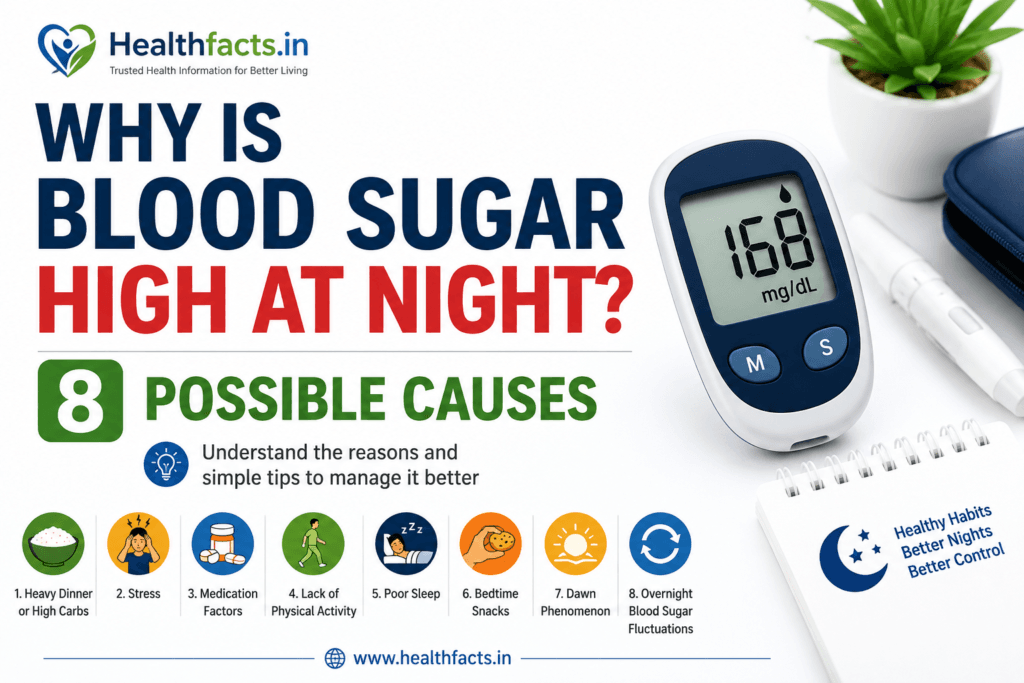
Blood Sugar High at Night: 8 Possible Causes
- 🌙 High blood sugar at night can happen for several reasons, including:
- What you eat at dinner
- Stress or anxiety
- Diabetes medications
- Physical activity levels
- Poor sleep or sleep problems
- Natural hormonal changes
- 🩸 For people with diabetes or prediabetes, understanding why blood sugar rises at night can help:
- Identify blood sugar patterns
- Find possible triggers
- Improve blood glucose management
- Make healthier lifestyle choices
- 📌 In this article, we explain 8 possible causes of high blood sugar at night, along with:
- Simple tips to help manage nighttime blood sugar
- Healthy eating suggestions
- Easy lifestyle changes
- Guidance on when to talk to a doctor
1. What Is Considered High Blood Sugar at Night? 🩸
The meaning of “high” depends on when you test, whether you have diabetes, your treatment plan, and your individual glucose targets.
For many adults with diabetes, commonly used targets are:
- Before a meal: 80–130 mg/dL
- About 1–2 hours after starting a meal: below 180 mg/dL
However, your personal target may be different.
A single high reading does not always mean something is wrong. Repeated high readings at night are more useful for identifying a pattern.
📌 Also Read
2. Possible Causes of High Blood Sugar at Night 🌙
1. Eating High Carbohydrate Dinner 🍚🍞
One of the most common reasons for high blood sugar at night is the food you eat in the evening.
Carbohydrates are broken down into glucose. A large meal containing refined carbohydrates can cause blood glucose to rise significantly after eating.
Examples include:
- White rice 🍚
- White bread
- Pasta
- Noodles
- Potatoes
- Sweets and desserts 🍰
- Sugary drinks
- Large portions of cereal
- Cakes and cookies
Eating a large dinner close to bedtime may also mean that your blood sugar remains elevated while you sleep.
Preventions tips?
Try building a balanced dinner with:
- Non-starchy vegetables 🥦
- A source of protein such as eggs, fish, chicken, tofu, or beans
- High fiber carbohydrates in moderate portions
- Healthy fats in reasonable amounts
2. The Dawn Phenomenon 🌅
The dawn phenomenon is a natural rise in blood sugar that can occur during the early morning hours.
Your body naturally releases hormones such as cortisol, growth hormone, and adrenaline as you prepare to wake up. These hormones can make the liver release more glucose into the bloodstream and can temporarily reduce insulin sensitivity.
As a result, your blood sugar may rise during the early morning.
For example:
Night: 110 mg/dL
⬇️
Early morning: 140–160 mg/dL
This can happen even if you did not eat anything overnight.
How can identify it?
Your doctor may recommend checking glucose at different times, such as:
- Before going to bed
- Around 2–3 a.m.
- When you wake up
A continuous glucose monitor (CGM) can also show overnight glucose patterns.
Don’t change insulin or other diabetes medication on your own based on these readings.
3. Eating a Bedtime Snack 🍪
A bedtime snack can sometimes contribute to high blood sugar overnight.
This is especially true when the snack contains a lot of carbohydrates or added sugar.
Examples include:
- Cookies
- Crackers
- Ice cream 🍦
- Sweetened yogurt
- Chocolate
- Bread
- Sugary cereal
Some people may need a bedtime snack for medical reasons, particularly if they are at risk of overnight hypoglycemia. Therefore, do not automatically stop a bedtime snack if your healthcare professional has recommended one.
Instead, ask your doctor or diabetes educator what type and amount of snack is appropriate for you.
4. Not Taking Diabetes Medication as Prescribed 💊
If you have diabetes, your blood sugar may rise when medication or insulin is:
- Missed
- Taken late
- Taken in the wrong dose
- Not absorbed properly
- Not taken according to your prescribed schedule
Some people may also need their diabetes treatment adjusted over time because blood glucose levels can change as diabetes progresses.
However, you should never increase, decrease, or stop diabetes medication on your own.
If your blood sugar is consistently higher at night despite taking your medication correctly, speak with your healthcare provider.
They can review:
- Your glucose readings
- Medication timing
- Meal patterns
- Physical activity
- Other health conditions
- Your overall diabetes treatment plan
5. Stress and Anxiety 😟
Stress can affect blood sugar.
When you are stressed, your body releases hormones such as cortisol and adrenaline. These hormones help your body respond to stressful situations, but they can also increase blood glucose.
Even emotional stress late in the day may contribute to higher glucose levels at night.
Common sources of evening stress include:
- Work pressure
- Financial concerns
- Family problems
- Lack of sleep
- Anxiety
- Poor sleep habits
Simple ways to reduce stress
Try:
- Taking a slow walk 🚶
- Practicing deep breathing
- Limiting screen time before bed
- Listening to relaxing music
- Going to bed at a consistent time
- Practicing meditation or relaxation exercises
Stress management does not replace diabetes treatment, but it can be part of a healthy routine.
6. Lack of Physical Activity During the Day 🏃
Physical activity helps your muscles use glucose for energy.
If you spend most of the day sitting and have little physical activity, your body may not use glucose as efficiently.
This can contribute to higher blood sugar levels.
You don’t necessarily need an intense workout.
Simple activities can help increase movement:
- Walking after dinner 🚶
- Taking the stairs
- Household activities
- Light stretching
- Gardening
- Short walking breaks during the day
For some people, a 10–20 minute walk after dinner may help reduce the post-meal glucose rise.
However, exercise recommendations should be individualized, especially if you take insulin or medications that can cause low blood sugar.
7. Poor Sleep or Sleep Problems 😴
Your sleep and blood sugar are closely connected.
Poor-quality sleep or not getting enough sleep can affect hormones involved in appetite, stress, and glucose regulation. Over time, inadequate sleep may also make insulin work less effectively.
You may be more likely to experience poor sleep because of:
- Stress
- Irregular sleep schedules
- Late-night screen use
- Caffeine late in the day
- Sleep apnea
- Frequent nighttime urination
People with diabetes may also experience a cycle in which high blood sugar causes increased thirst and urination, which then disrupts sleep.
What to do for better sleep?
Try to:
- Keep a regular bedtime
- Get enough sleep
- Avoid heavy meals close to bedtime
- Limit caffeine late in the day
- Keep your bedroom comfortable and dark
- Reduce phone or computer use before bed
If you regularly snore loudly, wake up gasping, or feel extremely sleepy during the day, talk with a healthcare professional about possible sleep apnea.
8. The Somogyi Effect or Overnight Low Blood Sugar 🔄
The Somogyi effect is sometimes described as a rebound rise in blood sugar following an episode of low blood sugar during the night.
However, the exact frequency and importance of this phenomenon are debated, and overnight high glucose can have several other explanations.
If you take insulin or medications that can cause hypoglycemia, an overnight low may sometimes be followed by a higher glucose reading later.
Your healthcare professional can help determine what is happening by reviewing glucose readings overnight.
A CGM can be particularly useful because it can show whether glucose is falling low during sleep before rising again.
Do not intentionally change your insulin dose to prevent nighttime highs without medical guidance.

3. Why Blood Sugar High at Night After Eating? 🍽️
If blood sugar rises after dinner, consider:
- How much carbohydrate you ate
- Portion size
- Whether the meal contained added sugar
- How quickly you ate
- Whether you were physically active
- Your medication timing
- Your individual insulin response
For example, a dinner containing a large serving of white rice, bread, potatoes, dessert, and a sugary drink can produce a much larger glucose rise than a balanced meal containing vegetables, protein, and a moderate carbohydrate portion.
4. Tips to Manage Nighttime Blood Sugar [CDC] 🌙✅
If you frequently notice high blood sugar at night, these habits may help:
🥗 1. Build a balanced dinner
Include:
- Vegetables
- Protein
- Fiber-rich foods
- Moderate portions of carbohydrates
🚶 2. Take a short walk after dinner
A gentle walk may help your muscles use glucose.
💧 3. Drink water
Choose water instead of sugary drinks.
🍬 4. Limit added sugar
Reduce sweets, desserts, sweetened beverages, and other foods high in added sugar.
📝 5. Track your patterns
Write down:
- Dinner time
- What you ate
- Physical activity
- Bedtime glucose
- Morning glucose
- Medication timing
Patterns can be much more useful than individual readings.
😴 6. Prioritize sleep
Try to maintain a regular sleep schedule and address ongoing sleep problems.
💊 7. Take medication exactly as prescribed
Do not skip doses or change the dose without medical advice.
5. When Should You Talk to a Doctor? 🩺
Contact your healthcare professional if your blood sugar is frequently above your recommended target, especially if this happens despite following your treatment plan.
You should also discuss repeated nighttime highs if you experience:
- Excessive thirst 💧
- Frequent urination 🚽
- Blurred vision
- Unusual tiredness
- Unexplained weight loss
- Repeated overnight glucose changes
- Episodes of low blood sugar
- Difficulty controlling your diabetes
🚨 Seek urgent medical care
Very high blood sugar accompanied by symptoms such as vomiting, abdominal pain, rapid or deep breathing, confusion, severe weakness, or significant dehydration can be a medical emergency, particularly in people with diabetes.
6. Final Takeaway 🩸🌙
High blood sugar at night can have several possible causes. A large carbohydrate-rich dinner, bedtime snacks, stress, low physical activity, poor sleep, medication issues, the dawn phenomenon, and overnight glucose fluctuations may all play a role.
The most important thing is to look for a pattern rather than focusing on one reading.
Keep a record of your evening meals, activity, medication timing, bedtime glucose, and morning glucose. Sharing this information with your healthcare professional can make it easier to identify why your blood sugar is rising at night.
👉 If nighttime high blood sugar happens regularly, don’t ignore it. Understanding the cause is the first step toward better blood sugar management.
FAQs
1. Can eating late at night raise blood sugar? 🍽️
- Yes. A large meal or sugary snack late at night can raise blood sugar.
2. Can stress increase blood sugar? 😟
- Yes. Stress can make your body release hormones that may increase blood sugar.
3. Can walking after dinner help? 🚶
- Yes. A short, easy walk after dinner may help your body use glucose and lower blood sugar.
4. Can poor sleep cause high blood sugar? 😴
- Yes. Poor sleep can affect how your body uses insulin and may increase blood sugar.
5. What should I eat at night if I have diabetes? 🥗
- Choose foods that fit your diabetes plan.
- Avoid large portions and foods high in added sugar.
- Ask your doctor or dietitian if you need help choosing a bedtime snack.
6. Should I change my diabetes medicine? 💊
- No. Do not change your medicine or insulin dose yourself.
- If your blood sugar stays high at night, talk to your doctor.
7. When should I see a doctor? 🩺
- See your doctor if your blood sugar is often high or difficult to control.
- Get urgent medical help if very high blood sugar occurs with vomiting, confusion, severe weakness, or trouble breathing.
The information provided on Healthfacts.in is for general educational and informational purposes only. It is not a substitute for professional medical advice, diagnosis, or treatment.
Always consult a qualified healthcare professional before making any decisions regarding your health, medication, diet, supplements, or treatment.

Hi, I’m Shishpa, founder of Healthfacts.in. I am a passionate health blogger focused on Mental wellness, Diabetes care, Weight management, and natural remedies. My goal is to provide easy, research-based and practical health advice that anyone can follow at home.