
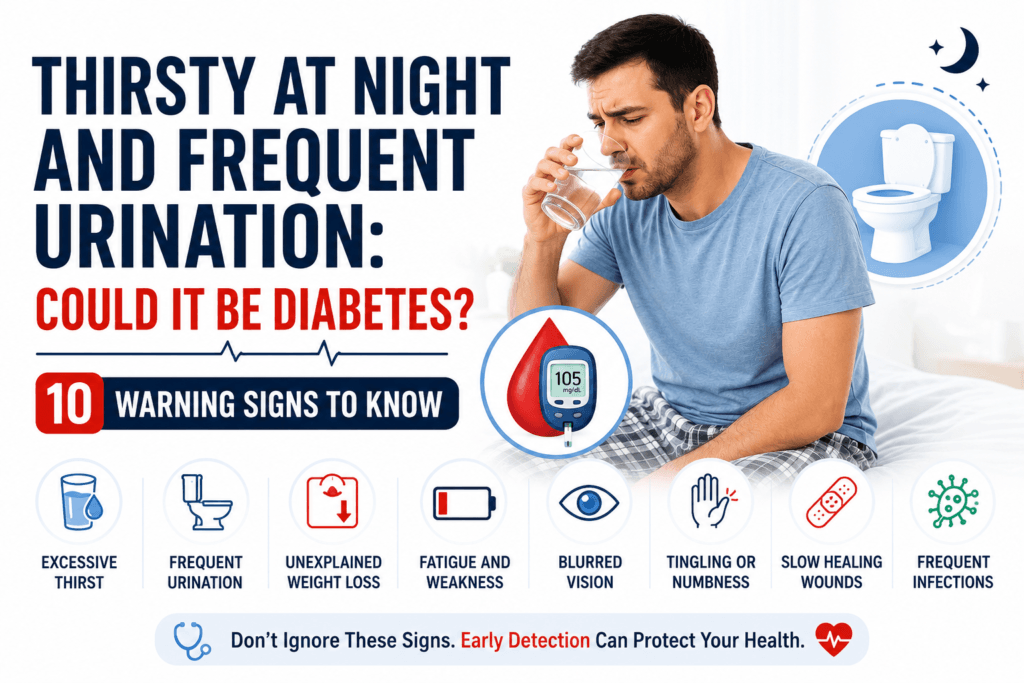
Thirsty at Night and Frequent Urination: Diabetes Signs?
- Waking up at night feeling thirsty and needing to urinate frequently can be uncomfortable and frustrating. If this happens regularly, you may wonder, “Could these symptoms be a sign of diabetes?”
- The answer is yes, they can be symptoms of diabetes but they do not always mean you have diabetes. Excessive thirst and frequent urination are two well-known symptoms associated with diabetes but they can also happen because of dehydration, caffeine, certain medications, urinary problems, and other health conditions.
- In this article, we will explain the possible connection between nighttime thirst, frequent urination, and diabetes. We will also discuss other possible causes, warning signs, useful tests, and when you should see a doctor.
1. 💧 Is Excessive Thirst at Night a Sign of Diabetes?
- Increased thirst, also called polydipsia, is one of the common symptoms associated with diabetes.
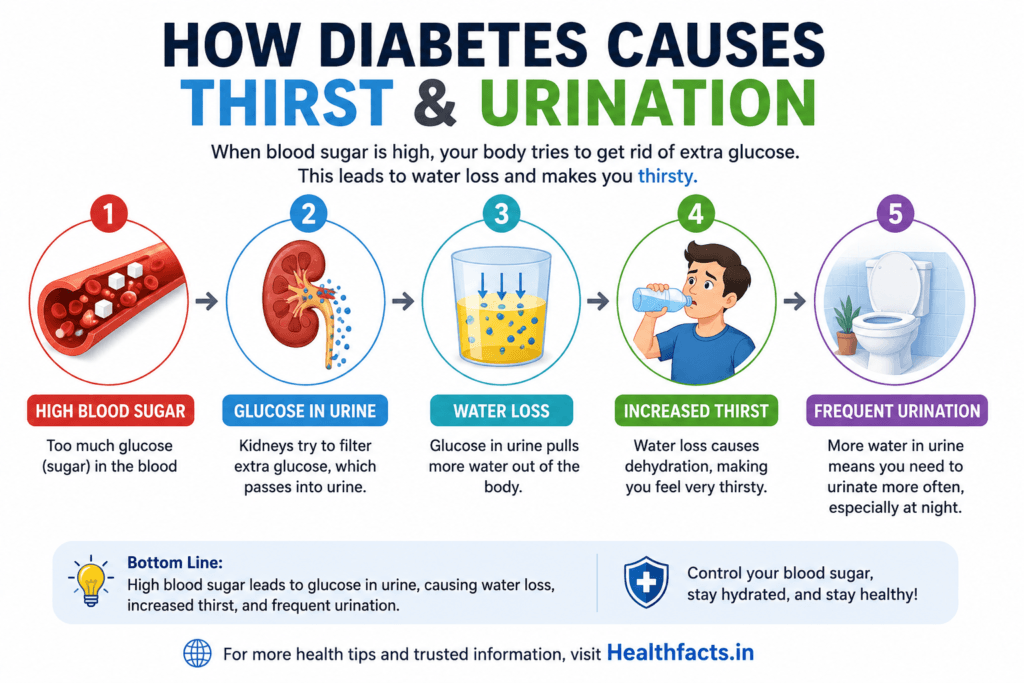
- When blood glucose becomes too high, the kidneys try to remove the extra glucose through urine. This can cause the body to lose more water.
As a result:
High blood sugar → More glucose in urine → More urination → More water loss → Increased thirst 🔄
- This can create a cycle in which you drink more water but continue to feel thirsty.
- If you are regularly waking up at night because you are extremely thirsty and also urinating several times, it is reasonable to consider checking your blood sugar—especially if you have other diabetes symptoms.
2. 🚽 Why Does Diabetes Cause Frequent Urination?
Frequent urination is medically known as polyuria.
Normally, the kidneys filter your blood and return most glucose back into the bloodstream. But when blood sugar becomes too high, the kidneys may not be able to reabsorb all of the glucose.
The excess glucose passes into the urine.
Glucose attracts water, so more water is removed from the body through urine.
This can lead to:
- 🚽 Urinating more often
- 🌙 Getting up several times at night
- 💧 Feeling unusually thirsty
- 🥤 Drinking more fluids
- 😴 Poor sleep because of repeated bathroom trips
Frequent nighttime urination is called nocturia.
3. Thirsty at Night and Frequent Urination: Is It Diabetes?
No.
- These symptoms can occur for many reasons.
- Diabetes is one possible cause, but other conditions and lifestyle factors may also be responsible.
- Possible causes include:
- 💧 Drinking a lot of water before bedtime
- ☕ Excess caffeine
- 🍺 Alcohol
- 💊 Certain medications, especially diuretics
- 🦠 Urinary tract infection (UTI)
- 🫘 Kidney problems
- ❤️ Certain heart conditions
- 💤 Sleep apnea
- 🧓 Age-related changes
- 🧂 Eating very salty foods
- 🩺 Prostate problems in men
- 🤰 Pregnancy
- 🩸 High blood sugar or diabetes
Therefore, symptoms alone cannot diagnose diabetes.
4. 🩸 Other Symptoms of Diabetes to Watch For
If excessive thirst and frequent urination occur together with other symptoms, diabetes becomes more important to consider.
Common symptoms can include:
1. 💧 Increased Thirst
You may feel thirsty much more often than usual, even after drinking water.
2. 🚽 Frequent Urination
You may need to urinate frequently during the day or wake up multiple times at night.
3. 🍽️ Increased Hunger
Some people with diabetes experience increased hunger despite eating normally.
4. ⚖️ Unexplained Weight Loss
Unintentional weight loss can occur when the body cannot properly use glucose for energy.
5. 😴 Tiredness
High blood sugar can be associated with fatigue and low energy.
6. 👁️ Blurred Vision
High blood glucose can temporarily affect the shape of the eye’s lens and cause blurred vision.
7. 🩹 Slow-Healing Cuts
Some people with diabetes notice that wounds take longer to heal.
8. 🦠 Recurrent Infections
Frequent urinary, skin, or other infections may occur in some people with diabetes.
9. ✋ Tingling or Numbness
Long-term high blood sugar can damage nerves and may cause tingling or numbness, particularly in the feet.
10. 🧴 Dry or Itchy Skin
Dehydration associated with increased urination can contribute to dry skin.
5. 🌙 Why Are You So Thirsty at Night?
Nighttime thirst does not automatically mean diabetes.
Here are some common explanations.
🥤 1. Not Drinking Enough During the Day
If you do not drink enough fluids during the day, your body may become thirsty later.
Try to maintain regular hydration rather than drinking a large amount immediately before bedtime.
🧂 2. Eating Salty Food
A salty dinner or snacks can make you feel thirsty.
Foods such as:
- Chips
- Namkeen
- Pickles
- Processed foods
- Instant noodles
- Very salty restaurant meals
may increase thirst.
☕ 3. Too Much Caffeine
Coffee, tea, energy drinks, and some soft drinks contain caffeine.
Having large amounts, particularly late in the day, may increase urination and disturb sleep.
🍺 4. Alcohol
Alcohol can increase urine production and contribute to dehydration.
🌡️ 5. Hot Weather
Hot temperatures, sweating, exercise, or sleeping in a warm room can increase your body’s need for fluids.
6. 🚽 Why Do You Need to Urinate Frequently at Night?
There are several possible causes.
Common causes include:
- Drinking lots of fluids before bed 💧
- Caffeine ☕
- Alcohol 🍺
- Diabetes 🩸
- Urinary tract infection 🦠
- Overactive bladder
- Enlarged prostate in men
- Certain medications 💊
- Pregnancy 🤰
- Sleep apnea 😴
- Kidney or heart-related conditions
If nighttime urination happens occasionally, it may not be concerning.
However, regularly waking up multiple times every night to urinate deserves attention, particularly if it is a new change.
7. 🩺 How Can You Check If You Have Diabetes?
The best way to find out is through blood glucose testing.
A doctor may recommend one or more of these tests:
🩸 1. Fasting Blood Glucose
This test measures your blood sugar after fasting, usually overnight.
It is commonly used to screen for diabetes and prediabetes.
🩸 2. HbA1c Test
HbA1c gives an estimate of your average blood glucose level over approximately the previous 2–3 months.
It is a convenient test because fasting is generally not required.
🩸 3. Random Blood Glucose
This test measures blood glucose at any time of the day.
It may be useful when someone has symptoms suggestive of diabetes.
🧪 4. Urine Tests
A doctor may recommend urine testing when appropriate, particularly if infection or other urinary problems are suspected.Important: A home glucose reading can be useful information, but diagnosis should be confirmed using appropriate medical testing.
8. 🔍 Diabetes or Something Else?
Here’s a simple way to think about the symptoms.
🩸 Diabetes may be more likely when you have:
- Excessive thirst
- Frequent urination
- Unexplained weight loss
- Increased hunger
- Persistent tiredness
- Blurred vision
- Recurrent infections
- Slow-healing wounds
- A family history of diabetes
🌙 Another cause may be more likely when:
- You drink a lot of water before bed.
- You consume tea or coffee late at night.
- You recently started a medication that increases urination.
- You have burning or pain while urinating.
- You have urinary urgency.
- Symptoms occur only occasionally.
However, symptoms alone cannot confirm the cause.
9.🚨 When Should You See a Doctor?
Make an appointment if:
- You are unusually thirsty for several days or weeks.
- You frequently wake up at night to urinate.
- Your symptoms are getting worse.
- You have unexplained weight loss.
- You have persistent fatigue.
- You experience blurred vision.
- You have recurrent infections.
- You have several symptoms associated with diabetes.
- You have risk factors for diabetes.
A simple blood glucose test can help determine whether diabetes or another condition may be responsible
10. 💡 Final Takeaway
Thirsty at night + frequent urination can be a sign of diabetes , but it doesn’t necessarily mean you have diabetes. 🩸💧
If you regularly experience these symptoms, especially along with unexplained weight loss, increased hunger, fatigue, blurred vision, or recurrent infections, consider getting your blood glucose checked.
The important thing is simple:
Don’t guess. Get tested. 🩸✅ Early detection of diabetes can help you take appropriate steps to manage your health and reduce the risk of complications.
❓ Frequently Asked Questions
1. Can diabetes cause thirst only at night?
It can, but nighttime thirst alone does not prove diabetes. Dehydration, salty foods, caffeine, medications, and other conditions can also cause nighttime thirst.
2. Is frequent urination always a sign of diabetes?
No. UTIs, prostate problems, excess fluid intake, caffeine, medications, pregnancy, overactive bladder, and other conditions can cause frequent urination.
3. How many times is it normal to urinate at night?
Occasionally waking once may happen, depending on factors such as age and fluid intake. If you regularly wake up multiple times every night and it affects your sleep, discuss it with a healthcare professional.
4. Should I get my blood sugar checked?
If excessive thirst and frequent urination are persistent—or occur together with other diabetes symptoms—talking to a healthcare professional about blood glucose testing is reasonable.
5. Can drinking too much water cause frequent urination?
Yes. Drinking large amounts of fluid, particularly shortly before bedtime, can naturally increase urine production.
6. Can prediabetes cause excessive thirst and urination?
Prediabetes often causes few or no obvious symptoms. Excessive thirst and frequent urination are more commonly associated with significant high blood glucose, but symptoms alone cannot distinguish prediabetes from diabetes.
⚠️ Medical Disclaimer:
This article is for general educational purposes only and is not a substitute for professional medical advice, diagnosis, or treatment. If you have persistent, severe, or worsening symptoms, consult a qualified healthcare professional.

Hi, I’m Shishpa, founder of Healthfacts.in. I am a passionate health blogger focused on Mental wellness, Diabetes care, Weight management, and natural remedies. My goal is to provide easy, research-based and practical health advice that anyone can follow at home.