
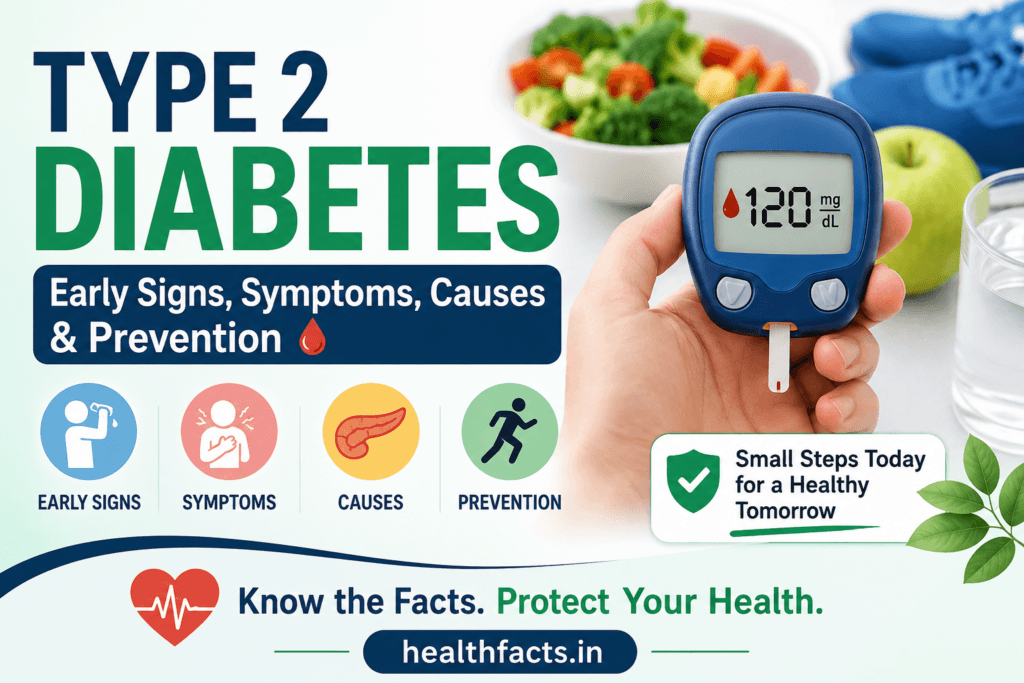
“Type 2 Diabetes: Early signs, symptoms, Causes & Prevention“
Type 2 diabetes is most common types of diabetes and happens when the body does not use insulin properly, causing blood sugar levels to rise.
The good news is that type 2 diabetes can often be prevented by healthy lifestyle changes. Detecting the early signs and getting a blood sugar test can help people to take action before complications develop.
In this article, we will learn about the early signs of type 2 diabetes, common symptoms, causes, risk factors, prevention tips, diagnosis, and when to see a doctor.
1. What Is Type 2 Diabetes? 🩸
Type 2 diabetes is a long-term health condition that causes high blood sugar levels.
- 🍞 When you eat food, your body breaks down carbohydrates into glucose (sugar).
- 🩸 Glucose enters your blood and is used by your body for energy.
- 🧬 Your pancreas makes a hormone called insulin.
- 🔑 Insulin helps glucose move from your blood into your cells.
- ⚠️ In type 2 diabetes, your body may not use insulin properly. This is called insulin resistance.
- 📉 Over time, the pancreas may also make less insulin.
- 🩸 As a result, glucose can build up in your blood.
- ⚠️ This leads to high blood sugar, which can cause health problems if it remains high for a long time.
2. Why Is Type 2 Diabetes Called “The Silent Killer”? 🩸
Type 2 diabetes is sometimes called a “silent killer” because it can develop slowly without obvious symptoms.
- 🤫 Few early symptoms: Many people may have high blood sugar without feeling sick.
- 🕰️ Develops gradually: Type 2 diabetes can develop over several years.
- 🩸 High blood sugar can cause damage: If blood sugar stays high for a long time, it can affect the blood vessels and nerves.
- ❤️ May affect the heart: Diabetes can increase the risk of heart disease and stroke.
- 👀 Can affect the eyes: Long-term high blood sugar may damage the blood vessels in the eyes.
- 🫘 Can affect the kidneys: Diabetes can damage the kidneys over time.
- 🦶 Can cause nerve problems: Some people may develop numbness, tingling, or pain, especially in the feet.
- 🔍 Regular testing matters: A simple blood test can help detect diabetes or prediabetes early.
The good news: Early detection, healthy lifestyle changes, regular checkups, and proper treatment can help manage type 2 diabetes and reduce the risk of complications.
📌 Also Read
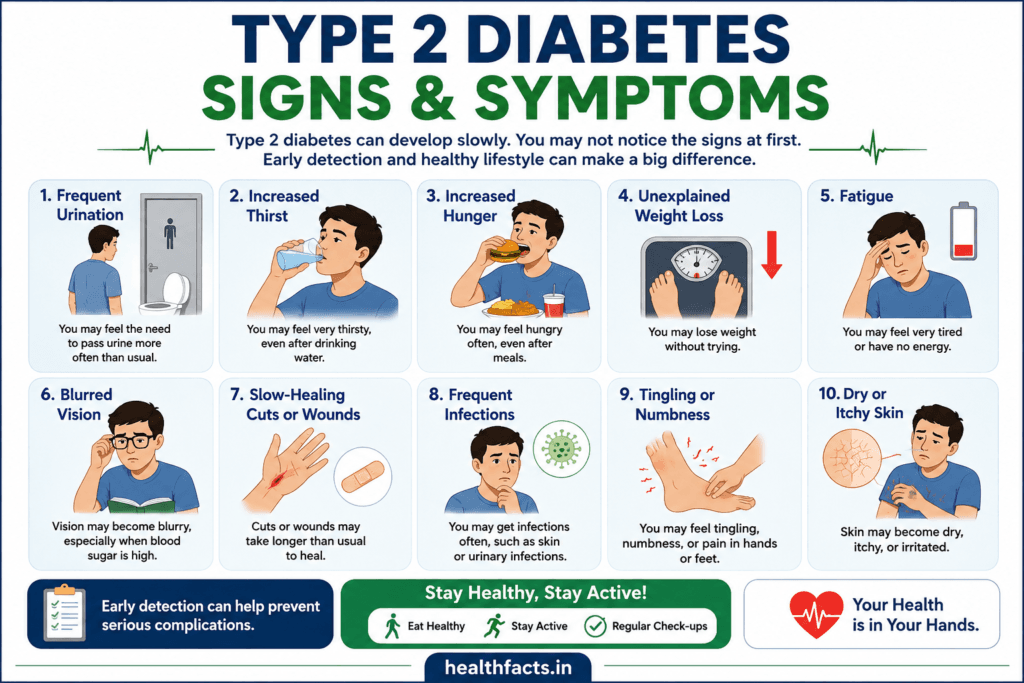
3. Common Signs & Symptoms of Type 2 Diabetes[WebMD]
Type 2 diabetes can develop slowly. Some people may have high blood sugar for months or years without noticing clear symptoms.
However, several early signs may occur.
1. Frequent Urination 🚽
High blood sugar can make the kidneys work harder to remove extra glucose from the blood.
This may cause you to urinate more often than usual, including waking up several times at night to use the bathroom.
2. Increased Thirst 💧
Frequent urination can cause the body to lose more water.
As a result, you may feel unusually thirsty and drink more water than normal.
3. Feeling Very Hungry 🍽️
When insulin does not work properly, glucose may not enter your cells efficiently.
Even after eating, you may feel hungry because your body is not using glucose effectively for energy.
4. Unexplained Weight Loss ⚖️
Some people with untreated diabetes lose weight without trying.
When the body cannot use glucose properly for energy, it may begin using stored fat and muscle for energy.
5. Feeling Tired 😴
High blood sugar can make you feel tired or weak.
You may notice that normal daily activities feel more difficult or that you lack energy.
6. Blurred Vision 👀
High blood sugar can temporarily affect the fluid balance in the eye, which may cause blurred vision.
Persistent high blood sugar can also damage the blood vessels that supply the eyes.
7. Slow-Healing Cuts 🩹
High blood sugar can affect circulation and the body’s ability to fight infections and repair damaged tissue.
As a result, cuts and wounds may take longer to heal.
8. Frequent Infections 🦠
People with diabetes may be more likely to develop certain infections, including skin, urinary tract, or yeast infections.
9. Tingling or Numbness 🦶
Long-term high blood sugar can damage nerves.
This may cause tingling, burning, pain, or numbness, especially in the feet and hands.
4. Main Causes of Type 2 Diabetes [WebMD]🩸
Type 2 diabetes usually develops due to a combination of genetics, lifestyle, and other health factors.
- 🧬 Insulin resistance – Your body does not use insulin properly.
- ⚖️ Overweight or obesity – Extra body fat can increase insulin resistance.
- 🛋️ Lack of physical activity – Being inactive can make it harder for your body to control blood sugar.
- 🍔 Unhealthy diet – Eating too many sugary drinks, processed foods, and refined carbohydrates may increase the risk.
- 👨👩👧 Family history – Having a close family member with type 2 diabetes can increase your risk.
- 🎂 Age – The risk generally increases as you get older, although type 2 diabetes can occur at any age.
- 🩸 Prediabetes – Having higher-than-normal blood sugar increases the risk of developing type 2 diabetes.
- 🤰 History of gestational diabetes – Women who had diabetes during pregnancy have a higher risk later in life.
- 🩺 High blood pressure and abnormal cholesterol – These conditions often occur along with insulin resistance and can be linked with a higher diabetes risk.
- 🧬 Certain genetic or ethnic factors – Some people are genetically more likely to develop type 2 diabetes.
Important: Type 2 diabetes is usually not caused by one single factor. Several risk factors can work together over time.
5. How to Prevent Type 2 Diabetes 🥗
You can often prevent or delay type 2 diabetes by making healthy lifestyle changes.
- 🥗 Eat a healthy diet – Choose vegetables, fruits, whole grains, beans, and lean proteins.
- 🥤 Limit sugary drinks – Reduce soda, sweetened tea, energy drinks, and other sugary beverages.
- 🍞 Choose high-fiber foods – Eat oats, beans, lentils, vegetables, and whole grains.
- 🚶 Stay physically active – Aim for regular walking, cycling, swimming, or other activities you enjoy.
- ⚖️ Maintain a healthy weight – If you have overweight, even modest weight loss can help lower your risk.
- 🪑 Avoid sitting for long periods – Get up, stretch, and move around regularly.
- 😴 Get enough sleep – Aim for a regular and healthy sleep schedule.
- 🚭 Avoid smoking – Smoking can increase the risk of type 2 diabetes and other health problems.
- 🩺 Check your blood sugar – Regular testing can help detect prediabetes or diabetes early, especially if you have risk factors.
- 💧 Drink more water – Choose water instead of sugary beverages most of the time.
- 🍽️ Watch portion sizes – Avoid regularly eating more calories than your body needs.
- ❤️ Manage blood pressure and cholesterol – Keep these under control with healthy habits and medical care when needed.
6. Risk Factors for Type 2 Diabetes ⚠️
You may have a higher risk of type 2 diabetes if you have one or more of these factors:
- 👨👩👧 Family history of diabetes
- ⚖️ Overweight or obesity
- 🛋️ Low physical activity
- 🍔 Unhealthy eating patterns
- 📈 High blood pressure
- 🩸 Abnormal cholesterol levels
- 👩 Previous gestational diabetes
- 🧬 Certain genetic factors
- 🎂 Increasing age
- 🩺 Prediabetes
Having a risk factor does not mean you will definitely develop diabetes.
7. How Is Type 2 Diabetes Diagnosed? 🧪
Doctors use blood tests to check your blood sugar levels. Common tests include:
- 🩸 A1C test – Shows your average blood sugar level over the past 2–3 months.
- 🌅 Fasting blood glucose test – Measures your blood sugar after fasting, usually overnight.
- 🥤 Oral glucose tolerance test (OGTT) – Checks how your body handles sugar after you drink a glucose solution.
- 🩸 Random blood glucose test – Measures your blood sugar at any time of the day, especially if you have diabetes symptoms.
- 🔁 Repeat testing – If a result is in the diabetes range and you do not have clear symptoms, your doctor may repeat the test to confirm the diagnosis.
8. When Should You See a Doctor? 🩺
Talk to a healthcare professional if you have symptoms such as:
- Frequent urination
- Excessive thirst
- Unexplained weight loss
- Persistent tiredness
- Blurred vision
- Slow-healing wounds
- Repeated infections
You should also consider discussing diabetes screening with your healthcare professional if you have risk factors such as a family history of diabetes, prediabetes, overweight, or a history of gestational diabetes.
Early testing can help identify blood sugar problems before they become more serious.
9. Can Type 2 Diabetes Be Reversed ? 🔄
Some people with type 2 diabetes can achieve remission, especially when significant lifestyle changes and, when appropriate, medical treatment lead to improved blood sugar levels.
However, remission is not the same as a permanent cure.
Blood sugar can rise again if the condition returns or lifestyle factors change.
If you have diabetes, do not stop prescribed medication without talking to your healthcare professional.
10. Best Diet for Type 2 Diabetes Control
Food choices can either stabilize blood sugar or spike it.
– Foods That Help Control Blood Sugar
Focus on:
- Green leafy vegetables
- Whole grains (in controlled portions)
- Lentils and legumes
- Nuts and seeds
- Lean protein like fish, eggs, tofu
- Healthy fats from olive oil and avocados
– Foods to Limit or Avoid
Reduce intake of:
- Sugar and sweetened beverages
- Refined flour products
- Fried and processed foods
- Packaged snacks
- Excess alcohol
11. Role of Physical Activity in Diabetes Control
- Exercise improves insulin sensitivity and helps lower blood sugar naturally.
- Effective activities include:
- Brisk walking
- Cycling
- Swimming
- Yoga
- Strength training
- Even 30 minutes a day can significantly improve glucose control.
– Lifestyle Changes That Truly Matter
- Small, consistent habits create lasting results:
- Maintain a healthy weight
- Sleep 7–8 hours nightly
- Manage stress through meditation or hobbies
- Quit smoking
- Limit screen time and stay active
Consistency beats intensity.
– Lifestyle Modifications with Proven Benefits
- Weight reduction of 5–10%
- Sleep optimization (7–8 hours)
- Stress management (mindfulness, yoga)
- Smoking cessation
- Limiting alcohol intake
These interventions significantly lower HbA1c levels.
12. Final Takeaway 💚
Type 2 diabetes can develop slowly, and some people may not notice symptoms at first. That is why knowing the early signs and risk factors is important.
- 🩸 Check your blood sugar if you have symptoms or risk factors.
- 🥗 Eat a balanced, high-fiber diet.
- 🚶 Stay physically active every day.
- ⚖️ Maintain a healthy weight.
- 🥤 Limit sugary drinks and highly processed foods.
- 😴 Get enough quality sleep.
- 🩺 Follow your doctor’s advice and get regular health checkups.
The good news: Type 2 diabetes can often be prevented with healthy lifestyle changes. Early detection and proper management can also help reduce the risk of complications. 💚
= FAQs =
1. What is the first warning sign of type 2 diabetes?
There is no single first sign. Common symptoms include increased thirst, frequent urination, tiredness, blurred vision, and unexplained weight loss. Some people may have no symptoms.
2. Can type 2 diabetes develop without symptoms?
Yes. Type 2 diabetes can develop slowly, and some people may not notice any symptoms. A blood sugar test can help find diabetes early.
3. Can type 2 diabetes be prevented?
Yes. You can often prevent or delay type 2 diabetes by eating healthy foods, exercising regularly, maintaining a healthy weight, and avoiding too many sugary drinks and processed foods.
4. What foods can increase the risk of type 2 diabetes?
Eating too many sugary drinks, sweets, processed foods, and refined carbohydrates may increase the risk. Choose more vegetables, whole grains, beans, fruits, lean protein, and healthy fats.
5. Is frequent urination always a sign of diabetes?
No. Frequent urination can have many causes. However, if you also have increased thirst or other diabetes symptoms, talk to a healthcare professional.
6. Can walking help prevent type 2 diabetes?
Yes. Regular walking and other physical activities can help your body use insulin better and support a healthy weight.
The information provided on Healthfacts.in is for general educational and informational purposes only. It is not a substitute for professional medical advice, diagnosis, or treatment.
Always consult a qualified healthcare professional before making any decisions regarding your health, medication, diet, supplements, or treatment.

Hi, I’m Shishpa, founder of Healthfacts.in. I am a passionate health blogger focused on Mental wellness, Diabetes care, Weight management, and natural remedies. My goal is to provide easy, research-based and practical health advice that anyone can follow at home.