
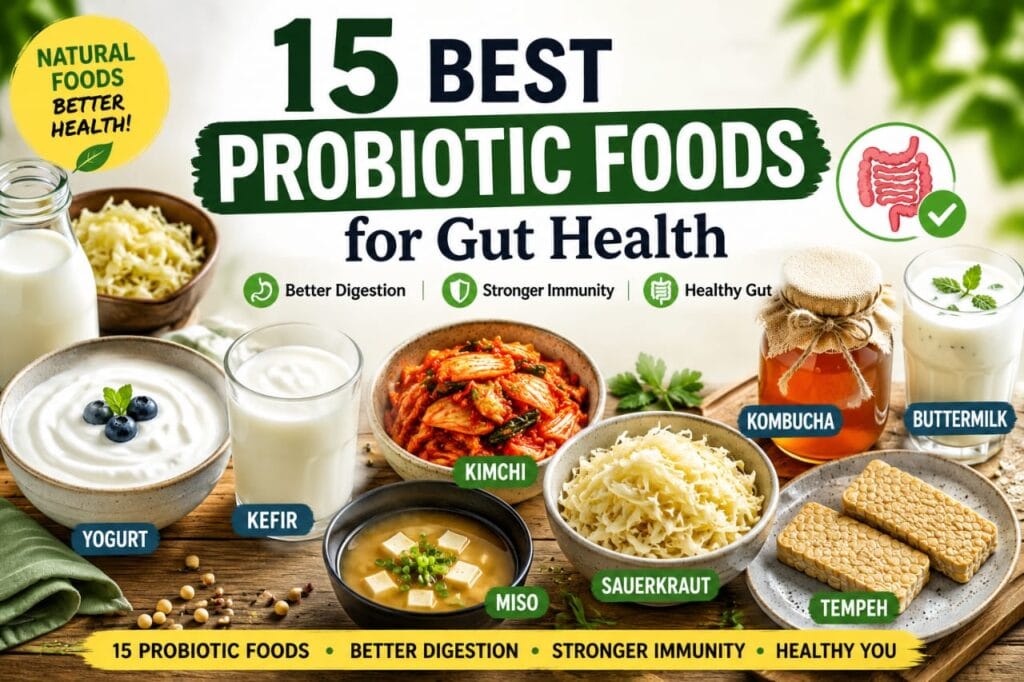
‘Best Probiotic Foods for Gut Health | Top 15 Natural Probiotic Foods’
- We sometimes experience bloating, gas, constipation, or stomach discomfort. In this case our gut may need more good bacteria.
- Our digestive system contains trillions of microorganisms called the gut microbiome. These tiny organisms play a major role in digestion, immunity, metabolism.
- One of the easiest ways to improve our gut health is by eating probiotic foods.
- In this article we shall discover the 15 best probiotic foods for gut health, their benefits, and how to include them in your daily meals.
1. What Are Probiotics? 🦠
- Probiotics are live beneficial bacteria and yeast that help maintain a healthy balance of microorganisms in your digestive system.
- They are often called “good bacteria” because they help keep harmful bacteria under control.
- When our gut has enough healthy bacteria, our digestive system works more efficiently.
2. Benefits of Probiotics ❤️
Regularly eating probiotic foods may provide many health benefits.
- ✅ Improve digestion
- ✅ Reduce bloating and gas
- ✅ Help relieve constipation
- ✅ Support a healthy immune system
- ✅ Improve nutrient absorption
- ✅ Restore gut bacteria after antibiotics
- ✅ Promote healthier skin
- ✅ Support mental well-being through the gut-brain connection
3. Top 15 Best Probiotic Foods for Gut Health 🥣
1. Yogurt 🥣
Yogurt is one of the most popular probiotic foods worldwide. It contains beneficial bacteria like Lactobacillus and Bifidobacterium, which support healthy digestion.
Benefits
✅ Improves digestion
✅ Helps reduce bloating
✅ Supports immune health
✅ May prevent antibiotic-related diarrhea
How to Eat
- Add fresh berries 🍓
- Mix with oats
- Make smoothies
- Eat as a healthy snack
Pro Tip: Choose plain yogurt with Live & Active Cultures and avoid products with added sugar.
2. Kefir 🥛
Kefir is a fermented milk drink that contains even more probiotic strains than yogurt.
It has a slightly tangy taste and is packed with healthy bacteria and yeast.
Benefits
✅ Supports healthy digestion
✅ Rich in calcium
✅ Good source of protein
✅ Helps improve gut bacteria diversity
How to Enjoy
- Drink it plain
- Blend into smoothies
- Add to breakfast bowls
3. Sauerkraut 🥬
Sauerkraut is fermented cabbage that is naturally rich in probiotics, fiber, and vitamins.
Benefits
✅ Supports healthy gut bacteria
✅ High in Vitamin C
✅ Improves digestion
✅ Rich in antioxidants
Tips
Choose raw, unpasteurized sauerkraut because pasteurized versions usually contain fewer live probiotics.
4. Kimchi 🌶️
Kimchi is a spicy Korean dish made by fermenting vegetables like cabbage and radish.
It contains beneficial bacteria and many essential nutrients.
Benefits
✅ Improves gut health
✅ Supports digestion
✅ Rich in antioxidants
✅ Boosts immunity
Serving Ideas
- Add to rice bowls
- Eat with grilled chicken
- Mix into soups
5. Miso 🍲
Miso is a fermented soybean paste used in Japanese cooking.
It has a rich, savory flavor and contains healthy probiotic bacteria.
Benefits
✅ Supports gut bacteria
✅ Improves digestion
✅ Rich in minerals
✅ Contains beneficial enzymes
Best Way to Eat
Add miso to warm—not boiling—water to help preserve the live cultures.
6. Tempeh 🌱
Tempeh is another fermented soybean food that is rich in probiotics and plant protein.
It has a firm texture and nutty flavor.
Benefits
✅ Excellent source of protein
✅ Supports healthy digestion
✅ Rich in iron
✅ Helps maintain healthy gut bacteria
Cooking Ideas
- Stir-fries
- Sandwiches
- Salads
- Grain bowls
7. Kombucha 🍹
Kombucha is a fermented tea made using bacteria and yeast.
It has become a popular drink for supporting digestive health.
Benefits
✅ Supports gut microbiome
✅ Rich in antioxidants
✅ May reduce bloating
✅ Refreshing low-calorie beverage
Buying Tip
Choose kombucha with:
- Low sugar
- Natural ingredients
- Live cultures
8. Naturally Fermented Pickles 🥒
Not all pickles contain probiotics. Only naturally fermented pickles made with salt and water contain beneficial bacteria.
Benefits
✅ Improves digestion
✅ Supports healthy bacteria
✅ Low in calories
✅ Contains beneficial enzymes
Remember
Avoid vinegar-only pickles if you’re looking for probiotic benefits.
9. Cottage Cheese (With Live Cultures) 🧀
Some brands of cottage cheese contain live probiotic cultures.
Benefits
✅ High in protein
✅ Supports muscle health
✅ Rich in calcium
✅ Helps improve digestion
Always check the label for Live & Active Cultures.
10. Traditional Buttermilk 🥛
Traditional cultured buttermilk is a refreshing probiotic drink.
Benefits
✅ Easy to digest
✅ Supports gut bacteria
✅ Rich in calcium
✅ Helps keep you hydrated
Drink it chilled during hot weather for a refreshing boost.
11. Natto 🍚
Natto is a traditional Japanese food made from fermented soybeans.
It has a unique taste and sticky texture but is one of the richest probiotic foods available.
Benefits
- 💪 Supports a healthy gut microbiome
- 🦴 Rich in Vitamin K2 for bone health
- ❤️ May support heart health
- 🌱 High in plant-based protein
- ⚡ Contains beneficial enzymes
Tip: Mix natto with steamed rice, green onions, or mustard for extra flavor.
12. Fermented Cheese 🧀
Some aged cheeses naturally contain live probiotic cultures that can support digestion.
Healthy Choices
- 🧀 Gouda
- 🧀 Cheddar
- 🧀 Swiss
- 🧀 Parmesan
Benefits
- ✅ Supports healthy gut bacteria
- 🦴 Rich in calcium
- 💪 Good source of protein
- 😋 Delicious and filling
Choose natural cheeses with minimal processing for the best nutritional value.
13. Raw Apple Cider Vinegar 🍎
Raw, unfiltered apple cider vinegar with “the mother” contains natural bacteria and enzymes. While it isn’t as probiotic-rich as fermented foods like yogurt or kefir, it may support healthy digestion.
Benefits
- 🍽️ Supports digestion
- 🌿 Contains natural enzymes
- 💧 May help maintain a healthy stomach environment
How to Use
Mix 1 tablespoon with a glass of water before meals. Avoid drinking it straight, as it can irritate your teeth and throat.
14. Fermented Olives 🫒
Naturally fermented olives are another tasty source of beneficial bacteria.
Benefits
- ❤️ Rich in healthy fats
- 🌿 Supports gut bacteria
- 🛡️ Contains antioxidants
- 🍽️ Adds flavor to meals
Add fermented olives to salads, sandwiches, or snack plates.
15. Probiotic Drinks 🥤
Many probiotic drinks are made with live cultures and are designed to support digestive health.
Benefits
- 🌱 Convenient source of probiotics
- 💪 Supports a healthy gut microbiome
- 🚽 Helps maintain regular digestion
- ⚡ Easy to include in a busy lifestyle
Choose drinks that are low in added sugar and clearly state they contain live and active cultures.

4. Daily Gut-Friendly Meal Plan 🍽️
| Meal | Food |
|---|---|
| Breakfast | Yogurt with fruits |
| Snack | Apple |
| Lunch | Rice, vegetables, fermented pickles |
| Evening | Buttermilk |
| Dinner | Vegetable soup with tempeh |
| Before Bed | Kefir |
5.Final Thought 🎯
Adding probiotic foods to your daily routine is one of the easiest and most natural ways to support digestive health. Remember these key takeaways:
- 🥣 Include probiotic-rich foods like yogurt, kefir, kimchi, sauerkraut, kombucha, traditional buttermilk, and kanji in your regular diet.
- 🦠 These foods provide beneficial bacteria that help maintain a healthy and balanced gut microbiome.
- 🍽️ Pair probiotics with a fiber-rich diet to nourish good gut bacteria and improve digestive function.
- 💪 Regular physical activity supports healthy digestion and overall gut health.
- 😴 Getting 7–9 hours of quality sleep helps maintain a healthy gut-brain connection.
- 💧 Stay well-hydrated to support smooth digestion and nutrient absorption.
- 🛡️ A healthy gut can contribute to better digestion, stronger immunity, improved nutrient absorption, and overall well-being.
- 🌿 Whenever possible, choose naturally fermented foods instead of relying only on probiotic supplements.
- 📅 Small, consistent healthy eating habits can lead to lasting improvements in gut health over time.
Start by adding one probiotic food each day, and combine it with a balanced lifestyle to naturally improve your digestive health from the inside out. 🌱
Frequently Asked Questions (FAQs)
1. What is the best probiotic food for gut health?
Plain yogurt with live cultures and kefir are among the best and most widely available probiotic foods.
2. Can probiotics help with bloating?
Yes. Regular consumption of probiotic foods may help balance gut bacteria and reduce bloating in many people.
3. Should I eat probiotic foods every day?
Yes. Including one or two probiotic-rich foods daily can support a healthy gut microbiome as part of a balanced diet.
4. Are probiotic supplements better than probiotic foods?
Not necessarily. Whole foods provide probiotics along with vitamins, minerals, protein, and other beneficial nutrients.
5. What foods feed good gut bacteria?
Prebiotic foods such as bananas, onions, garlic, oats, asparagus, and apples help nourish beneficial gut bacteria and work well alongside probiotic foods.

Hi, I’m Shishpa, founder of Healthfacts.in. I am a passionate health blogger focused on Mental wellness, Diabetes care, Weight management, and natural remedies. My goal is to provide easy, research-based and practical health advice that anyone can follow at home.