
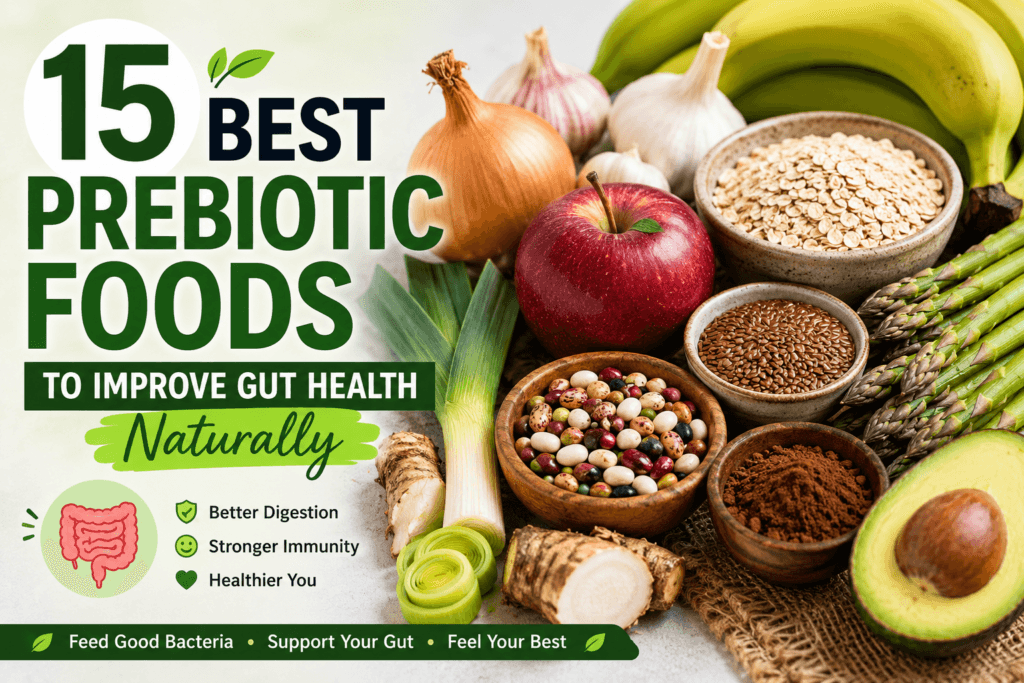
“Best Prebiotic Foods to Improve Gut Health naturally“
· 🦠 Our gut health affects much more than digestion. It plays an crucial role in overall health and well-being.
· 💪 Gut microbiome supports our immune system, brain health, metabolism, heart health, and even our mood.
· 🌱 A healthy gut contains trillions of beneficial bacteria that help digest food, produce essential vitamins, and protect your body from harmful germs.
· 🍎 These friendly bacteria need nourishment to thrive, and that nourishment comes from prebiotics.
· 🥣 Prebiotics are natural dietary fibers that feed the beneficial bacteria already living in your gut.
· 🥛 Unlike probiotics, which are live beneficial bacteria found in foods like yogurt, kefir, and fermented vegetables, prebiotics help those bacteria grow and multiply.
· 🔬 When gut bacteria ferment prebiotic fiber, they produce short-chain fatty acids (SCFAs) such as butyrate.
· ❤️ SCFAs help reduce inflammation, strengthen the gut lining, improve digestion, and support overall health.
· 🥗 Health experts recommend getting prebiotics from a variety of fiber-rich fruits, vegetables, legumes, and whole grains instead of depending only on supplements.
· 🌈 Eating a wide range of plant-based, fiber-rich foods helps build a more diverse and balanced gut microbiome, which is linked to better digestion, stronger immunity, and improved long-term health.
1. What are Prebiotics? 🌱
- 🌿 Prebiotics are a type of dietary fiber that your body cannot digest.
- 🦠 They act as food for the good bacteria living in your gut.
- 🌱 Think of your gut like a garden—the good bacteria are the flowers, and prebiotics are the fertilizer that helps them grow.
- 🍎 Instead of being digested in the stomach, prebiotics travel to the large intestine, where beneficial bacteria feed on them.
- 🔬 As these bacteria break down prebiotic fiber, they produce short-chain fatty acids (SCFAs), including butyrate.
- ❤️ SCFAs help strengthen the gut lining and keep your digestive system healthy.
- 😊 They may also help reduce inflammation, improve digestion, GERD and support a stronger immune system.
- 🩸 Research suggests that prebiotics may also help support healthy blood sugar levels and heart health.
- 🥗 Natural sources of prebiotics include garlic, onions, bananas, oats, apples, asparagus, beans, and chicory root.
- 💚 Eating prebiotic-rich foods every day can help create a healthy and balanced gut microbiome.
2. Prebiotics vs Probiotics 🦠
| Prebiotics | Probiotics |
| Feed good bacteria | Are good bacteria |
| Found in fruits, vegetables, grains | Found in yogurt, kefir, kimchi |
| Rich in fiber | Live microorganisms |
| Help bacteria grow | Add new bacteria to your gut |
3. Benefits of eating Prebiotic Foods ❤️
Eating prebiotic foods every day may help:
- 🌱 Improve digestion
- 🦠 Feed healthy gut bacteria
- 💪 Strengthen immunity
- ❤️ Support heart health
- ⚖️ Help maintain healthy weight
- 🩸 Improve blood sugar control
- 😊 Support better mood through the gut-brain connection
- 💩 Reduce constipation
4. 15 Best Prebiotic Foods to Improve Gut Health
1. Garlic 🧄
Garlic is one of the richest natural sources of inulin, a powerful prebiotic fiber. It helps beneficial bacteria such as Bifidobacteria grow while reducing harmful bacteria. Garlic also contains antioxidants that support the immune system and heart health.
– Easy ways to eat it:
- Add to soups
- Mix into salads
- Roast with vegetables
2. Onions 🧅
Onions provide both inulin and fructooligosaccharides (FOS), two well-known prebiotic fibers. They support digestion and increase the production of beneficial gut bacteria.
Best eaten:
- Raw in salads
- Cooked with vegetables
- Added to soups
3. Green Bananas 🍌
Slightly green bananas are rich in resistant starch, a type of prebiotic that reaches the colon without being digested.
Benefits include:
- Better digestion
- Increased fullness
- Improved blood sugar balance
- Healthier gut bacteria
4. Oats 🌾
Oats contain beta-glucan, a soluble fiber that nourishes beneficial bacteria and supports heart health. Eating oatmeal regularly may also help lower cholesterol.
Great breakfast ideas:
- Oatmeal
- Overnight oats
- Smoothies
5. Apples 🍎
Apples contain pectin, another excellent prebiotic fiber. Eating apples with the skin provides the highest amount of fiber.
Benefits include:
- Better digestion
- Healthy gut bacteria
- Improved bowel regularity
6. Asparagus 🌿
Asparagus is naturally rich in inulin and helps increase beneficial bacteria while supporting digestive health.
7. Leeks
Leeks belong to the onion family and provide many of the same gut-friendly fibers.
8. Chicory Root
Chicory root is considered one of the richest natural sources of inulin, with a very high concentration compared with many other foods.
9. Jerusalem Artichokes
Also called sunchokes, these vegetables are packed with prebiotic fiber that supports microbial diversity.
10. Flaxseeds 🌾
Flaxseeds contain fiber and healthy omega-3 fats. They help improve digestion while feeding beneficial gut bacteria.
Try adding them to:
- Yogurt
- Smoothies
- Oatmeal
11. Barley
Barley contains beta-glucan, which supports gut bacteria and may help lower cholesterol.
12. Lentils
Lentils provide both protein and prebiotic fiber, making them an excellent choice for vegetarians.
13. Beans 🫘
Beans such as black beans, kidney beans, and chickpeas contain resistant starch and fiber that nourish beneficial bacteria.
14. Cocoa 🍫
Pure cocoa powder contains natural polyphenols and prebiotic compounds that support beneficial bacteria. Choose dark chocolate with high cocoa content and low added sugar.
15. Avocados 🥑
Avocados contain pectin and healthy fats that help support digestion and increase beneficial gut bacteria.
5. Quick Comparison Table
| Food | Main Prebiotic Fiber | Main Benefit |
| Garlic | Inulin | Supports good bacteria |
| Onion | FOS | Better digestion |
| Green Banana | Resistant starch | Gut health |
| Oats | Beta-glucan | Heart + gut |
| Apple | Pectin | Regular digestion |
| Asparagus | Inulin | Gut microbiome |
| Leeks | Inulin | Digestive support |
| Chicory Root | Inulin | Excellent prebiotic |
| Jerusalem Artichoke | Inulin | Microbiome diversity |
| Flaxseed | Fiber | Gut + heart |
| Barley | Beta-glucan | Cholesterol support |
| Lentils | Fiber | Digestion |
| Beans | Resistant starch | Healthy microbiome |
| Cocoa | Polyphenols | Good bacteria |
| Avocado | Pectin | Digestive health |
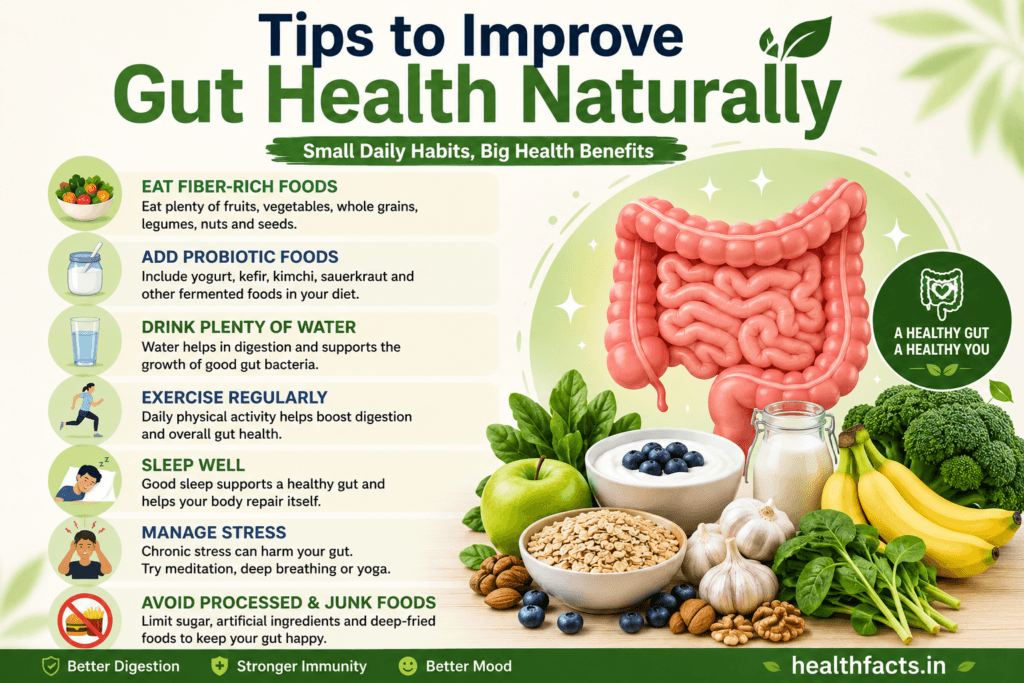
6. Tips to Improve Gut Health Naturally 🌿
- 🥗 Eat at least 25–38 grams of fiber daily.
- 💧 Drink plenty of water.
- 🚶 Exercise regularly.
- 😴 Sleep 7–9 hours every night.
- 🍎 Eat a variety of fruits, vegetables, legumes, and whole grains.
- 🥣 Combine prebiotic foods with probiotic foods like yogurt or kefir for extra gut support. Experts increasingly recommend a diverse, fiber-rich diet rather than focusing on a single “superfood.”
7. Final Thought 🌟
Adding more prebiotic foods to your daily meals is one of the easiest and most natural ways to improve gut health. Foods like garlic, onions, oats, apples, bananas, beans, flaxseeds, and avocados feed the beneficial bacteria that help keep your digestive system healthy. Over time, a diet rich in different plant foods can support stronger immunity, better digestion, and overall wellness. Start slowly if you’re not used to eating a lot of fiber, and gradually increase your intake while drinking plenty of water.
FAQs
1. What is the best prebiotic food?
Chicory root is one of the richest natural sources of prebiotic fiber, but garlic, onions, oats, and bananas are also excellent everyday choices.
2. How long does it take for prebiotics to improve gut health?
Many people notice digestive improvements within 2–4 weeks, though long-term benefits come from consistent healthy eating.
3. Can I eat prebiotic foods every day?
Yes, Most healthy adults can safely enjoy a variety of prebiotic-rich foods daily.
4. Are prebiotics better than probiotics?
Neither is better, They work best together prebiotics feed beneficial bacteria, while probiotics add beneficial bacteria.
5. Can prebiotics cause gas or bloating?
Yes, If you suddenly eat a lot of fiber, you may experience temporary gas or bloating. Increase your intake gradually and stay hydrated.

Hi, I’m Shishpa, founder of Healthfacts.in. I am a passionate health blogger focused on Mental wellness, Diabetes care, Weight management, and natural remedies. My goal is to provide easy, research-based and practical health advice that anyone can follow at home.