
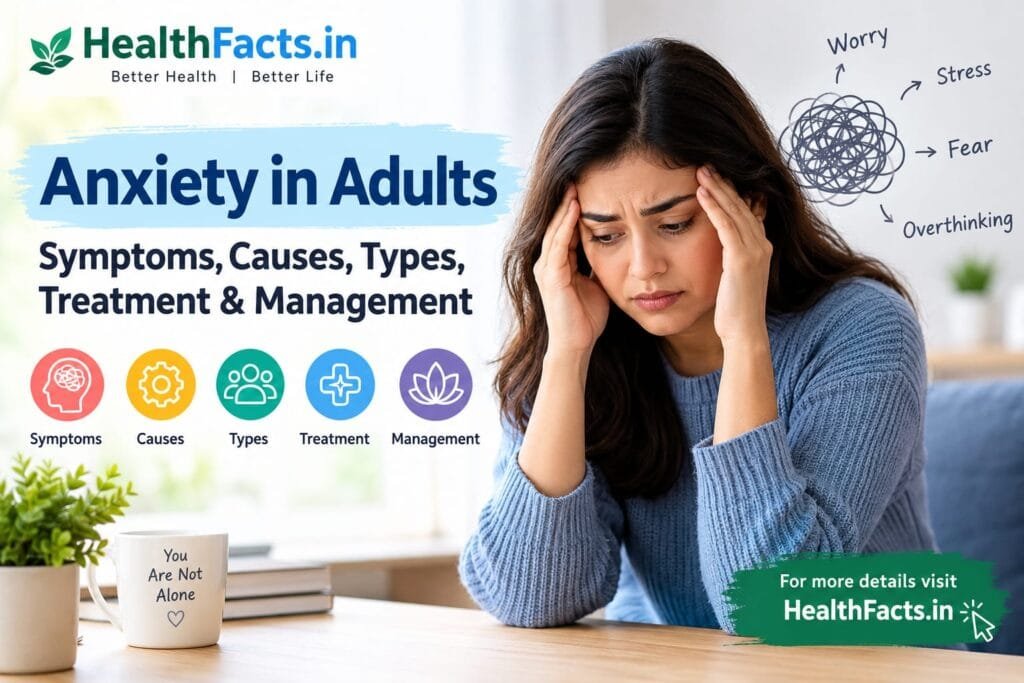
Anxiety in Adults: Symptoms, Causes, and management
Feeling worried or nervous from time to time is a normal part of life. You may feel anxious before an interview, an exam, an important meeting, or a difficult conversation.
However, anxiety can become a problem when fear, worry, or nervousness happens often, feels difficult to control, or starts affecting daily life.
Anxiety in adults can affect thoughts, emotions, sleep, relationships, work, and even the body. The good news is that anxiety can often be managed with healthy lifestyle changes, therapy, support, and, when needed, medication.
In this article, we will explain what anxiety is, common symptoms, possible causes, and 7 effective ways to manage anxiety in adults.
1. What Is Anxiety?
Anxiety is the body’s natural response to stress or a perceived threat.
When you feel anxious, your brain may prepare your body to deal with danger. This can cause changes such as a faster heartbeat, tense muscles, sweating, or rapid breathing.
A small amount of anxiety can sometimes be helpful. For example, it may help you prepare for an important task.
But anxiety may become a concern when:
- 😟 You worry excessively about everyday situations.
- 🔄 Your worries keep coming back.
- 🧠 You find it difficult to control your thoughts.
- 😴 Anxiety affects your sleep.
- 💼 It interferes with work or studies.
- ❤️ It affects relationships or social activities.
- 🚫 You start avoiding places or situations because of fear.
- 📅 Symptoms continue for a long time and interfere with daily life.
Anxiety is not simply “overthinking.” For some people, it can become a serious mental health condition that needs professional help.
📌 Also Read
2. 🔍 Common Symptoms of Anxiety in Adults
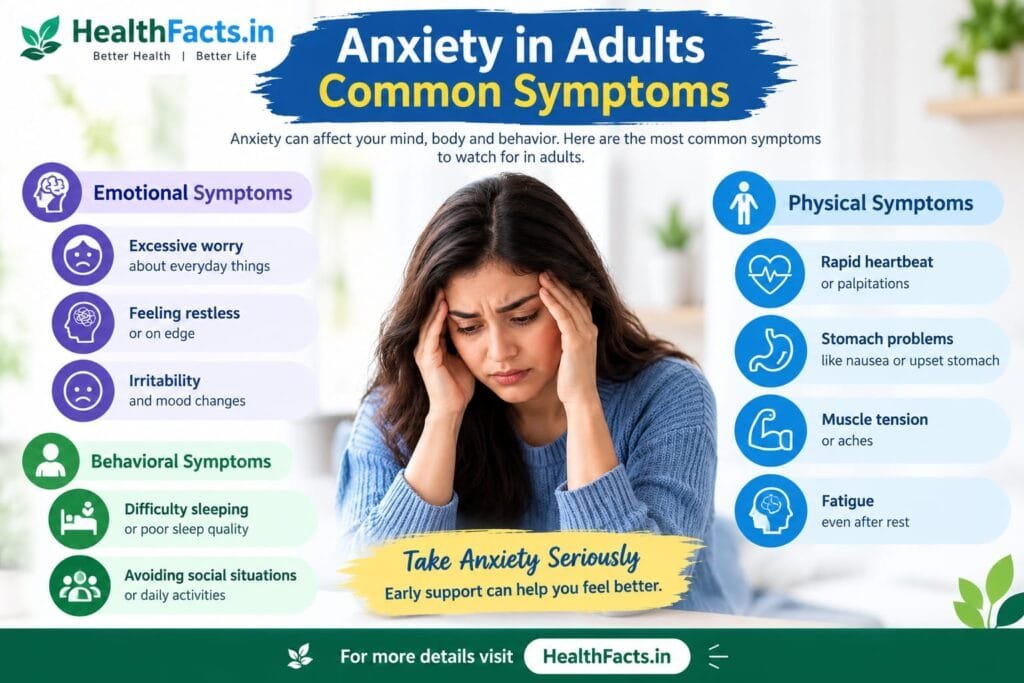
Anxiety can affect the mind and body. Symptoms are different from person to person.
🧠 Emotional and Mental Symptoms
Common mental symptoms include:
- Constant worrying
- Feeling nervous or restless
- Feeling something bad may happen
- Difficulty concentrating
- Racing thoughts
- Trouble making decisions
- Feeling overwhelmed
- Irritability
- Difficulty relaxing
- Fear of losing control
- Thinking repeatedly about possible problems
Sometimes, a person may know that their worries are excessive but still find them difficult to stop.
❤️ Physical Symptoms of Anxiety
Anxiety can also produce physical symptoms.
These may include:
- ❤️ Fast or pounding heartbeat
- 😮💨 Shortness of breath or rapid breathing
- 💦 Sweating
- 🤲 Shaking or trembling
- 😣 Muscle tension
- 🤢 Upset stomach or nausea
- 🤕 Headaches
- 😴 Tiredness
- 🌀 Dizziness or feeling lightheaded
- 😬 Feeling restless
- 🫀 Chest discomfort
- 🥶 Feeling hot or cold
- 🚽 Changes in bowel habits
These symptoms can sometimes feel frightening. Some people may worry that they are having a serious physical problem.
If you have new, severe, or unexplained physical symptoms, especially chest pain, difficulty breathing, fainting, or other emergency symptoms, seek urgent medical care rather than assuming they are caused by anxiety.
3. 🧩 Common Causes of Anxiety in Adults
Anxiety in adults can develop due to a combination of psychological, physical, and lifestyle factors. While occasional anxiety is a normal part of life, long-term or intense anxiety often has deeper underlying causes.
- Work and Career Stress :=> Heavy workloads, job insecurity, long working hours, and pressure to perform can trigger ongoing anxiety.
- Financial Problems :=> Debt, low income, rising expenses, or fear of financial instability are common causes of anxiety in adults.
- Relationship and Family Issues :=> Conflicts with partners, family responsibilities, caregiving duties, or emotional stress in relationships can increase anxiety levels.
- Past Trauma or Stressful Experiences :=> Traumatic events such as accidents, abuse, loss of a loved one, or childhood difficulties can leave lasting emotional effects that lead to anxiety.
- Health Concerns :=> Chronic illnesses, ongoing pain, hormonal imbalances, or fear of health problems can contribute to persistent anxiety.
- Poor Sleep Habits :=> Lack of quality sleep or irregular sleep patterns can disrupt brain function and worsen anxiety symptoms.
- Lifestyle Factors :=> Excessive caffeine, alcohol, smoking, lack of exercise, and unhealthy eating habits can increase anxiety.
- Excessive Screen Time and Information Overload :=> Constant exposure to social media, negative news, and digital stress can overstimulate the mind and trigger anxiety.
- Personality Traits :=> Perfectionism, low self-esteem, people-pleasing behavior, or fear of failure may make some adults more prone to anxiety.
- Lack of Emotional Support :=> Isolation, loneliness, or difficulty expressing emotions can cause anxiety to build up over time.
4. 🌿 7 Effective Ways to Manage Anxiety in Adults
There is no single solution that works for everyone. A combination of healthy habits, psychological treatment, social support, and professional care may be helpful.
Here are seven practical approaches.
1. 🧘 Practice Slow Breathing and Relaxation
When you feel anxious, your body may become tense and your breathing may become faster.
Slow, comfortable breathing can help you focus on the present moment and reduce physical tension.
Try this simple approach:
- Sit somewhere comfortable.
- Relax your shoulders.
- Breathe in slowly.
- Breathe out slowly.
- Avoid forcing very deep breaths.
- Repeat for a few minutes.
- Focus your attention on the sensation of breathing.
You can also try relaxation methods such as:
- Meditation
- Progressive muscle relaxation
- Mindfulness
- Gentle stretching
- Yoga
The goal is not to force anxiety to disappear immediately. Instead, you are giving your body and mind a chance to settle.
2. 🏃 Exercise Regularly
Physical activity can support mental health and may help reduce stress and anxiety.
You do not need an expensive gym membership.
Try activities such as:
- 🚶 Walking
- 🚴 Cycling
- 🏊 Swimming
- 🧘 Yoga
- 🏋️ Strength training
- 💃 Dancing
- 🏃 Light jogging
Start with an amount of activity that feels realistic for you.
Even a short walk can be a good starting point if you have been inactive.
Regular exercise may also improve sleep and overall well-being.
3. 😴 Improve Your Sleep Routine
Good sleep is an important part of managing stress.
Try to build a consistent sleep routine.
Helpful habits include:
- Go to bed and wake up around the same time each day.
- Keep your bedroom comfortable and quiet.
- Reduce stimulating activities before bedtime.
- Avoid large amounts of caffeine, especially later in the day.
- Limit alcohol.
- Keep phones and other distractions away when possible.
- Use relaxing activities before bed.
If anxiety or another problem regularly prevents you from sleeping, talk with a healthcare professional.
4. ☕ Reduce Caffeine and Other Triggers
If you frequently feel anxious, consider how much caffeine you consume.
Common sources include:
- Coffee
- Energy drinks
- Strong tea
- Cola and other caffeinated beverages
- Some pre-workout products
You do not necessarily need to stop caffeine completely. However, reducing your intake may help if caffeine makes your symptoms worse.
Also pay attention to other personal triggers.
For example, you might notice that anxiety increases after:
- Poor sleep
- Skipping meals
- Excessive social media use
- Heavy workloads
- Alcohol use
- Certain stressful situations
Keeping a simple symptom diary can help you identify patterns.
5. 🧠 Consider Therapy
Therapy can be very helpful for adults with anxiety.
One commonly used treatment is cognitive behavioral therapy (CBT).
CBT can help you understand the connection between:
Thoughts → Feelings → Behaviors
For example, you may have a thought such as:
“Something terrible is going to happen.”
That thought can increase fear and cause you to avoid the situation.
Therapy can help you recognize unhelpful thinking patterns and develop healthier ways to respond.
A qualified mental health professional can help determine which type of therapy is appropriate for you.
6. 🤝 Stay Connected With Supportive People
Anxiety can make people withdraw from friends and family.
However, staying connected can provide emotional support.
Consider:
- Talking with someone you trust.
- Spending time with family.
- Meeting a friend for a walk.
- Joining a support group.
- Speaking with a counselor or therapist.
- Asking for help when you feel overwhelmed.
You do not have to explain everything perfectly.
Sometimes simply saying “I have been feeling very anxious lately” can be a good first step.
7. 🩺 Get Professional Help When Needed
If anxiety is persistent or seriously affecting your life, professional help is important.
A healthcare professional can:
- Ask about your symptoms.
- Review your medical history.
- Look for possible physical causes.
- Assess your mental health.
- Discuss treatment options.
- Recommend therapy or other support.
- Consider medication when appropriate.
Medication can be helpful for some people, but it should be taken only under the guidance of a qualified healthcare professional.
Do not start, stop, or change anxiety medication on your own.
5. 🧠 Types of Anxiety Disorders
“Anxiety” is a broad term. There are several types of anxiety disorders.
Some include:
Generalized Anxiety Disorder (GAD)
People with GAD may experience excessive and persistent worry about multiple areas of life, such as work, health, family, or finances.
Panic Disorder
This involves recurrent panic attacks and may include intense fear and physical symptoms such as a racing heart, sweating, trembling, or shortness of breath.
Social Anxiety Disorder
People with social anxiety disorder may experience intense fear or anxiety in social or performance situations because they are worried about being judged or embarrassed.
Specific Phobias
A specific phobia involves intense fear of a particular object or situation, such as heights, flying, certain animals, or needles.
Other Anxiety Conditions There are other anxiety-related conditions, and symptoms can overlap. A healthcare professional can help determine what is happening
6. 🚨 When Should You Seek Immediate Help?
Most anxiety symptoms are not emergencies, but some symptoms should never be automatically blamed on anxiety.
Seek urgent medical attention for symptoms such as:
- Severe or new chest pain
- Severe difficulty breathing
- Fainting or loss of consciousness
- Sudden weakness or confusion
- Severe symptoms that feel different from your usual anxiety
- Thoughts of suicide or self-harm
If you are in immediate danger or think you may hurt yourself, contact your local emergency service or go to the nearest emergency department.
7. 🌿 Final Thoughts
Anxiety is a common human experience, but you do not have to simply live with overwhelming anxiety.
Understanding your symptoms is an important first step. Healthy habits such as regular exercise, better sleep, relaxation, reducing caffeine, and staying connected with supportive people may help.
For ongoing or severe anxiety, professional treatment can make a significant difference. Therapy, including CBT, and medication when appropriate can help many people manage their symptoms and improve their quality of life.
❤️ Remember: Asking for help is not a sign of weakness. It is a positive step toward better mental health.
FAQ❓
1. Can anxiety go away on its own?
Mild, temporary anxiety may improve when the stressful situation ends. However, persistent or severe anxiety may require professional support.
2. What is the most common symptom of anxiety?
Excessive worry is a common symptom. Anxiety can also cause physical symptoms such as a racing heartbeat, sweating, muscle tension, and difficulty sleeping.
3. Can anxiety cause physical symptoms?
Yes. Anxiety can cause many physical symptoms, including muscle tension, sweating, trembling, rapid breathing, stomach problems, and a fast heartbeat.
4. Can exercise help anxiety?
Regular physical activity may help reduce stress and support mental well-being. Walking, cycling, swimming, yoga, and strength training are examples.
5. Is anxiety the same as stress?
No. Stress is usually a response to an identifiable challenge or pressure. Anxiety can continue even when there is no immediate threat and may become persistent or excessive.
6. Can anxiety be treated?
Yes. Anxiety disorders can often be effectively managed with treatments such as psychotherapy, lifestyle changes, and, for some people, medication.
7. Should I talk to a doctor about anxiety?
Yes, especially if anxiety is persistent, difficult to control, getting worse, or interfering with sleep, work, relationships, or everyday activities.
The information provided on Healthfacts.in is for general educational and informational purposes only. It is not a substitute for professional medical advice, diagnosis, or treatment.
Always consult a qualified healthcare professional before making any decisions regarding your health, medication, diet, supplements, or treatment.

Hi, I’m Shishpa, founder of Healthfacts.in. I am a passionate health blogger focused on Mental wellness, Diabetes care, Weight management, and natural remedies. My goal is to provide easy, research-based and practical health advice that anyone can follow at home.