
Have you suddenly developed a fever, body aches, tiredness, or a sore throat? 🤒 You may be wondering whether it is the flu (influenza) or simply a common cold.
Flu is a common respiratory infection caused by influenza viruses. It can affect people of all ages, including healthy adults. Flu symptoms often appear suddenly and may make you feel much more unwell than a typical cold.
Knowing the early signs of flu in adults can help you take care of yourself early, reduce the spread of infection, and recognize when medical attention may be needed.
In this article, we will discuss 9 early flu symptoms in adults, causes, risk factors, treatment options, prevention tips, and when to see a doctor.
1. What Is the Flu? 🤒
The flu, or influenza, is a contagious respiratory infection caused by influenza viruses.
It mainly affects the:
- 👃 Nose
- 👄 Throat
- 🫁 Respiratory system
Flu can range from mild to severe. Most healthy adults recover with rest, fluids, and supportive care. However, some people have a higher risk of complications.
Flu is different from the common cold because flu symptoms often develop more suddenly and may cause stronger fever, body aches, chills, and tiredness.
📌 Also Read
2. 9 Early Flu Symptoms in Adults
Flu symptoms can vary from person to person. Some people may have several symptoms, while others may have only a few.
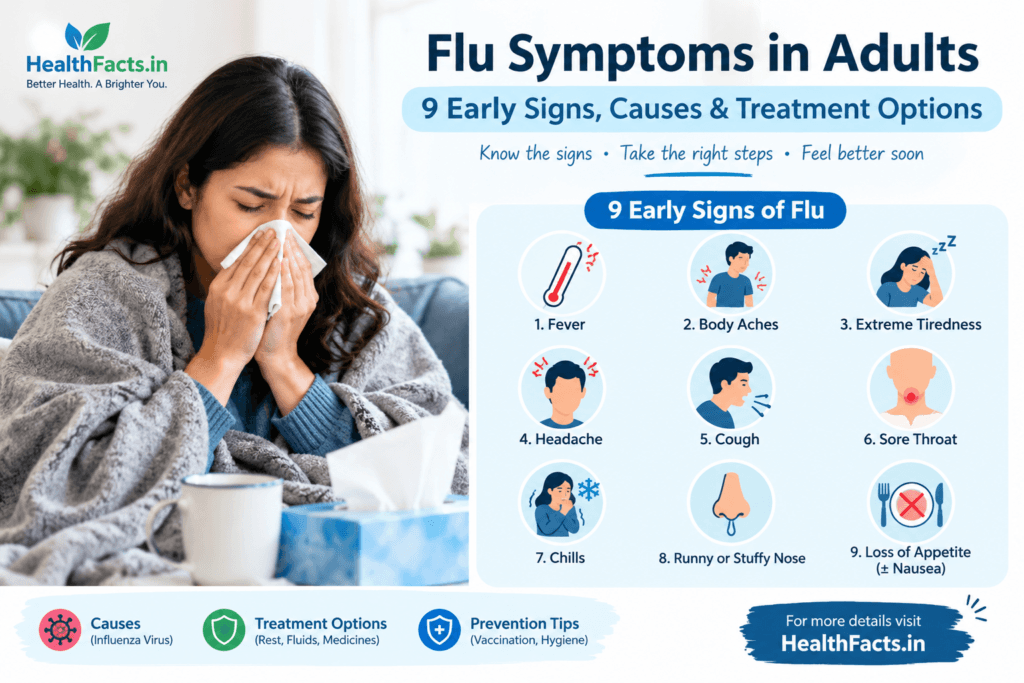
Here are 9 common early signs of flu in adults:
1. Sudden Fever 🌡️
A fever is one of the common symptoms of influenza.
You may suddenly feel hot and develop an elevated body temperature. Fever may occur along with chills or sweating.
However, not everyone with flu develops a fever, so the absence of fever does not completely rule out influenza.
You may also experience:
- Feeling hot or cold
- Chills
- Sweating
- Weakness
- Headache
If your fever is high, persistent, or accompanied by concerning symptoms, contact a healthcare professional.
2. Body Aches and Muscle Pain 💪
Another common flu symptom is muscle and body aches.
You may feel soreness in your:
- Back
- Legs
- Arms
- Shoulders
- Neck
The aches can sometimes be uncomfortable enough to make normal daily activities difficult.
Flu-related body aches are often more noticeable than those associated with a mild cold.
3. Extreme Tiredness 😴
Feeling unusually tired is another common sign of flu.
You may feel:
- Very weak
- Exhausted
- Low on energy
- Unable to concentrate
- Less interested in normal activities
Some people continue to feel tired for days or even longer after their other flu symptoms improve.
Getting enough sleep and allowing your body to rest can support recovery.
4. Headache 🤕
A headache may occur during influenza.
It can happen together with:
- Fever
- Body aches
- Tiredness
- Dehydration
- Sensitivity to light
Drinking enough fluids and getting adequate rest may help with mild headaches.
If you develop a severe or unusual headache, particularly with confusion, a stiff neck, weakness, or other serious symptoms, seek medical care promptly.
5. Dry or Persistent Cough 🫁
A cough is another common flu symptom.
Flu often causes a dry cough, although some people may later produce mucus.
The cough may:
- Start suddenly
- Become worse over several days
- Cause throat irritation
- Continue after other symptoms improve
Try to avoid smoking and secondhand smoke while you are recovering because smoke can further irritate your airways.
6. Sore Throat 😷
A sore or irritated throat can occur with flu.
You may notice:
- Pain when swallowing
- Dryness
- Scratchiness
- Throat irritation
- Cough-related discomfort
Warm fluids and adequate hydration may help soothe a mild sore throat.
If your throat pain is severe or you have difficulty breathing or swallowing, seek medical attention.
7. Chills 🥶
Some adults with flu experience chills.
You may suddenly feel cold or start shaking even when the room temperature feels comfortable.
Chills can occur when your body temperature is changing, particularly when you have a fever.
Wearing comfortable clothing and using a light blanket can help you stay comfortable. Avoid excessive covering if you have a high fever.
8. Runny or Stuffy Nose 👃
Although flu is often associated with fever and body aches, nasal symptoms can also occur.
You may experience:
- Runny nose
- Stuffy nose
- Sneezing
- Nasal irritation
These symptoms can overlap with the common cold and other respiratory infections, so symptoms alone cannot always tell you which virus is responsible.
9. Loss of Appetite and Sometimes Nausea 🤢
Flu may reduce your appetite.
Some adults may also experience:
- Mild nausea
- Reduced interest in food
- Occasional vomiting
- Diarrhea
Digestive symptoms are more commonly reported in children than adults, but they can occur in adults too.
If you are eating less, focus on staying hydrated and choose small, easy-to-tolerate meals.
3. Flu Symptoms vs Common Cold
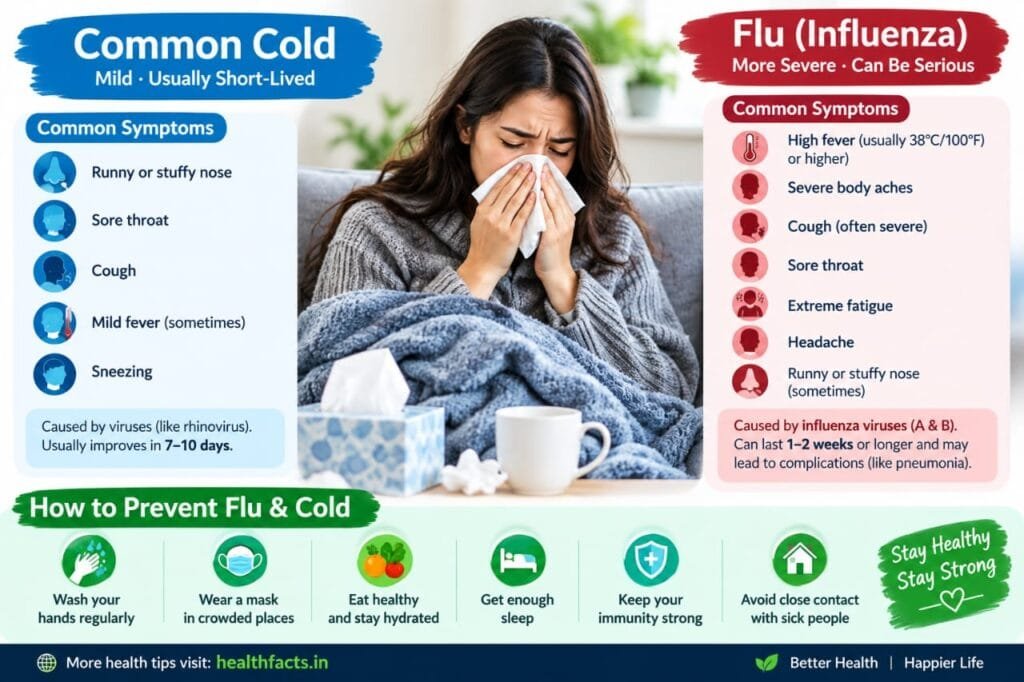
Flu and the common cold can have similar symptoms, but they often differ in how quickly they begin and how strongly they affect you.
Flu may cause:
- 🌡️ Sudden fever
- 💪 Stronger body aches
- 😴 Significant tiredness
- 🤕 Headache
- 🫁 Dry cough
- 🥶 Chills
A common cold may more often cause:
- 🤧 Runny nose
- 🤧 Sneezing
- 😷 Sore throat
- Mild cough
- Mild tiredness
However, symptoms overlap, so testing may be needed to determine the cause of a respiratory illness.
4. What Causes Flu? 🦠
Flu is caused by influenza viruses.
These viruses can spread from an infected person to another person, particularly when an infected person coughs, sneezes, or talks.
You can also become infected after touching contaminated surfaces and then touching your mouth, nose, or eyes.
Influenza viruses change over time, which is one reason seasonal flu continues to circulate.
5. How Does Flu Spread? 🦠➡️👤
Flu can spread through respiratory particles released when an infected person:
- Coughs
- Sneezes
- Talks
- Breathes
The risk of transmission may be higher in crowded or poorly ventilated indoor environments.
You can reduce the risk of spreading flu by:
- 🧼 Washing your hands regularly
- 😷 Covering coughs and sneezes
- 🏠 Staying home when sick when possible
- 🗑️ Disposing of tissues properly
- 🧴 Cleaning frequently touched surfaces
- 🌬️ Improving indoor ventilation
6. Flu Treatment Options 💊
Treatment depends on the severity of your illness, your health history, and how long you have had symptoms.
1. Get Plenty of Rest 🛌
Your body needs energy to fight infection.
Try to:
- Get enough sleep
- Reduce strenuous activity
- Take breaks during the day
- Avoid intense exercise while you are sick
Do not rush back to your normal routine if you still feel significantly unwell.
2. Drink Plenty of Fluids 💧
Fever and sweating can increase fluid loss.
Drink fluids such as:
- Water
- Soups
- Oral rehydration solutions when appropriate
- Warm beverages
If you have vomiting or diarrhea, paying extra attention to hydration is especially important.
3. Use Medicines for Symptom Relief 💊
Some over-the-counter medicines may help reduce symptoms such as fever, headache, or body aches.
Examples include commonly used fever and pain medicines such as acetaminophen (paracetamol) or ibuprofen, when appropriate for the individual.
Always follow the product directions and consider your existing medical conditions and other medicines.
If you are unsure which medicine is suitable for you, ask a doctor or pharmacist.
Do not give aspirin to children or teenagers with suspected viral illness unless specifically directed by a healthcare professional.
4. Antiviral Medicines 💊
Doctors may prescribe antiviral medicines for influenza in certain situations.
Antiviral treatment can be particularly important for people who:
- Have severe or progressive illness
- Are hospitalized
- Have a higher risk of flu complications
Antiviral medicines generally work best when started early, so people at higher risk should contact a healthcare professional promptly after symptoms begin.
Antibiotics do not treat influenza because flu is caused by a virus, not bacteria.
7. When Should You See a Doctor? 🩺
Contact a healthcare professional if your symptoms are severe, getting worse, or not improving as expected.
You should seek urgent medical care if you develop warning signs such as:
- 🫁 Difficulty breathing
- ❤️ Chest pain or pressure
- 🧠 Confusion or difficulty staying awake
- Severe weakness or dizziness
- Signs of severe dehydration
- Seizures
- Symptoms that improve and then suddenly become much worse
People at higher risk of complications should seek medical advice early, even if symptoms initially appear mild.
8. How to Prevent Flu 🛡️
Prevention is an important part of reducing your risk of influenza.
Helpful habits include:
- 💉 Get an annual flu vaccination when recommended for you.
- 🧼 Wash your hands regularly with soap and water.
- 😷 Cover your mouth and nose when coughing or sneezing.
- 🏠 Stay home when you are sick when possible.
- 🚫 Avoid close contact with people who are ill.
- 🌬️ Improve ventilation in indoor spaces.
- 🧴 Clean frequently touched surfaces.
- 🥗 Maintain healthy eating and sleep habits.
Vaccination is one of the main ways to reduce the risk of influenza and its complications.
9. Final Thoughts 🩺
Flu can make adults feel suddenly and significantly unwell. Common early signs include fever, chills, body aches, headache, extreme tiredness, cough, sore throat, nasal symptoms, and reduced appetite.
Most healthy adults recover with rest, fluids, and supportive care. However, influenza can sometimes cause serious complications, especially in people at higher risk.
👉 If your symptoms are severe, worsening, or you have a medical condition that increases your risk of complications, contact a healthcare professional.
FAQ ?
1. What are the first signs of flu in adults?
Early symptoms can include fever, chills, body aches, headache, tiredness, cough, sore throat, and a runny or stuffy nose. Symptoms often develop more suddenly than those of a typical cold.
2. Can you have flu without a fever?
Yes. Not everyone with influenza develops a fever. Other symptoms, such as cough, body aches, tiredness, and headache, can still occur.
3. How long does flu usually last?
Many people recover within several days, but cough and tiredness may last longer. Recovery can vary depending on overall health and whether complications occur.
4. Are antibiotics useful for flu?
No. Antibiotics treat bacterial infections and do not treat influenza viruses. A doctor may prescribe antibiotics only if a bacterial infection develops or is suspected.
5. Can flu be treated at home?
Mild flu can often be managed at home with rest, fluids, and symptom relief. However, people with severe symptoms or a higher risk of complications should contact a healthcare professional.
6. Is flu contagious?
Yes. Influenza is contagious and can spread from infected people through respiratory particles and close contact.
7. When should I worry about flu symptoms?
Seek urgent medical attention if you develop difficulty breathing, chest pain or pressure, confusion, severe weakness, severe dehydration, seizures, or symptoms that improve and then become significantly worse.
The information provided on Healthfacts.in is for general educational and informational purposes only. It is not a substitute for professional medical advice, diagnosis, or treatment.
Always consult a qualified healthcare professional before making any decisions regarding your health, medication, diet, supplements, or treatment.

Hi, I’m Shishpa, founder of Healthfacts.in. I am a passionate health blogger focused on Mental wellness, Diabetes care, Weight management, and natural remedies. My goal is to provide easy, research-based and practical health advice that anyone can follow at home.