
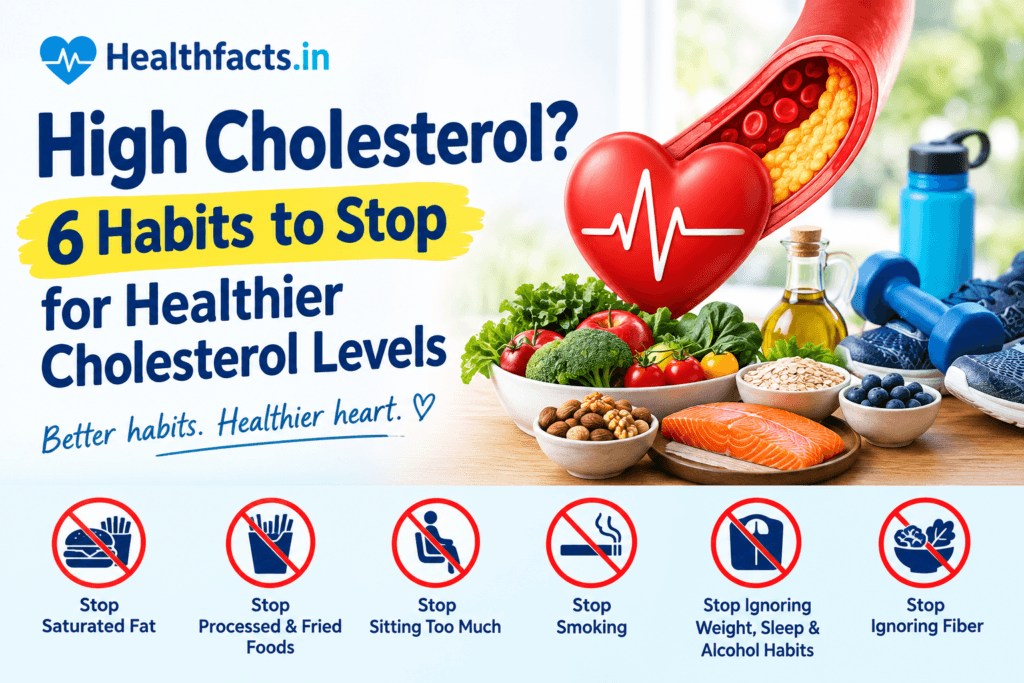
High Cholesterol: 6 Habits to Stop for Healthier Cholesterol Levels
High cholesterol is a common health problem that can increase the risk of heart disease and stroke. The good news is that daily habits can play an important role in managing cholesterol levels.
You may already know that eating healthy foods and exercising are helpful. But it is also important to know which habits may be making your cholesterol harder to control.
In this article, we will discuss 6 habits to stop for healthier cholesterol levels, along with simple lifestyle changes that may support better heart health. ❤️
Medical note: Cholesterol levels can be affected by genetics, medical conditions, medicines, diet, physical activity, and other factors. Lifestyle changes are helpful, but some people may also need medication prescribed by a healthcare professional.
1. What Is Cholesterol? 🩸
Cholesterol is a waxy, fat-like substance that your body needs to work properly. Your body uses cholesterol to make hormones, vitamin D, and substances that help digest food.
However, too much cholesterol in the blood can be harmful.
There are different types of cholesterol:
- LDL cholesterol: Often called “bad” cholesterol because high levels can contribute to plaque buildup in arteries.
- HDL cholesterol: Often called “good” cholesterol because it helps carry cholesterol away from the bloodstream.
- Triglycerides: Another type of fat in the blood. High triglycerides can also increase cardiovascular risk.
Your overall cholesterol picture is more important than focusing on one number alone.
📌 Also Read
2. 6 Habits to Stop for Healthier Cholesterol Levels 🚫
1. Stop Eating Too Many Foods High in Saturated Fat 🍔
One of the most important dietary habits to address is eating too much saturated fat.
Saturated fat can raise LDL cholesterol in many people.
Foods that may contain significant amounts of saturated fat include:
- Fatty cuts of meat
- Processed meats
- Sausages
- Bacon
- Butter
- Ghee
- Full-fat dairy products
- Cream
- Cheese
- Fried foods
- Some bakery products
- Foods made with coconut or palm oil
This does not mean you need to completely avoid every food containing saturated fat.
Instead, try to make healthier substitutions.
Try this instead:
- Choose leaner cuts of meat.
- Remove visible fat from meat.
- Choose low-fat or reduced-fat dairy when appropriate.
- Use unsaturated oils such as olive, canola, or other suitable vegetable oils.
- Eat more beans, lentils, vegetables, fruits, nuts, and whole grains.
👉 Simple goal: Instead of only asking, “What should I stop eating?” ask, “What healthier food can I eat instead?”
2. Stop Eating Too Many Processed and Fried Foods 🍟
Processed and fried foods can make it harder to maintain a heart-healthy diet.
Examples include:
- French fries
- Fried chicken
- Chips
- Packaged snacks
- Instant fried foods
- Processed meat
- Fast-food meals
- Some frozen fried foods
- Commercial baked snacks
These foods may be high in saturated fat, calories, sodium, or refined carbohydrates, depending on the product.
Eating them occasionally does not automatically mean your cholesterol will become high. The bigger concern is regularly eating large amounts as part of your usual diet.
Healthier swaps:
Instead of:
- Fried potatoes → Try baked or roasted potatoes.
- Chips → Try a small serving of unsalted nuts.
- Fried snacks → Try roasted chickpeas or other minimally processed snacks.
- Processed meat → Try beans, lentils, fish, or lean poultry.
🥗 Building your meals around whole and minimally processed foods can make a heart-healthy diet easier to follow.
3. Stop Ignoring Soluble Fiber 🌾
Many people focus on avoiding unhealthy foods but forget about foods that can actively support healthier cholesterol levels.
Soluble fiber is particularly useful because it can help reduce the absorption of cholesterol in the digestive tract.
Good sources include:
- Oatmeal
- Barley
- Beans
- Lentils
- Chickpeas
- Apples
- Pears
- Oranges
- Berries
- Vegetables
- Psyllium husk
Easy ways to eat more fiber:
🥣 Have oatmeal for breakfast.
🫘 Add beans or lentils to lunch or dinner.
🍎 Choose whole fruit instead of fruit juice.
🥗 Add vegetables to your main meals.
🌾 Choose whole grains more often.
Increase fiber gradually
If you suddenly eat a lot more fiber, you may experience:
- Gas
- Bloating
- Abdominal discomfort
Increase fiber slowly and drink enough fluids unless your healthcare professional has advised you to restrict fluids.
4. Stop Sitting for Most of the Day 🪑
Physical inactivity can negatively affect overall cardiovascular health and may contribute to an unhealthy cholesterol profile.
You do not need to start with intense workouts.
Even small changes can help you become more active.
Try these simple habits:
- Walk for 20–30 minutes.
- Take the stairs when practical.
- Walk after meals.
- Spend less time sitting continuously.
- Do household activities.
- Try cycling, swimming, or another activity you enjoy.
- Add strength-training exercises if they are appropriate for you.
🏃 Consistency matters more than perfection.
If you have been inactive for a long time, start slowly and gradually increase your activity.
For adults, health authorities generally recommend regular moderate-intensity physical activity along with muscle-strengthening activities.
5. Stop Smoking 🚭
Smoking is harmful to cardiovascular health and can contribute to damage of the blood vessels.
Quitting smoking is one of the most important lifestyle changes you can make for your heart and overall health.
If you smoke, don’t think that you have to quit without support.
You can talk with a healthcare professional about:
- Nicotine replacement therapy
- Prescription medicines
- Counseling
- Quit-smoking programs
- Support from family and friends
Why quitting matters
Stopping smoking can:
- Reduce cardiovascular risk
- Improve blood vessel health
- Improve overall health
- Help protect the heart and lungs
🚭 There is no need to wait for a “perfect” time to quit.
If you have tried before and returned to smoking, that does not mean you cannot quit successfully. Talk to a healthcare professional about another quit attempt and available support.
6. Stop Ignoring Your Weight, Sleep, and Alcohol Habits 😴
Cholesterol management is not only about one food.
Your overall lifestyle matters.
Maintain a Healthy Weight
For people who are overweight, losing even a modest amount of weight may improve some cholesterol and triglyceride measurements.
You do not need to follow extreme diets.
Focus on sustainable habits such as:
- Eating more vegetables
- Choosing whole foods
- Controlling portion sizes
- Eating enough protein
- Limiting highly processed foods
- Being physically active
Avoid crash diets
Very restrictive diets may be difficult to maintain.
A gradual approach is usually easier to continue over the long term.
Pay Attention to Sleep 😴
Poor sleep and irregular sleep patterns can be associated with poorer cardiovascular health.
Try to develop a regular sleep routine.
Helpful sleep habits include:
- Go to bed and wake up at similar times.
- Keep your bedroom comfortable and quiet.
- Reduce screen use before bedtime.
- Avoid large meals close to bedtime.
- Get regular physical activity during the day.
Most adults should aim for 7 or more hours of sleep per night, although individual needs can vary.
Be Careful With Alcohol 🍷
If you drink alcohol, remember that more is not better for heart health.
Alcohol can contribute to:
- Increased triglycerides
- Extra calorie intake
- High blood pressure
- Other health problems
Some people should avoid alcohol completely.
If you do not drink, there is no need to start drinking for cholesterol or heart health.
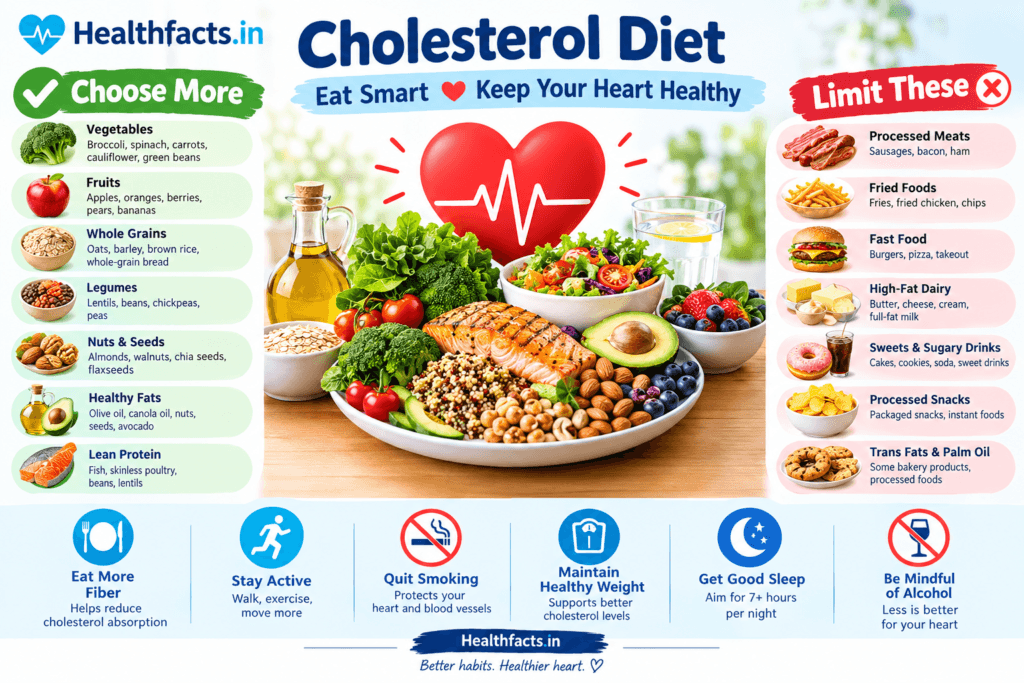
3. What Should You Eat for Healthier Cholesterol? 🥗
Instead of focusing only on foods to avoid, build your diet around foods that support heart health.
Choose more:
🥦 Vegetables
- Broccoli
- Spinach
- Carrots
- Cauliflower
- Green beans
- Other colorful vegetables
🍎 Fruits
- Apples
- Oranges
- Berries
- Pears
- Bananas
🌾 Whole grains
- Oats
- Barley
- Brown rice
- Whole-grain bread
🫘 Legumes
- Lentils
- Beans
- Chickpeas
- Peas
🥜 Nuts and seeds
- Almonds
- Walnuts
- Chia seeds
- Flaxseeds
🐟 Healthy protein sources
- Fish
- Beans
- Lentils
- Skinless poultry
- Other lean protein choices
🫒 Unsaturated fats
- Olive oil
- Canola oil
- Nuts
- Seeds
- Avocado
4. Foods You May Want to Limit 🚫
For healthier cholesterol levels, consider limiting foods that are high in saturated fat, trans fat, added sugars, or excess calories.
Examples include:
- Processed meats
- Fatty meats
- Butter
- High-fat dairy products
- Fried foods
- Many fast foods
- Packaged baked foods
- Sugary drinks
- Highly processed snacks
Remember, limiting does not always mean completely eliminating.
Your overall eating pattern matters.
5. When Should You Get Your Cholesterol Checked? 🩺
High cholesterol often has no obvious symptoms.
You may feel completely healthy even when your cholesterol is elevated.
A blood test called a lipid panel can measure important blood fats, including:
- Total cholesterol
- LDL cholesterol
- HDL cholesterol
- Triglycerides
How often you need testing depends on your age, health history, risk factors, previous cholesterol results, and healthcare professional’s advice.
6. Final Thoughts ❤️
High cholesterol does not always mean you need to completely change your life overnight.
Start with simple, realistic changes.
Try to:
- 🚫 Reduce foods high in saturated fat.
- 🚫 Cut back on highly processed and fried foods.
- 🌾 Eat more soluble fiber.
- 🚶 Move your body regularly.
- 🚭 Stop smoking.
- 😴 Improve your sleep and maintain a healthy weight.
- 🍷 Be mindful of alcohol intake.
The goal is not to follow a perfect diet. The goal is to create healthy habits that you can maintain for the long term.
If you have high cholesterol, talk with your healthcare professional about your lipid results and overall cardiovascular risk. They can help you decide whether lifestyle changes alone are appropriate or whether medication or additional treatment is needed.
FAQs ?
1. What is the main habit to stop for high cholesterol?
Avoiding excessive intake of foods high in saturated fat is an important step. Regular physical activity, not smoking, maintaining a healthy weight, and eating more fiber-rich foods are also important.
2. Can I eat eggs if I have high cholesterol?
For many people, eggs can be included in a balanced diet. However, your overall dietary pattern and individual health situation matter. If you have high cholesterol or cardiovascular disease, discuss your diet with your healthcare professional.
3. Does eating sugar cause high cholesterol?
Eating too much added sugar can contribute to weight gain and may raise triglycerides. However, cholesterol levels are influenced by many factors, including genetics, diet, physical activity, and health conditions.
4. Can walking help lower cholesterol?
Regular walking can support cardiovascular health and may improve some cholesterol and triglyceride measurements. Brisk walking is a simple way to increase physical activity.
5. Which foods are good for high cholesterol?
Foods rich in soluble fiber and unsaturated fats can be useful choices. Examples include oats, barley, beans, lentils, fruits, vegetables, nuts, seeds, and fish.
6. Can high cholesterol cause symptoms?
Usually, high cholesterol does not cause noticeable symptoms. A blood test is generally needed to identify elevated cholesterol.
7. Can high cholesterol be controlled naturally?
Lifestyle changes can help improve cholesterol levels for many people. However, some people need medication because of their cholesterol level, cardiovascular risk, or genetic factors.
The information provided on Healthfacts.in is for general educational and informational purposes only. It is not a substitute for professional medical advice, diagnosis, or treatment.
Always consult a qualified healthcare professional before making any decisions regarding your health, medication, diet, supplements, or treatment.
📚 Sources 6 Sources
- CDC — Preventing High Cholesterol
- WebMD — 6 Lifestyle Keys to Better Cholesterol
- CLS Health — What to Eat (and Avoid) If You Have High Cholesterol
- American Heart Association — Life’s Essential 8™ – How to Control Cholesterol Fact Sheet
- Verywell — 12 Ways to Cut LDL Cholesterol by Changing Your Lifestyle
- NHS — How to lower your cholesterol

Hi, I’m Shishpa, founder of Healthfacts.in. I am a passionate health blogger focused on Mental wellness, Diabetes care, Weight management, and natural remedies. My goal is to provide easy, research-based and practical health advice that anyone can follow at home.