
Bipolar Disorder: Early Signs, Symptoms, Types, and Ways to Manage It
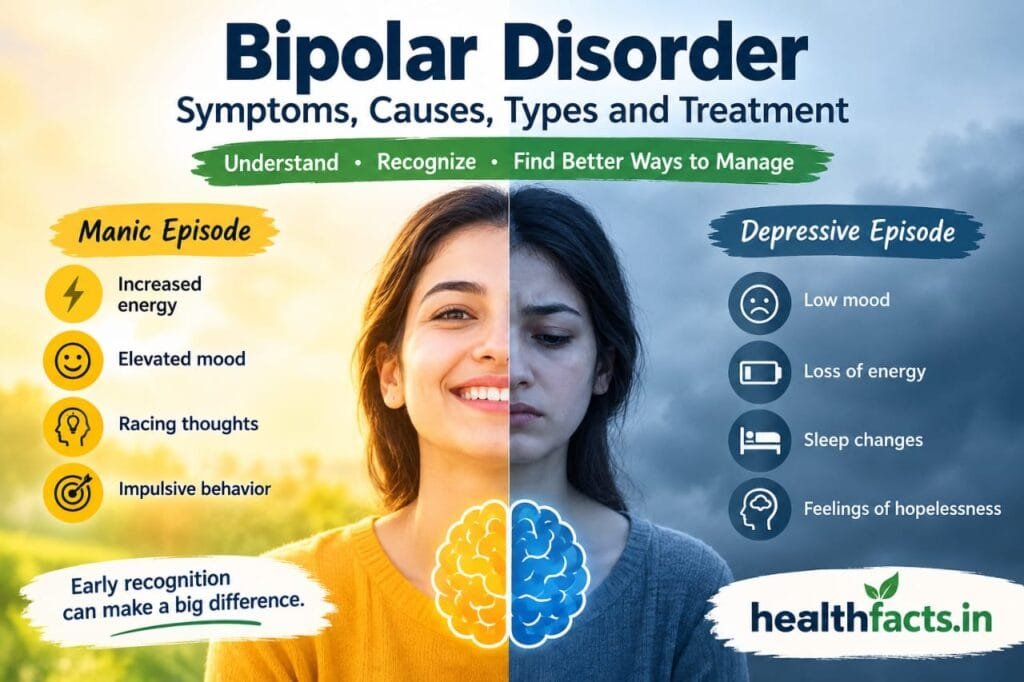
Bipolar disorder is a mental health condition that can cause significant changes in a person’s mood, energy, activity level, thinking, and behaviour. People with bipolar disorder may go through periods of extremely high or irritable mood, called mania or hypomania, and periods of low mood, called depression.
These mood changes are more than normal ups and downs. They can affect relationships, work, school, sleep, and everyday life.
The good news is that bipolar disorder can be managed with proper treatment and support. Many people with bipolar disorder live healthy, happy and meaningful lives. ❤️
In this article, we will explain what bipolar disorder is, its early signs and symptoms, the different types, possible causes, diagnosis, treatment, and ways to manage it.
1. 🧠 What Is Bipolar Disorder?
Bipolar disorder is a mental health condition that causes strong changes in mood, energy, and behavior.
A person with bipolar disorder may have:
- 🔺 Very high energy or an unusually happy/irritable mood => called mania or hypomania
- 🔻 Very low mood, sadness, or loss of interest => called depression
- 😴 Less need for sleep
- 🔻 Low mood or sadness
- 😔 Loss of interest in activities
- 🧠 Difficulty concentrating
- 💭 Changes in thoughts and behavior
These changes can affect sleep, work, relationships, and daily life.
These episodes can last for days or weeks. The pattern and severity can be different from one person to another.
Bipolar disorder is not simply being happy one day and sad the next. Normal mood changes usually do not cause major problems in daily life.
📌 Also Read
2. ⚠️ Early Signs of Bipolar Disorder [WebMD]
Early signs can sometimes be difficult to recognize because they may look like normal changes in mood or personality.
a. Early signs of a manic or hypomanic episode
A person may:
- ⚡ Suddenly have much more energy
- 😴 Need much less sleep without feeling tired
- 🗣️ Talk much more than usual
- 💭 Have racing thoughts
- 🎯 Start many new projects
- 🚀 Feel unusually confident
- 💰 Spend money impulsively
- 🚗 Take unusual risks
- 😡 Become easily irritated or angry
- 🧠 Find it difficult to slow down
b. Early signs of a depressive episode
A person may:
- 😔 Feel sad, empty, or hopeless
- 😴 Sleep too much or too little
- 🛋️ Have very little energy
- 🚫 Lose interest in favorite activities
- 🧠 Have trouble concentrating
- 🍽️ Experience changes in appetite
- 💔 Feel worthless or guilty
- 🐢 Feel unusually slow or tired
- 👥 Avoid family or friends
Having one or more of these symptoms does not automatically mean someone has bipolar disorder. A mental health professional needs to evaluate the person’s symptoms and history.
🔺 What Is Mania?
Mania is a period of unusually elevated, expansive, or irritable mood along with increased energy or activity.
During mania, a person may feel extremely energetic or confident. They may sleep very little and still feel full of energy.
Common signs include:
- Very high energy
- Very little need for sleep
- Fast speech
- Racing thoughts
- Easily distracted
- Feeling unusually powerful or confident
- Excessive spending
- Risky behavior
- Increased activity
- Poor judgment
Severe mania can interfere significantly with daily life and may require urgent medical attention. In some cases, a person may experience psychosis, such as hallucinations or strongly held false beliefs.
🌤️ What Is Hypomania?
Hypomania is similar to mania but is generally less severe.
During hypomania, a person may feel:
- More energetic than usual
- More talkative
- More productive
- More confident
- Less interested in sleeping
- More active or social
However, hypomania can still cause problems, especially when it leads to impulsive decisions or changes in relationships and work.
The person may even feel very good during hypomania and may not realize that their behavior has changed.
2. Types of Bipolar Disorder
There are several recognized forms of bipolar disorder.
1. Bipolar I Disorder
Bipolar I disorder is characterized by at least one manic episode.
A person may also experience depressive episodes, but depression is not required to make a Bipolar I diagnosis.
Mania can be severe enough to require hospitalization or cause major problems with work, relationships, finances, or safety.
2. Bipolar II Disorder
Bipolar II disorder involves:
- At least one hypomanic episode
- At least one major depressive episode
- No history of a full manic episode
Some people think Bipolar II is simply a milder form of bipolar disorder because it does not involve full mania.
However, the depressive episodes can be severe and can cause significant difficulties in daily life.
3. Cyclothymic Disorder
Cyclothymic disorder, also called cyclothymia, involves repeated periods of hypomanic symptoms and depressive symptoms that do not meet the full criteria for hypomanic or major depressive episodes.
The symptoms can continue for a long period and may cause problems with daily functioning.
3. What Causes Bipolar Disorder? 🧠
There is no single cause of bipolar disorder. It may develop due to a combination of factors:
- 🧬 Genetics: Bipolar disorder can run in families.
- 🧠 Brain chemistry: Changes in brain chemicals may play a role.
- 🧠 Brain structure and function: Differences in how the brain works may contribute.
- 😰 Severe stress: Major stressful events may trigger mood episodes in some people.
- 😴 Sleep problems: Major changes or lack of sleep can trigger episodes.
- 🍺 Alcohol or drug use: Substance use can worsen mood changes or trigger episodes.
- 🌪️ Major life changes: Events such as relationship problems, loss, or major changes in routine may contribute.
- 💊 Certain medicines or medical conditions: Some can cause mood symptoms that may look similar to bipolar disorder.
In simple Bipolar disorder usually develops because of a mix of genetics, brain factors, and life or environmental factors.
4. 🧪 How Is Bipolar Disorder Diagnosed?
Bipolar disorder is diagnosed by a doctor or mental health professional based on a person’s symptoms, mood changes, and medical history.
The diagnosis may include:
- 🗣️ Talking about symptoms: The doctor asks about mood, energy, sleep, thoughts, and behavior.
- 📅 Reviewing mood history: They look for past periods of mania, hypomania, or depression.
- 👨👩👧 Family history: A family history of bipolar disorder or other mental health conditions may be considered.
- 💊 Reviewing medicines and substance use: Alcohol, drugs, or some medicines can cause similar symptoms.
- 🩺 Physical check-up: Tests may be done to rule out other medical conditions that can cause similar symptoms.
- 🧠 Mental health assessment: The professional checks how symptoms affect daily life, work, relationships, and sleep.
- 🔍 Using diagnostic criteria: The doctor compares the symptoms with established criteria for bipolar disorder.
There is no single blood test or scan that can diagnose bipolar disorder. A proper diagnosis usually requires a detailed assessment by a qualified healthcare professional.
5. 🌿 Natural Ways to Manage Bipolar Disorder [ Medical News ]
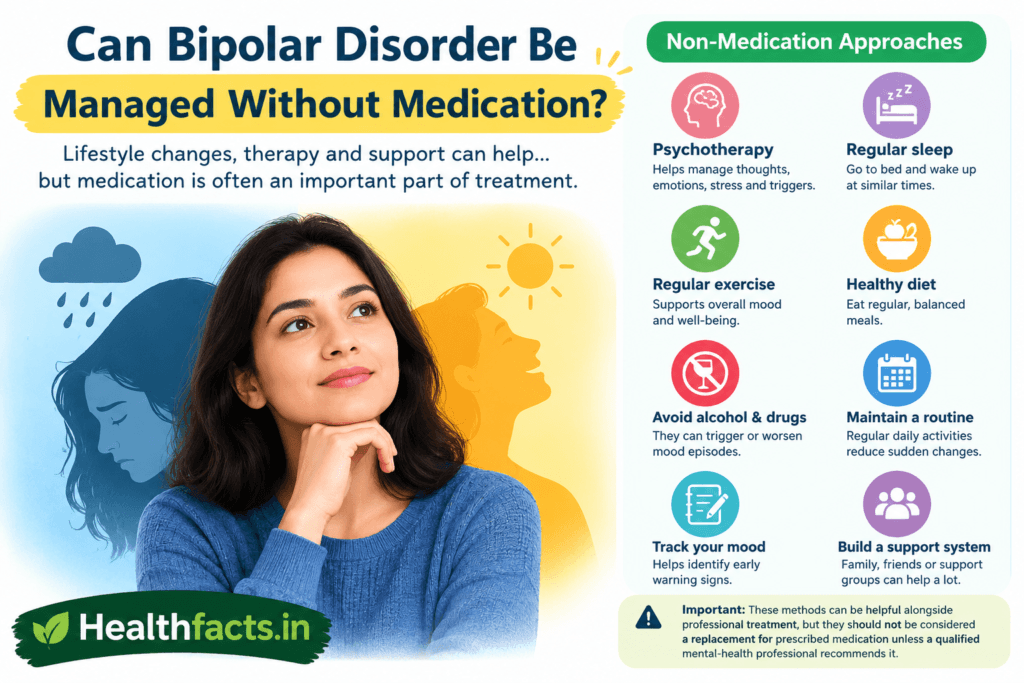
Natural and lifestyle approaches can support mood stability and overall well-being, but they should be used alongside professional treatment not as a replacement for prescribed medication or therapy. The practical ways to manage bipolar disorder naturally is:
😴 1. Maintain a Regular Sleep Schedule
Sleep is one of the most important parts of managing bipolar disorder. Major changes in sleep can sometimes contribute to mood episodes.
Try to:
- Go to bed and wake up at roughly the same time every day.
- Aim for a consistent amount of sleep each night.
- Avoid staying awake all night.
- Keep your bedroom quiet, comfortable, and dark.
- Reduce phone and computer use before bedtime.
- Avoid excessive caffeine late in the day.
- Take sudden changes in sleep seriously.
🧘 2. Practice Stress Management
High stress can make it harder to maintain stable moods.
Helpful techniques may include:
- 🧘 Meditation
- 🌬️ Deep-breathing exercises
- 🧎 Gentle yoga
- 📖 Reading
- 🎵 Listening to calming music
- 🌳 Spending time in nature
- 🎨 Enjoying hobbies
- 🙏 Relaxation or mindfulness practices
You do not need to spend hours doing these activities. Even 10–15 minutes of relaxation may help create a calmer daily routine.
🚶 3. Exercise Regularly
Regular physical activity can support both physical and mental health.
Good options include:
- 🚶 Walking
- 🚴 Cycling
- 🏊 Swimming
- 🧘 Yoga
- 🤸 Stretching
- 🏋️ Light or moderate strength training
Start slowly if you are not active and choose an activity you enjoy.
Avoid turning exercise into an extreme activity, especially if you notice unusually high energy or reduced need for sleep.
🥗 4. Eat a Balanced Diet
There is no specific diet that cures bipolar disorder, but a nutritious diet supports overall health.
Try to include:
- 🥦 Vegetables
- 🍎 Fruits
- 🌾 Whole grains
- 🫘 Beans and lentils
- 🥚 Eggs and other protein sources
- 🐟 Fish, when suitable for your diet
- 🥜 Nuts and seeds
- 🫒 Healthy fats
Try to limit excessive amounts of:
- Highly processed foods
- Added sugar
- Very irregular meals
- Excessive caffeine
Regular meal times can also help maintain a predictable daily routine.
💧 5. Stay Hydrated
Dehydration can contribute to tiredness and make you feel unwell.
Simple habits include:
- Keep water nearby.
- Drink regularly throughout the day.
- Drink more when exercising or in hot weather.
- Choose water instead of sugary drinks most of the time.
☀️ 6. Get Regular Daylight
Getting natural daylight during the day can help support a regular sleep wake rhythm.
You can:
- Take a morning walk.
- Spend time outdoors during the day.
- Open curtains and let daylight into your home.
- Combine daylight exposure with gentle exercise.
However, avoid deliberately changing your sleep schedule or using extreme light exposure without professional guidance.
📝 7. Track Your Mood and Sleep
A mood diary can help you recognize patterns before symptoms become severe.
Each day, record:
- 😊 Mood
- 😴 Hours of sleep
- ⚡ Energy level
- 💊 Medication
- ☕ Caffeine intake
- 🍺 Alcohol or substance use
- 😰 Stress level
- 🏃 Physical activity
- ⚠️ Unusual changes in behavior
Over time, this information can help you and your healthcare professional identify possible triggers and early warning signs.
🚫 8. Avoid Alcohol and Recreational Drugs
Alcohol and recreational drugs can affect:
- Mood
- Sleep
- Judgment
- Impulse control
- Medication effectiveness
They may also make mood symptoms harder to manage.
If stopping alcohol or drugs is difficult, speak with a healthcare professional rather than trying to manage the problem alone.
☕ 9. Limit Excessive Caffeine
Coffee, energy drinks, and other caffeinated beverages can interfere with sleep.
For some people, too much caffeine may increase:
- Restlessness
- Anxiety
- Difficulty sleeping
- Racing thoughts
You do not necessarily have to completely avoid caffeine, but moderation and consistency vare generally better than large amounts or sudden changes.
📅 10. Follow a Daily Routine
A predictable routine can help reduce major changes in sleep, meals, and activity.
Try to maintain regular times for:
- 🛏️ Sleeping
- 🌅 Waking
- 🍽️ Meals
- 💊 Medication
- 🚶 Exercise
- 💼 Work or study
- 🧘 Relaxation
A simple routine can make it easier to notice when your mood or behavior starts changing.
👨👩👧 11. Stay Connected With Supportive People
Social support can be very valuable when managing bipolar disorder.
Stay connected with people you trust, such as:
- Family members
- Close friends
- Support groups
- Therapists
- Doctors or other healthcare professionals
You can also tell a trusted person about your early warning signs so they can help you notice changes that you may not recognize yourself.
🧠 12. Learn Your Early Warning Signs
Knowing your personal warning signs can help you seek help earlier.
Possible signs of increasing mania or hypomania include:
- 😴 Sleeping much less
- ⚡ Unusually high energy
- 🗣️ Talking much more than usual
- 💭 Racing thoughts
- 💰 Unusual spending
- 🚀 Taking more risks
- 😠 Increased irritability
Possible signs of depression include:
- 😔 Persistent sadness
- 💤 Low energy
- 🚫 Loss of interest
- 😴 Major changes in sleep
- 🍽️ Appetite changes
- 🧠 Difficulty concentrating
- 💔 Feelings of hopelessness or worthlessness
If you notice significant changes, contact your healthcare professional early.
🌳 13. Spend Time in Nature
Spending time outdoors can be a simple way to support relaxation and physical activity.
You could:
- Take a short walk in a park.
- Sit outside and read.
- Garden.
- Walk with a friend.
- Spend time in a peaceful outdoor environment.
This should be viewed as a supportive wellness habit, not a treatment for bipolar disorder itself.
📱 14. Reduce Excessive Screen Time
Too much screen use, especially late at night, can interfere with sleep.
Helpful habits include:
- Put your phone away before bedtime.
- Avoid scrolling late at night.
- Turn off unnecessary notifications.
- Keep your bedroom focused on sleep.
- Take regular breaks from social media.
Maintaining good sleep is particularly important for people with bipolar disorder.
6. 🚨 When Should You Seek Help?
Professional help is important if mood changes are interfering with daily life.
Seek medical advice if you notice:
- Severe mood changes
- Major sleep changes
- Unusual risk-taking
- Extreme irritability
- Persistent depression
- Difficulty functioning at work or school
- Problems maintaining relationships
- Repeated periods of unusually high energy
🆘 Get urgent help if:
Someone is:
- Having thoughts of suicide or self-harm
- Unable to care for themselves
- Experiencing severe confusion
- Losing touch with reality
- Becoming dangerously impulsive or aggressive
In an emergency, contact your local emergency service or go to the nearest emergency department.
7. ❌ Common Myths About Bipolar Disorder
Myth 1: Bipolar disorder means having two personalities.
Fact: Bipolar disorder is a mood disorder. It is not the same as having multiple personalities.
Myth 2: People with bipolar disorder are always unstable.
Fact: With appropriate treatment and support, many people manage their symptoms successfully.
Myth 3: Bipolar disorder is just normal mood swings.
Fact: Bipolar mood episodes are more intense and can significantly affect daily functioning.
Myth 4: People with bipolar disorder cannot have successful careers.
Fact: Bipolar disorder does not determine a person’s intelligence, abilities, or potential. With appropriate support and treatment, many people continue their careers and personal goals.
Myth 5: Treatment is only needed during a mood episode.
Fact: Bipolar disorder is a long-term condition, so ongoing care may be important even when symptoms are controlled.
8. 🌟 Final Takeaway
Bipolar disorder is a treatable mental health condition that causes episodes of mood, energy, sleep, and behavior changes. The main types include Bipolar I, Bipolar II, and cyclothymic disorder.
Recognizing early warning signs such as major changes in sleep, energy, mood, activity, and behavior can help people seek support earlier.
Treatment may include medication, psychotherapy, healthy routines, sleep management, mood tracking, and strong social support. ❤️
If you or someone you know is experiencing significant mood changes, it is important to speak with a qualified healthcare professional. Bipolar disorder is a medical condition not a personal weakness and getting help is a sign of strength.
Medical Disclaimer: This article is for educational purposes only and does not replace professional medical advice, diagnosis, or treatment. If you are concerned about bipolar disorder or serious changes in mood or behavior, consult a qualified healthcare professional.
Frequently Asked Questions ❓
1. What is bipolar disorder ?
Bipolar disorder is a mental health condition that causes episodes of unusually high or irritable mood and energy, as well as episodes of depression.
2. What are the first signs of bipolar disorder?
Early signs may include unusual changes in sleep, energy, mood, talking, activity, spending, confidence, or behavior. During depression, a person may experience sadness, low energy, loss of interest, and sleep or appetite changes.
3. Can bipolar disorder be cured?
Bipolar disorder is generally considered a long-term condition rather than something that can simply be cured. However, treatment can help manage symptoms and reduce the impact of mood episodes.
4. Can a person with bipolar disorder live a normal life?
Yes. Many people with bipolar disorder are able to work, maintain relationships, pursue education, and enjoy fulfilling lives with appropriate treatment and support.
5. Is bipolar disorder genetic?
Genetics can play a role. Having a close family member with bipolar disorder can increase risk, but many other factors are involved.
6. Can stress cause bipolar disorder?
Stress can trigger or worsen mood episodes in some people who are vulnerable to bipolar disorder. However, stress alone does not explain why everyone develops the condition.
7. Can bipolar disorder be managed without medication?
Bipolar disorder can be supported with healthy habits and therapy, but for many people, medication is an important part of controlling mood episodes. Stopping prescribed medication without medical advice can increase the risk of mania or depression.
The information provided on Healthfacts.in is for general educational and informational purposes only. It is not a substitute for professional medical advice, diagnosis, or treatment.
Always consult a qualified healthcare professional before making any decisions regarding your health, medication, diet, supplements, or treatment.

Hi, I’m Shishpa, founder of Healthfacts.in. I am a passionate health blogger focused on Mental wellness, Diabetes care, Weight management, and natural remedies. My goal is to provide easy, research-based and practical health advice that anyone can follow at home.