
COPD : Early Signs, Symptoms and Best Treatment Options 😮💨🫁
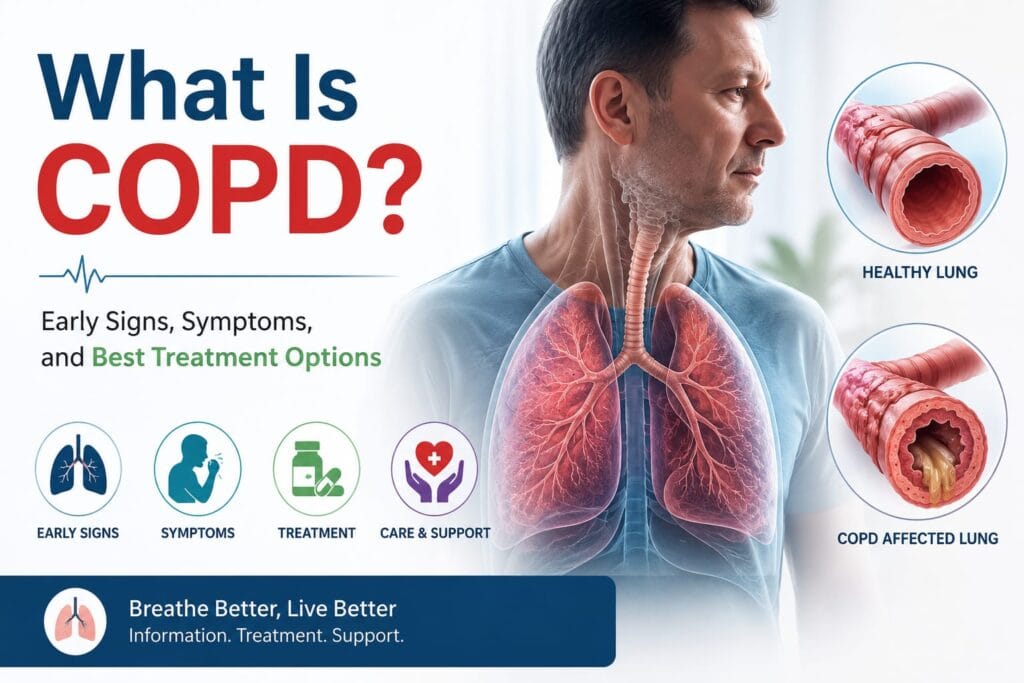
- COPD stands for Chronic Obstructive Pulmonary Disease.
- It is a long-term lung disease that makes breathing difficult. 😮💨
- Chronic means the disease lasts for a long time.
- Obstructive means airflow in the lungs becomes blocked.
- People with COPD may feel short of breath while walking, climbing stairs, or doing simple work.
- COPD damages the airways and tiny air sacs inside the lungs.
- The lungs become swollen and filled with mucus, making breathing harder.
- Healthy lungs work like soft balloons, but COPD lungs become stiff and weak. 🎈
- Less oxygen reaches the body because of damaged lungs.
- Smoking is the main cause of COPD. 🚬
- Air pollution, dust, chemical fumes, and cooking smoke can also cause COPD. 🌫️
- Non-smokers can also develop COPD.
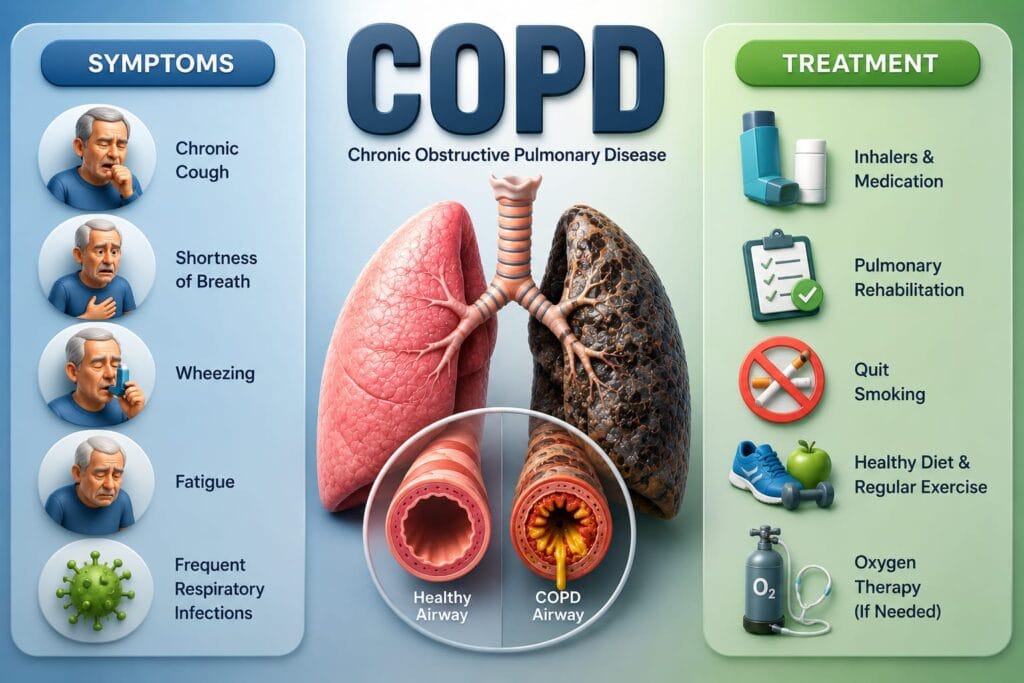
- Common symptoms include cough, wheezing, mucus, and chest tightness.
- COPD usually develops slowly over many years.
- Early treatment can help control symptoms and improve quality of life. 💙
1. Why COPD Happens
– COPD develops slowly over many years. Most people do not notice symptoms in the beginning because the damage happens gradually. The lungs try to repair themselves, but repeated exposure to harmful smoke or pollution eventually weakens them.
– Here are the main reasons why COPD happens:
- 🚬 Smoking cigarettes or tobacco
- 🌫️ Exposure to polluted air
- 🧪 Working with chemicals and dust
- 🔥 Indoor cooking smoke
- 🧬 Genetic conditions
- 😷 Frequent lung infections during childhood
– The scary part is that many people ignore the warning signs until the disease becomes serious. A mild morning cough may seem harmless, but over time it can turn into severe breathing problems. Early awareness can truly save lives.
2. Types of COPD 🌬️
1. Chronic Bronchitis 🤧
- Chronic bronchitis is a common type of COPD.
- It happens when the airways become swollen and filled with mucus.
- This causes a long-lasting cough that may continue for months or years.
- It is often called a “smoker’s cough.” 🚬
- Non-smokers can also get chronic bronchitis.
- Too much mucus blocks the airways and makes breathing difficult.
- Many people feel chest heaviness or congestion.
Common Symptoms of Chronic Bronchitis
- Persistent cough 🤧
- Thick mucus or phlegm
- Wheezing sound while breathing
- Chest discomfort
- Shortness of breath 😮💨
Frequent chest infections
2. Emphysema 😮💨
- Emphysema is another major type of COPD.
- It damages the tiny air sacs inside the lungs.
- These air sacs help oxygen move into the blood.
- Damaged air sacs make breathing very difficult.
- The lungs lose their flexibility and trap air inside.
- People with emphysema often struggle to breathe out fully.
- Simple activities can become tiring and exhausting.
Common Symptoms of Emphysema
- Severe shortness of breath 😮💨
- Tiredness and weakness
- Weight loss
- Barrel-shaped chest
- Difficulty exercising 🏃
- Fast breathing
Important Note 💡
- Many people with COPD have both chronic bronchitis and emphysema together.
- Early treatment can help control symptoms and improve breathing. 💙
3. Common Early Signs and symptoms of COPD 🚨
1. Constant Cough
- A cough that does not go away for weeks or months
- Often called a “smoker’s cough”
- May be worse in the morning
- Can be dry or produce mucus/phlegm
- Common in smokers and people exposed to pollution
2. Shortness of Breath
- Feeling breathless after walking or climbing stairs
- Trouble catching your breath during simple activities
- Breathing may feel heavy or difficult
- Symptoms slowly become worse over time
- Many people mistake it for aging or tiredness
3. Wheezing Sounds
- Whistling sound while breathing
- Happens because airways become narrow
- May occur during exercise or at night
- Often comes with coughing or chest tightness
- Can feel uncomfortable and noisy while breathing
4. Chest Tightness
- Feeling pressure or heaviness in the chest
- Chest may feel tight while breathing
- Breathing deeply can become difficult
- Sometimes causes anxiety or discomfort
- Often happens along with wheezing and cough
5. Excess Mucus
- Too much mucus or phlegm in the throat and chest
- Frequent throat clearing
- Sticky mucus may be white, yellow, or clear
- Mucus often builds up more in the morning
- Can block airways and trigger coughing
6. Feeling Tired All the Time
- Constant tiredness even after small tasks
- Low energy during daily activities
- Feeling weak or sleepy often
- Breathing problems use extra body energy
- Poor sleep from coughing may worsen fatigue
7. Frequent Chest Infections
- Repeated colds, flu, or bronchitis
- Chest infections happen more often than normal
- Longer recovery time after illness
- Damaged lungs struggle to fight germs
- Infections may worsen lung damage over time
8. Difficulty Doing Daily Activities
- Simple tasks become tiring
- Trouble walking long distances
- Climbing stairs feels harder than before
- Carrying groceries or cleaning becomes exhausting
- Many people avoid physical activity without realizing why
9. Blue Lips or Fingernails
- Happens when oxygen levels become low
- Usually seen in severe COPD cases
10. Unintended Weight Loss
- Losing weight without trying
- Common in advanced stages of COPD
4. Best Treatment Options for COPD 🌬️
– COPD treatment focuses on improving breathing, reducing symptoms, preventing lung damage, and helping people live a better life.
– While COPD cannot be completely cured, the right treatment can slow down the disease and improve daily activities.
1. Quit Smoking 🚭
- The most important treatment for COPD
- Helps slow lung damage
- Improves breathing over time
- Reduces coughing and mucus production
- Even long-time smokers benefit after quitting
2. Bronchodilator Inhalers 💨
- Help open narrowed airways
- Make breathing easier
- Reduce wheezing and shortness of breath
- Commonly used every day or during breathing attacks
Types of Bronchodilators
- Short-acting inhalers: Quick relief during sudden symptoms
- Long-acting inhalers: Control symptoms for longer periods
3. Steroid Medications 💊
- Reduce swelling and inflammation in the airways
- Often given as inhalers
- Help prevent COPD flare-ups
- Sometimes used with bronchodilators
4. Oxygen Therapy 🫁
- Used when oxygen levels become very low
- Helps the body get enough oxygen
- Can improve sleep, energy, and breathing
- Severe COPD patients may need oxygen at home
5. Pulmonary Rehabilitation 🏃
- Special program for people with lung disease
- Includes exercise, breathing training, and education
- Helps improve strength and stamina
- Reduces tiredness and breathlessness
6. Breathing Exercises 🌿
Simple breathing techniques can help control symptoms.
Common Exercises
- Pursed-lip breathing: Helps slow breathing
- Diaphragmatic breathing: Strengthens breathing muscles
These exercises help move air in and out of the lungs more effectively.
7. Regular Exercise 🚶
- Walking, cycling, and light workouts improve lung function
- Helps increase energy levels
- Strengthens muscles used for breathing
- Reduces stress and anxiety
8. Healthy Diet 🥗
- Nutritious food supports lung and body health
- Protein helps maintain muscle strength
- Drinking water keeps mucus thinner and easier to clear
- Small meals may help reduce breathing discomfort
9. Vaccinations 💉
People with COPD should get:
- Flu vaccine
- Pneumonia vaccine
- COVID-19 vaccine
Vaccines help prevent serious chest infections that can worsen COPD.
10. Avoid Air Pollution and Smoke 🌫️
- Stay away from dust, smoke, and chemical fumes
- Wear masks in polluted areas
- Improve ventilation at home
- Avoid second-hand smoke
11. Antibiotics for Infections 🦠
- Doctors may prescribe antibiotics during chest infections
- Helps control worsening symptoms
- Important during COPD flare-ups
12. Surgery (For Severe Cases) 🏥
Some severe COPD patients may need surgery.
Surgical Options
- Lung volume reduction surgery
- Bullectomy
- Lung transplant in advanced cases
These treatments are usually considered when other options no longer work well.
Best Lifestyle Tips for COPD Patients ❤️
- Stop smoking immediately
- Stay physically active
- Follow doctor’s advice regularly
- Take medicines on time
- Get enough sleep
- Manage stress and anxiety
Drink plenty of water
5. When to Seek Emergency Help 🚨
-Get medical help immediately if you notice:
- Severe breathing difficulty
- Blue lips or fingernails
- Chest pain
- Confusion or dizziness
- High fever with breathing problems
6. COPD Diagnosis 🏥
- Spirometry Test
Doctors use a breathing test called spirometry to diagnose COPD.
FEV1/FVC<0.70FEV_1/FVC < 0.70FEV1/FVC<0.70
This test measures how much air you can breathe out and how fast you can do it. It is painless and takes only a few minutes. According to WHO, spirometry is the most important test for COPD diagnosis.
2. Imaging and Blood Tests
Doctors may also use:
- Chest X-rays 📷
- CT scans
- Blood oxygen tests
- Arterial blood gas tests
These tests help check lung damage and oxygen levels.
7. Main Causes and Risk Factors 🚬🌫️
| Risk Factor | How It Affects COPD |
| Smoking | Damages airways and air sacs |
| Air Pollution | Irritates lungs |
| Dust & Chemicals | Causes long-term lung damage |
| Indoor Smoke | Common from wood or coal cooking |
| Genetics | Rare inherited conditions |
8. Best Foods and Exercises for COPD 🍎🏋️
– Healthy eating gives the body energy to breathe better. COPD patients often lose weight because breathing burns extra calories.
– Best foods include:
- Fruits and vegetables 🍊🥦
- Lean protein 🍗
- Whole grains 🌾
- Healthy fats 🥜
Avoid:
- Fried foods 🍟
- Sugary drinks 🥤
- Excess salt 🧂
– Simple exercises can also improve lung strength:
- Walking
- Cycling
- Yoga 🧘
- Breathing exercises
Pursed-lip breathing is especially useful for COPD patients because it helps release trapped air from the lungs.
9. Final Thought🌟
– COPD is a serious but manageable lung disease that affects millions of people worldwide. It slowly damages the lungs and makes breathing difficult, especially if ignored in the early stages. Symptoms like chronic cough, wheezing, mucus production, and shortness of breath should never be taken lightly.
– The most powerful step anyone can take is quitting smoking and protecting the lungs from pollution and harmful chemicals. Modern treatments like inhalers, oxygen therapy, pulmonary rehabilitation, and healthy lifestyle habits can help people breathe easier and live longer. Your lungs work for you every second of the day. Taking care of them today can protect your future tomorrow. 💙🫁
FAQs ❓
1. What is the first sign of COPD?
The first sign is usually shortness of breath during normal activities or a constant cough.
2. Can COPD be cured permanently?
No, COPD cannot be cured completely, but treatment can control symptoms and slow progression.
3. Is COPD only caused by smoking?
No, air pollution, dust, chemicals, indoor smoke, and genetics can also cause COPD.
4. Which exercise is best for COPD patients?
Walking, yoga, cycling, and breathing exercises are very helpful.
5. Can young people get COPD?
Yes, especially smokers or people with genetic conditions like Alpha-1 Antitrypsin Deficiency.

Hi, I’m Shishpa, founder of Healthfacts.in. I am a passionate health blogger focused on Mental wellness, Diabetes care, Weight management, and natural remedies. My goal is to provide easy, research-based and practical health advice that anyone can follow at home.