
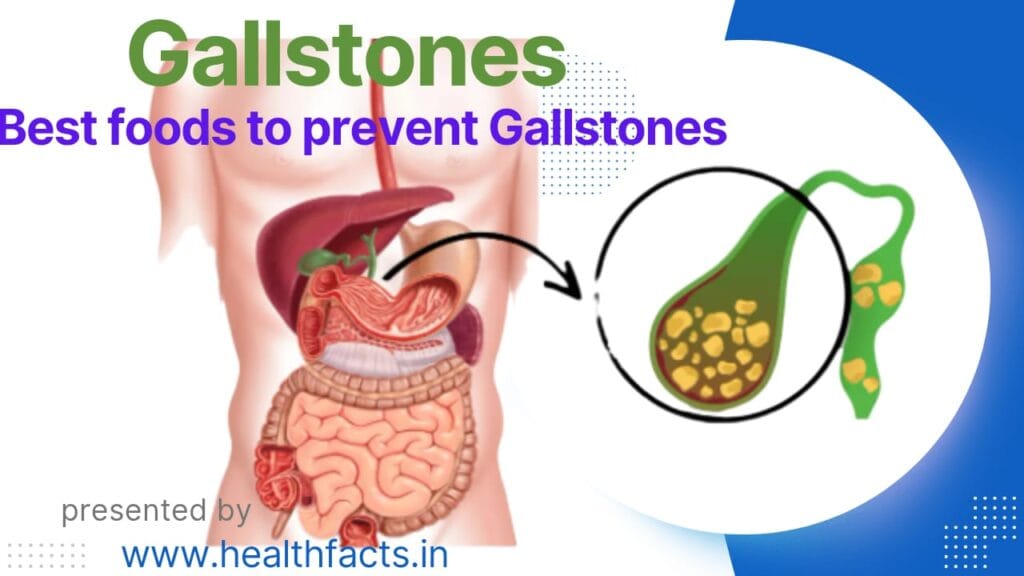
“Best Foods to Prevent Gallstones Naturally without medicines”
– Gallstones are small, hard stones that form in the gallbladder. Many people do not know they have them until pain starts. Gallstones can cause abdominal pain, nausea, bloating, and digestive problems.
– The good news is that healthy eating habits can help reduce the risk of gallstones. Certain foods support the gallbladder and help the body digest fats properly.
– In this guide, we will explore the best foods to prevent gallstones naturally. These foods are simple, affordable, and easy to add to your daily diet.
– Let’s understand best foods to prevent Gallstones naturally step by step. 👇
1. What Is the Gallbladder? 🪨
- The gallbladder is a small organ located under the liver.
- Its main job is to store bile, a digestive liquid produced by the liver. Bile helps the body break down fats from food.
- When you eat fatty foods, the gallbladder releases bile into the digestive system.
- But when bile contains too much cholesterol or not enough bile salts, small stones can form. These stones are called gallstones.
- Diet plays a big role in preventing this problem.
2. Why Diet Matters for Gallstone Prevention 🥗
– Healthy foods can help by:
• Reducing excess cholesterol in bile
• Supporting proper digestion
• Maintaining healthy body weight
• Preventing inflammation
• Improving bile flow
– Eating the right foods regularly can help lower the risk of gallstones naturally.
3. Best Foods to Prevent Gallstones Naturally
👉1. High-Fiber Foods 🌾
– Fiber is one of the best nutrients for gallbladder health.
– Fiber helps improve digestion and reduces cholesterol levels in bile.
– Foods rich in fiber include:
• Oats
• Brown rice
• Whole wheat bread
• Barley
• Lentils
• Beans
• Chickpeas
– Fiber also helps prevent constipation and digestive problems, which supports overall gut health.
– Try to include fiber in every meal.
👉 2. Fresh Fruits 🍎🍓
– Fruits are rich in vitamins, antioxidants, and fiber.
– They help reduce inflammation and support liver and gallbladder function.
– Best fruits for gallbladder health
• Apples
• Pears
• Berries
• Oranges
• Papaya
• Bananas
– Apples are especially helpful because they contain pectin, a type of fiber that helps control cholesterol.
– Try to eat 2–3 servings of fruits daily.
👉 3. Green Leafy Vegetables 🥬
– Green vegetables are packed with nutrients and antioxidants.
– They help detox the liver and support healthy bile production.
– Healthy options include:
• Spinach
• Kale
• Broccoli
• Lettuce
• Fenugreek leaves
• Mustard greens
– These vegetables also contain magnesium, which may help reduce gallstone risk.
– Eating vegetables every day supports better digestion and overall health.
👉 4. Healthy Fats 🥑
– Many people think fat should be avoided completely, but the body actually needs healthy fats.
– Healthy fats help the gallbladder empty regularly, which prevents bile from becoming thick.
– Healthy fat sources
• Avocados
• Olive oil
• Nuts
• Seeds
• Fatty fish
– These fats are much better than fried and processed foods.
– The key is moderation.
👉 5. Nuts and Seeds 🥜
– Nuts and seeds contain healthy fats, fiber, and minerals.
– They support digestion and may help prevent cholesterol buildup in bile.
– Good options include
• Almonds
• Walnuts
• Chia seeds
• Flaxseeds
• Pumpkin seeds
– Eating a small handful of nuts daily can be beneficial for gallbladder health.
– However, avoid salted or fried nuts.
👉 6. Whole Grains 🍞
– Whole grains are a great source of fiber and complex carbohydrates.
– They help maintain stable blood sugar levels and support digestion.
– Examples include
• Brown rice
• Whole wheat
• Quinoa
• Oats
• Millets
– Replacing refined grains with whole grains can reduce the risk of metabolic problems linked to gallstones.
👉 7. Legumes and Beans 🫘
– Legumes are excellent plant-based protein sources.
– They are also rich in fiber, iron, and nutrients.
– Healthy choices include
• Lentils
• Black beans
• Kidney beans
• Chickpeas
• Peas
– These foods help control cholesterol levels and support digestion.
– Adding legumes to meals a few times a week can help protect gallbladder health.
👉 8. Fatty Fish 🐟
– Fatty fish contain omega-3 fatty acids, which help reduce inflammation in the body.
– Best options
• Salmon
• Sardines
• Mackerel
• Tuna
– Omega-3 fats may help improve bile composition and support liver health.
– Try eating fish 2–3 times per week.
👉 9. Low-Fat Dairy Products 🥛
– Dairy foods can be part of a healthy diet when consumed in low-fat forms.
– Good options include
• Low-fat milk
• Yogurt
• Cottage cheese
– These foods provide calcium and protein, which are important for overall health.
– However, high-fat dairy products like heavy cream and butter should be limited.
👉10. Citrus Fruits 🍊
– Citrus fruits are rich in vitamin C, which plays an important role in cholesterol metabolism.
– Examples include
• Oranges
• Lemons
• Grapefruit
• Limes
– Vitamin C helps the body convert cholesterol into bile acids, which may reduce gallstone formation.
– Adding lemon to warm water is a simple daily habit that may support digestion.
👉 11. Garlic 🧄
– Garlic has many health benefits.
– It may help reduce cholesterol levels and support liver health.
– Garlic also contains antioxidants and anti-inflammatory compounds.
– Adding fresh garlic to cooking can support better digestion and metabolism.
👉 12. Turmeric 🌿
– Turmeric is a powerful natural spice known for its anti-inflammatory properties.
– It may help improve bile flow and support liver function.
– Turmeric is commonly used in cooking and traditional medicine.
– Adding turmeric to meals or warm milk can provide digestive benefits.
👉 13. Plenty of Water 💧
– Hydration is often ignored but very important.
– Drinking enough water helps the body:
• Maintain healthy digestion
• Support liver function
• Prevent thick bile
– Try to drink 6–8 glasses of water daily.
– Water supports overall digestive health and may help reduce gallstone risk.
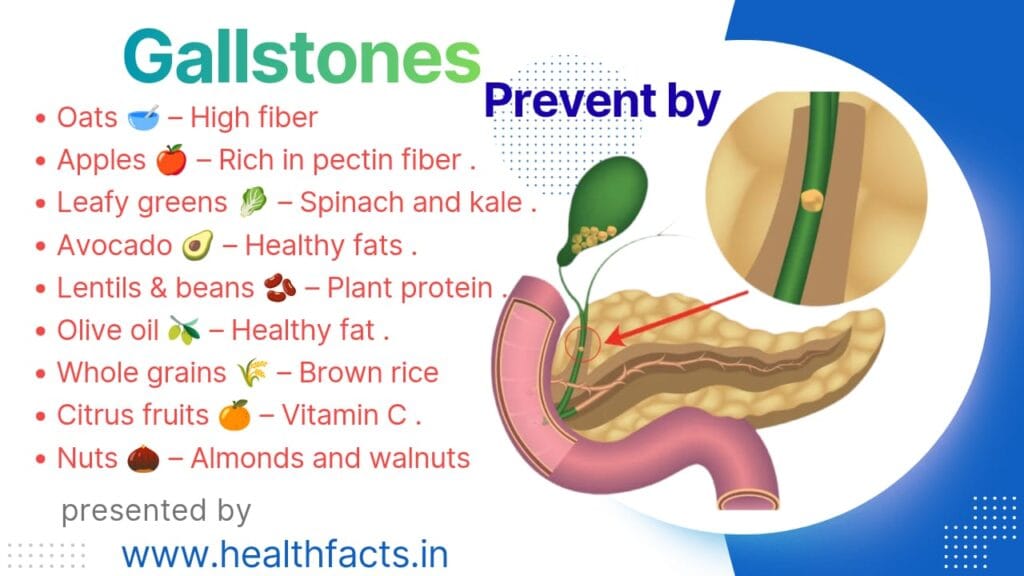
4. Foods to Limit to Prevent Gallstones ⚠️
– While some foods help protect the gallbladder, others may increase gallstone risk.
– Try to reduce:
👉Fried Foods 🍟
Deep-fried foods contain unhealthy fats.
👉Processed Foods 🍔
Packaged snacks and fast foods are high in unhealthy fats and salt.
👉Sugary Foods 🍩
High sugar intake can increase cholesterol levels.
👉Refined Carbohydrates 🍞
White bread, pastries, and sweets should be limited.
👉High-Fat Meats 🥓
Fatty red meats may increase cholesterol in bile.
Reducing these foods supports better gallbladder and digestive health.
5. Lifestyle Tips to Prevent Gallstones 🌿
– Food is important, but lifestyle habits also matter.
Maintain a Healthy Weight ⚖️
Being overweight increases gallstone risk.
Avoid Crash Dieting 🚫
Rapid weight loss can trigger gallstone formation.
Exercise Regularly 🏃
Physical activity improves digestion and metabolism.
Eat Regular Meals ⏰
Skipping meals may slow bile movement.
Manage Stress 🧘
Stress can affect digestion and overall health.
6. Gallstones (Cholelithiasis) – Global Data / Statistics
1. Global Prevalence
- Around 5.5%–6.7% of the world population has gallstones.
2. Prevalence by Region
Region ——————->Prevalence
South America ————>~11.2% (highest)
North America ————> ~8.1%
Europe ——————–> ~6.4%
Africa ———————-> ~6.6%
Asia ————————> ~5.1% (lower compared to others)
3. Gender Difference :
Women: ~7.6% prevalence
Men: ~5.4% prevalence
Women have about 2× higher risk because estrogen increases cholesterol in bile.
7. When to See a Doctor 👩⚕️
– If gallstones cause symptoms, medical advice is necessary.
– Watch for warning signs such as:
• Severe upper abdominal pain
• Pain after fatty meals
• Nausea and vomiting
• Fever and chills
• Yellow skin or eyes
– These symptoms may indicate gallbladder problems that require treatment.
8. Final Thoughts 🌟
- Gallstones are common, but they can often be prevented with healthy lifestyle choices.
- Eating the right foods regularly supports digestion and keeps the gallbladder working properly.
- Foods rich in fiber, fruits, vegetables, whole grains, healthy fats, and lean proteins can help reduce the risk of gallstones.
- At the same time, limiting fried foods, processed snacks, and excess sugar is important.
- Simple habits like drinking enough water, staying active, and maintaining a healthy weight also make a big difference.
- Small daily choices can protect your gallbladder and improve overall digestive health.
- Remember: Prevention is always better than treatment. 💚
9. Medical Disclaimer
This information is only for educational knowledge purpose. It is not a substitute for medical advice, diagnosis, or treatment. Always consult a doctor or qualified healthcare professional for any health concerns.
= FAQ =
1. What are gallstones?
Gallstones are small hard stones that form in the gallbladder from bile substances like cholesterol.
2. What are the early symptoms of gallstones?
Early symptoms may include upper stomach pain, bloating, nausea, and indigestion after fatty meals.
3. Can diet help prevent gallstones?
Yes, eating fiber-rich foods, fruits, vegetables, and healthy fats may help reduce the risk.
4. Which foods are best for preventing gallstones?
Foods like apples, leafy greens, whole grains, nuts, legumes, and healthy oils support gallbladder health.
5. Is coffee good for gallbladder health?
Drinking moderate coffee may help stimulate bile flow and lower gallstone risk.
6. Does drinking water help prevent gallstones?
Yes, staying hydrated helps digestion and keeps bile from becoming too thick.
7. Can weight loss reduce gallstone risk?
Maintaining a healthy weight can reduce risk, but rapid weight loss may increase it.
8. Are gallstones more common in women?
Yes, women are more likely to develop gallstones due to hormonal changes.
9. When should someone see a doctor?
You should see a doctor if you have severe stomach pain, fever, nausea, or yellowing of the skin.
10. Can gallstones be completely prevented?
Gallstones cannot always be prevented, but healthy diet and lifestyle habits can lower the risk.

Hi, I’m Shishpa, founder of Healthfacts.in. I am a passionate health blogger focused on Mental wellness, Diabetes care, Weight management, and natural remedies. My goal is to provide easy, research-based and practical health advice that anyone can follow at home.