
How to manage Generalized Anxiety Disorder (GAD) naturally at home
Generalized Anxiety Disorder (GAD) can feel like your mind never switches off. 🧠⚡
It is like having a worry engine that keeps running all day ,even when there is no real danger or urgent problem.
People with GAD often:
- Worry excessively about everyday things
- Feel restless or “on edge”
- Struggle to relax
- Overthink small situations
- Have trouble sleeping
The worry feels difficult to control, even when you know it may be unnecessary.
1. Understanding Generalized Anxiety Disorder
👉What is Generalized Anxiety Disorder?
Generalized Anxiety Disorder (GAD) is ongoing, excessive worry about everyday things i.e. jobs, health, family, work, or disease. Even small decisions can feel huge. It is not just “being a worrier.” It is constant, overwhelming, and hard to control. 😟
👉Common Symptoms of GAD
People with GAD may experience:
• Constant worrying – Worrying most days, even when there is no clear reason.
• Restlessness – Feeling on edge or unable to relax.
• Racing thoughts – Mind keeps thinking about “what if” situations.
• Fatigue – Feeling tired easily because the brain is always active.
• Trouble concentrating – Difficulty focusing on simple tasks.
• Muscle tension – Tight shoulders, neck pain, or body aches.
• Irritability – Getting upset or frustrated quickly.
• Sleep problems – Trouble falling asleep or staying asleep. 😴
• Physical symptoms – Headaches, stomach upset, sweating, or a fast heartbeat. 💓
2. Why Go for Natural Management of Generalized Anxiety Disorder (GAD)? 🌿
– Living with Generalized Anxiety Disorder (GAD) can feel exhausting. While medication and therapy are important options, many people also choose natural management methods to support their mental health. Here’s why:
1️⃣ Fewer Side Effects
Natural approaches like breathing exercises, yoga, and herbal support often have fewer side effects compared to some medications. This makes them a gentle starting point for many people.
2️⃣ Improves Overall Health
Natural management does not just target anxiety — it improves your whole body.
• Better sleep 😴
• Stronger immunity 🛡️
• Improved digestion
• More energy ⚡
3️⃣ Builds Long-Term Coping Skills
Practices like meditation, journaling, and mindfulness teach your brain how to respond calmly to stress. These are lifelong skills you can use anytime.
4️⃣ Gives You a Sense of Control
Anxiety often makes you feel powerless. Natural habits — like daily walks, healthy eating, and deep breathing — help you feel more in control of your mind and body. 💪
5️⃣ Works Well Alongside Professional Help
Natural methods can safely support therapy or medical treatment (always consult a doctor before combining with medication). They are not a replacement in severe cases, but they can strengthen recovery.
6️⃣ Encourages a Healthy Lifestyle
Regular exercise, balanced meals, proper hydration, and sunlight exposure all reduce stress hormones naturally. 🌞
3. Manage Generalized Anxiety Disorder (GAD) Naturally🌿
1. Building a strong daily routine
Anxiety loves chaos. Routine brings calm.
👉The power of morning habits
How you start your day matters. Instead of grabbing your phone and checking stressful news, try slowing down.
👉Simple 5-Minute morning reset
- Sit quietly.
- Take 5 deep breaths.
- Stretch your arms and shoulders.
- Say one positive sentence: “I can handle today.”
It sounds small. But small actions create stability.
👉Creating a calm evening routine
Turn off screens 30–60 minutes before bed. Dim the lights. Drink herbal tea. Read something light. Let your brain know it is safe to relax.
2. Breathing and relaxation techniques
Your breath is powerful. It is like a remote control for your nervous system.
👉Deep breathing exercises
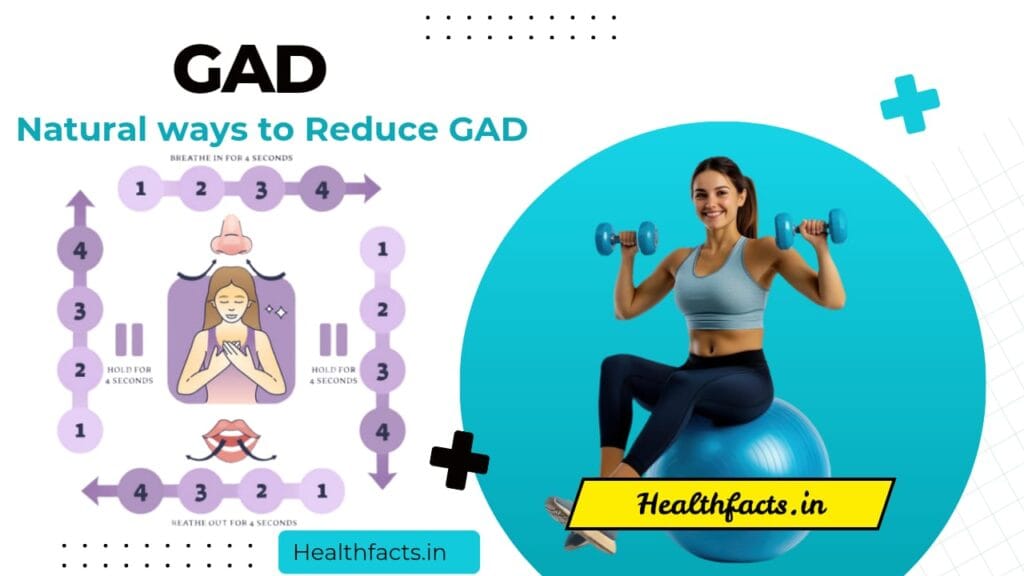
Try the 4-4-4 method:
- Inhale for 4 seconds
- Hold for 4 seconds
- Exhale for 4 seconds
Do this for 2–3 minutes. Your heart rate will slow down.
👉Progressive muscle relaxation
Tighten each muscle group for 5 seconds, then release. Start from your feet and move upward. This teaches your body the difference between tension and calm.
👉Grounding techniques for panic moments
When anxiety spikes, look around and name:
- 5 things you see
- 4 things you feel
- 3 things you hear
- 2 things you smell
- 1 thing you taste
This pulls your brain back to the present moment.
3. The role of exercise in reducing anxiety
Movement is medicine.
👉Best home exercises for anxiety
- Brisk walking
- Light jogging
- Yoga
- Bodyweight exercises
- Dancing in your living room
You do not need a gym membership. Just move.
👉How much exercise do you really need?
Even 20–30 minutes a day helps. Consistency matters more than intensity.
4. Food and nutrition for anxiety relief
What you eat affects how you feel.
👉Anxiety-triggering foods to avoid
- Too much caffeine
- Sugary snacks
- Energy drinks
- Alcohol
That third cup of coffee? It might be fueling your anxiety.
👉Foods that support a calm mind
- Leafy greens
- Whole grains
- Nuts
- Eggs
- Fatty fish like salmon
Balanced blood sugar = balanced mood.
5. Sleep and Anxiety: Breaking the Cycle
Anxiety and poor sleep feed each other.
👉Why sleep matters
Your brain resets at night. Without enough rest, worries feel louder the next day.
👉Tips for better sleep at home
- Go to bed at the same time
- Keep your room cool and dark
- Avoid late-night scrolling
- Use white noise if needed
Sleep is not lazy. It is healing.
6. Limiting news and social media
👉 The Anxiety-information overload link
Constant news updates, specially in the U.S., can increase stress. Try limiting news to once or twice daily. Unfollow accounts that trigger you. Protect your mental space.
7. Journaling and emotional release
Your thoughts do not need to stay trapped in your head.
👉How to start anxiety journaling
Write down your worries. Then ask:
- Is this fact or fear?
- Can I control this?
Often, anxiety exaggerates.
👉Thought-challenging technique
Replace “What if everything goes wrong?” with “What if things work out?”
It sounds simple ,but reframing thoughts changes brain patterns over time.
8. The Power of connection
Isolation increases anxiety.
👉Staying connected in a busy American lifestyle
Call a friend. Text someone. Join a hobby group. Even short conversations help regulate emotions.
👉When to join support groups
Online or local anxiety support groups can remind you that you are not alone.
9. Mindfulness and meditation
You do not have to sit cross-legged for hours.
👉Simple beginner meditation
Set a timer for 5 minutes. Focus only on your breathing. When your mind wanders (it will), gently bring it back.
That is it.
👉Mindfulness in daily activities
Wash dishes slowly. Notice the water. Walk and feel your steps. Mindfulness is paying attention on purpose.
10. Natural supplements
👉 Common supplements people use
Some Americans try:
- Magnesium
- Omega-3
- Chamomile
- L-theanine
👉 Talk to a doctor first
Always consult a healthcare provider before starting supplements. Natural does not always mean safe.
🌟 Important Reminder
Natural management works best with consistency. Results may take time. If anxiety:
- Lasts for many months
- Interferes with work or relationships
- Causes panic attacks
- Leads to depression
Please seek professional help. Therapy and medical support can be life-changing.
4. Final Thought
- Managing GAD naturally at home is about small, steady habits. There is no magic switch ,but daily breathing, movement, better sleep, healthy food, and connection slowly build resilience.
- Think of it like strengthening a muscle. At first, it feels weak but over time, it grows stronger.
- You do not have to eliminate anxiety completely. You just need tools to handle it. Start small. Pick one habit today, tomorrow, add another.
- Always remember, if anxiety feels overwhelming, professional help is always a smart and brave choice.
5. Medical Disclaimer
This information is only for educational knowledge purpose. It is not a substitute for medical advice, diagnosis, or treatment. Always consult a doctor or qualified healthcare professional for any health concerns.
FAQs
1. Can GAD go away naturally?
Symptoms can improve with lifestyle changes, but some people also need therapy or medication.
2. How long does it take to see improvement?
Small improvements can appear in a few weeks if habits are consistent.
3. Is exercise helpful for anxiety?
Yes, Regular movement lowers stress hormones and boosts mood chemicals.
4. Should I stop caffeine completely?
Not always, but reducing it often helps lower anxiety symptoms.
5. What is the fastest natural way to calm anxiety?
Deep breathing is usually the quickest tool to reduce physical symptoms.

Hi, I’m Shishpa, founder of Healthfacts.in. I am a passionate health blogger focused on Mental wellness, Diabetes care, Weight management, and natural remedies. My goal is to provide easy, research-based and practical health advice that anyone can follow at home.