
= Bipolar Disorders in USA, India and world: Types, Causes, Symptoms and Treatments=
1. Whats is Bipolar Disorders ?
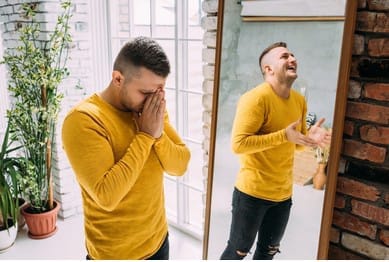
- Bipolar disorders, formerly called manic depression, is a mental health condition that causes extreme mood swings , shifting between emotional highs (mania/hypomania) and lows (depression) .
- People with bipolar disorder experience strong mood swings.
- These include:
- Mania: feeling very happy, energetic, or irritable
- Depression: feeling very sad, tired, or hopeless
- It affecting energy, activity, and focus.
- These cycles disrupt daily life, but can be managed with treatment.
- Bipolar disorder affects people in the USA, India, and many other countries around the world.
- It affects millions of people around the world, regardless of age, gender, or country
2. Types of Bipolar Disorders
- Bipolar disorders has different types.
- Each type is based on how strong the mood changes and how long they last.
- Bipolar I Disorder
- This type includes very strong high moods, called mania.
- During mania, a person may feel extremely energetic, talk a lot, sleep very little, or make risky decisions.
- These episodes can be serious and may need hospital care immediately .
- Bipolar II Disorder
- Bipolar II includes milder high moods (hypomania) and deep low moods (depression).
- The high moods are not as severe as Bipolar I, but the depressive episodes can strongly affect daily life.
- Cyclothymic Disorder
- This type involves mild mood swings.
- The person has ups and downs for a long time, often for two years or more.
- The symptoms are not very severe but happen often.
- Other Types of Bipolar Disorders
- Some people have mood symptoms that do not clearly match the main types.
- Doctors diagnose and treat these based on the person’s symptoms.
In Simple
- Bipolar I: Very strong highs
- Bipolar II: Mild highs and strong lows
- Cyclothymia: Long-term mild mood swings
With the proper treatment and support, people with all types of bipolar disorder can live healthy and balanced lives.
3. Symptoms of Bipolar Disorders
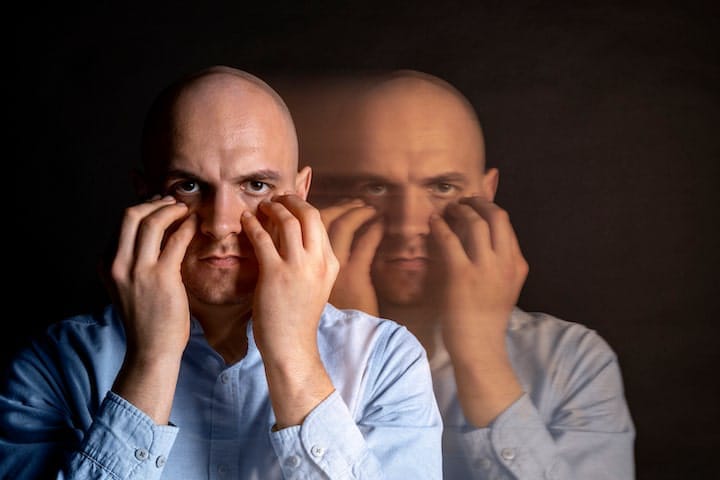
The symptoms of bipolar disorders depend on the type of mood episode of a person . There are high mood episodes and low mood episodes.
- High Mood Symptoms (Mania or Hypomania) : In high mood episode, a person may :
- Feel very happyness, excited, or energetic
- Talk more or talk very fast
- Need very little sleep
- Have racing thoughts
- Feel over confident or powerful
- Get easily distracted
- Make risky decisions, like overspending
2. Low Mood Symptoms (Depression) : In low mood episode, a person may:
- Feel sad, empty, or hopeless
- No interest in daily activities
- Feels tired or weak all time
- Sleep too much or too little
- Have trouble concentrating
- Feel guilty or worthless
- Think about death or suicide
3. Other Common Symptoms
- Mood changes that last for days or weeks
- Difficulty in managing work, school, or relationships
- Periods of normal mood between episodes
Symptoms can be different for each person. Some has mild episode, while others have severe episodes. Bipolar disorders can be treated with proper medication ,help and support.
4. Causes of Bipolar Disorders
Bipolar disorders does not have single cause. It is usually happens due to mix of reasons. the main cause of bipolar disorder is given below
- Family history:
If someone in your family has bipolar disorder, the chance can be higher. It can run among the family, but it is not guaranteed. - Brain chemistry:
Our brain uses chemicals to control mood and emotions. When these chemicals are imbalanced, then mood swings can happen. - Stressful life events:
Lot of stress, trauma, or sudden life changes—like death of a loved one, money problems, family dispute or relationship issues—can trigger symptoms. - Sleep problems:
Not sleeping or having irregular sleep can make mood change . - Hormone changes:
Changes in hormones may also affect mood and hormone play a crucial role in mood change.
Important to know
Bipolar disorder is not a personal fault. It is not caused by weakness or bad choices. A bipolar disorder affected person can live healthy and meaningful lives with the proper treatment ,right help and care .
5 . Treatment of Bipolar Disorders
- Medicines :
- Doctors usually prescribe medicines to control and treat mood swings. These medicines are very important to reduce extreme highs (mania) and lows (depression). It is most important to take medicines timely and not stop them without doctor’s advice.
- Psychotherapy (Talk Therapy) :
- Therapy is also play crucial role to overcome the bipolar disorder. Therapy helps a person understand their thoughts, feelings, and behavior. Therapy helps in stress control, and recognize early signs of mood changes.
- Regular Sleep Routine:
- Sleeping and waking up at the same time every day helps to keep moods stable. Lack of sleep can trigger mood episodes.
- Healthy Lifestyle :
- By taking healthy food every day , exercise regularly, and doing yoga or meditation help improve mental balance.
- Avoid Alcohol:
- Alcohol can increase mood swings and reduce the effect of medicines.
- Family and Social Support:
- Support of family and friends helps the person to feel good and recover fast.
- Regular Doctor Check-ups:
- Regular Follow-ups your doctors for treatment and prevent future episodes.
- Exercise regularly:
- Light exercise like walking or yoga helps improve mood.
- Home care:
- A caring home environment plays a big role in managing bipolar disorder and maintaining emotional balance.
6. Conclusion :
Bipolar disorder is a serious but treatable mental health condition. It affects mood, energy, and daily life of a person, but with the right treatment ,medication and support, people can live a stable and meaningful lives. Medicines, therapy, daily health routine, and strong family support all play an important role in managing bipolar disorder. Understanding bipolar disorder helps reduce fear and encourages people to seek help early. A supportive home care, regular sleep, and stress control can help to recover fast.
7. Medical Disclaimer
This content is only for educational purposes and it is not for professional medical advice, diagnosis, or treatment. Always consult your Doctor or a qualified healthcare professional for diagnosis or treatment. In case of emergency, seek medical help immediately.
FAQ on Bipolar Disorder
Q1. What is bipolar disorder?
It is a mental health problem that causes strong mood changes.
Q2. What moods happen in bipolar disorder?
Very high moods (mania) and very low moods (depression).
Q3. Is bipolar disorder serious?
Yes, but it can be treated with proper care.
Q4. What causes bipolar disorder?
Family history, brain chemical changes, stress, and sleep problems.
Q5. Can bipolar disorder be cured?
Yes complete cure possible with proper medication ,therapy and care.
Q6. Can a person live a normal life?
Yes, with treatment and support.
Q7. Is it the person’s fault?
No, it is not a person’s fault.
Q8. When should a doctor be seen?
When mood changes affect daily life.

Hi, I’m Shishpa, founder of Healthfacts.in. I am a passionate health blogger focused on Mental wellness, Diabetes care, Weight management, and natural remedies. My goal is to provide easy, research-based and practical health advice that anyone can follow at home.