
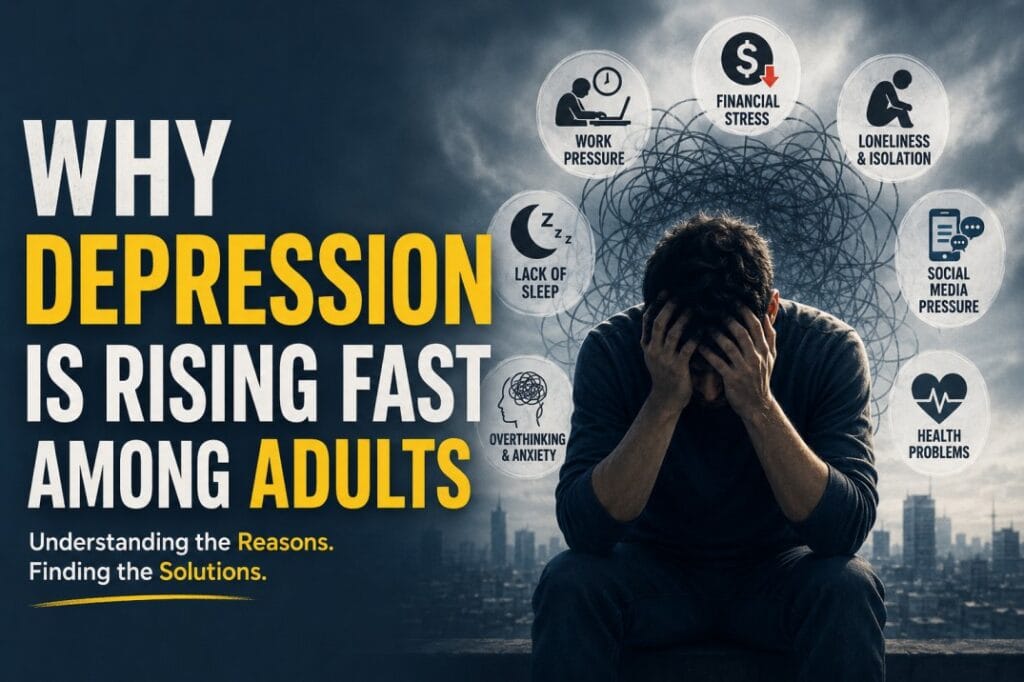
Why More Adults Are Suffering From Depression
- Depression is becoming very common among adults today. 😔
- Earlier, people did not talk much about mental health.
- Now, more people are openly sharing their emotional struggles. 🗣️
- Depression is not just normal sadness for a few days.
- It is a serious mental health condition that affects daily life. 🧠
- It can affect emotions, thoughts, sleep, energy, and behavior.
- Millions of adults around the world are facing stress and anxiety every day. 🌍
- Loneliness and emotional pain are also increasing quickly.
- Modern lifestyle is one major reason behind rising depression. 📱
- Work pressure and financial problems create constant stress. 💼💸
- Too much social media use can also affect mental health badly.
- Unhealthy habits like poor sleep, junk food, and lack of exercise make the problem worse. 🍔😴
- Let us understand point by point why depression is rising fast among adults today. 🚨
1. What Is Depression? 🧠😔
Depression is a serious mental health condition that affects how a person feels, thinks, and behaves. It is more than just feeling sad or stressed for a short time. People with depression may feel hopeless, tired, emotionally empty, or lose interest in daily activities.
Depression can affect:
- Mood 😔
- Sleep 😴
- Energy levels ⚡
- Appetite 🍽️
- Concentration 🧩
- Daily life activities 🚶
Many adults with depression struggle to enjoy things they once liked. Some may feel lonely, anxious, or emotionally exhausted all the time.
Depression can happen because of:
- Stress 💼
- Financial problems 💸
- Relationship issues 💔
- Loneliness 🏠
- Health problems 🩺
- Trauma or emotional pain 😢
If depression continues for a long time, it can affect both mental and physical health. Early support, healthy habits, and proper treatment can help people recover and feel better again. 🌱
2. Why Depression Is Rising Fast Among Adults
1. High Work Pressure 💼
One of the biggest reasons for rising depression is work stress.
Today many adults work long hours and have very little time to relax. Offices often expect workers to meet deadlines, handle pressure, and stay available even after office hours.
Problems caused by work pressure:
- Mental exhaustion 😩
- Lack of sleep 🌙
- Constant stress 😰
- Fear of losing jobs
- No work-life balance
Many adults feel trapped in a routine where they only work and rarely enjoy life. Slowly this pressure affects mental health and can lead to depression.
2. Financial Problems 💸
Money stress is another major cause of depression.
Prices of food, rent, education, and healthcare are increasing quickly. Many adults struggle to manage expenses while earning limited income.
Financial stress may include:
- Loan pressure
- Credit card debt
- Unemployment
- Low salary
- Family responsibilities
When people constantly worry about money, their minds stay stressed all the time. This can lead to anxiety, hopelessness, and depression.
3. Social Media Pressure 📱
Social media has changed modern life completely.
Many adults spend hours scrolling through Instagram, Facebook, or other platforms. They often compare their lives with others.
Social media can cause:
- Low self-esteem 😔
- Jealousy
- Feeling unsuccessful
- Fear of missing out (FOMO)
- Loneliness
People usually post only happy moments online. Seeing these “perfect lives” makes others feel unhappy about their own life.
Too much social media also reduces real human connection, which increases emotional isolation.
4. Loneliness and Isolation 🏠
Many adults feel lonely even when surrounded by people.
Modern lifestyles have reduced emotional bonding. People are busy with work, phones, and personal problems. Families spend less time together than before.
Reasons for loneliness:
- Living alone
- Lack of close friendships
- Busy schedules
- Relationship problems
- Moving to new cities
Loneliness deeply affects mental health. Humans need emotional support and meaningful relationships to stay mentally healthy.
5. Unhealthy Lifestyle 🍔
Modern unhealthy habits are harming both physical and mental health.
Many adults:
- Eat junk food 🍟
- Sleep late 🌃
- Exercise less 🛋️
- Spend too much time indoors
These habits affect brain chemicals that control mood and emotions.
Poor lifestyle can lead to:
- Low energy
- Mood swings
- Fatigue
- Stress
- Depression
Healthy food, proper sleep, and exercise play a very important role in mental wellness.
6. Lack of Sleep 😴
Sleep problems are becoming very common today.
Many adults sleep less because of:
- Mobile phones 📱
- Night shifts
- Stress
- Overthinking
- Long working hours
When the brain does not get enough rest, emotional balance becomes weaker.
Poor sleep can cause:
- Irritability
- Anxiety
- Difficulty focusing
- Emotional breakdowns
- Depression
Good sleep is necessary for a healthy mind.
7. Relationship Problems 💔
Broken relationships can strongly affect emotions.
Adults may face:
- Divorce
- Breakups
- Family conflicts
- Toxic relationships
- Lack of emotional support
Emotional pain from relationships can make people feel rejected, lonely, and hopeless.
Sometimes adults hide their feelings and suffer silently for months or years.
8. Rising Anxiety and Overthinking 🤯
Modern life moves very fast. Many adults constantly think about the future.
Common worries include:
- Career
- Marriage
- Health
- Children
- Financial security
Overthinking creates mental pressure. When stress continues for a long time, it can slowly turn into depression.
People often feel mentally tired even without physical work.
9. Lack of Physical Activity 🏃
Physical movement is important for mental health.
Earlier, people walked more and stayed active. Today many adults sit for long hours in offices or at home.
Lack of exercise can:
- Reduce happy hormones
- Increase stress
- Lower energy levels
- Affect sleep quality
Exercise helps release endorphins, which naturally improve mood and reduce stress.
10. Health Problems 🩺
Chronic diseases can also increase depression.
Adults dealing with:
- Diabetes
- Heart disease ❤️
- Obesity
- Chronic pain
- Hormonal problems
often experience emotional stress too.
Living with long-term illness can make people feel helpless and emotionally exhausted.
11. Increased Competition 📚
Competition is higher than ever before.
People constantly try to:
- Earn more money
- Build successful careers
- Look attractive
- Buy expensive things
- Achieve social status
This pressure creates stress and dissatisfaction.
Many adults feel they are “not good enough” even when they are doing fine.
12. Family Responsibilities 👨👩👧
Adults carry many responsibilities every day.
They may need to:
- Support parents
- Raise children
- Manage bills
- Handle work stress
- Balance relationships
Managing everything together becomes emotionally exhausting.
Sometimes adults ignore their own mental health while caring for others.
13. Fear About the Future 🌍
Many people feel uncertain about the future.
Common fears include:
- Job insecurity
- Economic problems
- Climate change
- Health emergencies
- Global crises
Constant fear and uncertainty can slowly damage mental peace.
14. Substance Abuse 🚬🍺
Some adults try to escape stress through:
- Alcohol
- Smoking
- Drugs
These may provide temporary relief but worsen depression over time.
Substance abuse affects brain function and emotional control.
15. Emotional Suppression 😶
Many adults do not express their feelings openly.
Society often teaches people to:
- “Stay strong”
- “Do not cry”
- “Handle problems alone”
As a result, emotions stay trapped inside.
Suppressing emotions for a long time increases mental stress and sadness.
16. Technology Addiction 💻
Technology is useful, but too much screen time harms mental health.
Many adults spend hours:
- Watching videos
- Playing games
- Scrolling social media
- Working on screens
Excessive screen use reduces sleep quality and social interaction.
This can increase feelings of loneliness and depression.
17. Childhood Trauma 😢
Past emotional pain can affect adulthood.
Adults who experienced:
- Abuse
- Neglect
- Bullying
- Family violence
may carry emotional scars for many years.
Unhealed trauma often increases the risk of depression later in life.
18. Lack of Mental Health Awareness 🧠
Many people still do not understand depression properly.
Some believe depression is:
- Weakness
- Laziness
- Overthinking only
Because of this misunderstanding, many adults avoid seeking help.
Untreated depression often becomes more severe with time.
19. Less Human Connection 🤝
Modern life has reduced face-to-face interaction.
People now communicate more online than in real life.
Real conversations, emotional bonding, and quality time are becoming less common.
This emotional disconnect increases loneliness and sadness.
20. Effects of the Pandemic 😷
The COVID-19 pandemic affected mental health worldwide.
Many adults experienced:
- Isolation
- Job loss
- Fear
- Grief
- Stress
Even after the pandemic, many people continue to struggle emotionally
3. Common Signs of Depression 🚨
Adults with depression may experience:
- Constant sadness 😔
- Loss of interest in activities
- Low energy
- Sleep problems
- Changes in appetite
- Difficulty concentrating
- Irritability
- Feeling hopeless
- Social withdrawal
- Negative thoughts
These symptoms may continue for weeks or months.
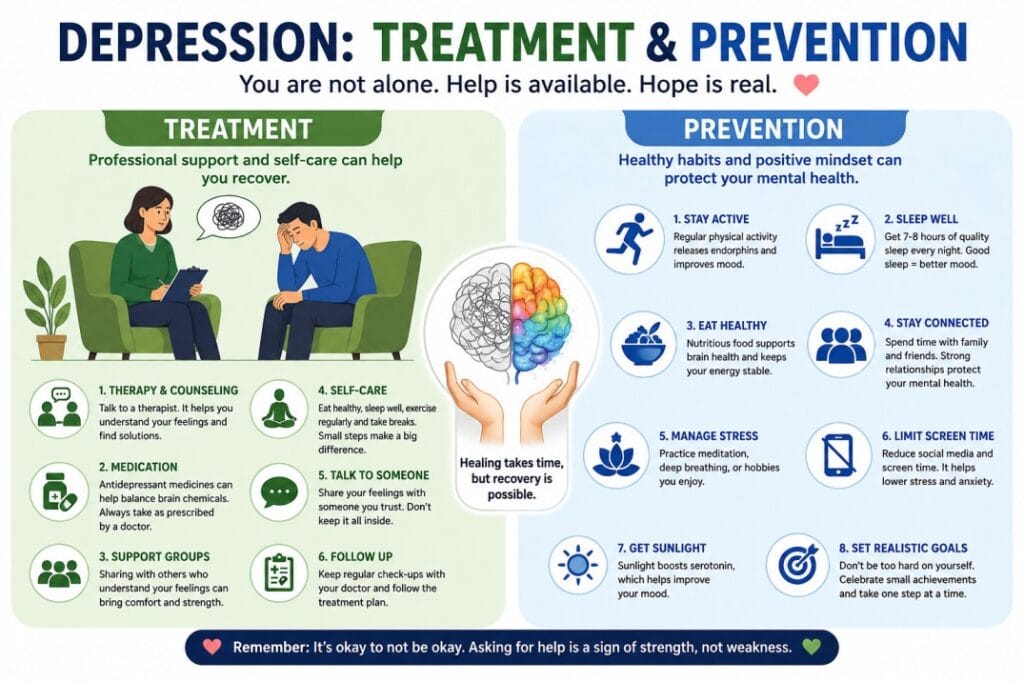
4. How Adults Can Protect Their Mental Health 🌱
1. Exercise Regularly 🏃
Physical activity improves mood and reduces stress.
2. Sleep Properly 😴
Aim for 7–8 hours of quality sleep daily.
3. Eat Healthy Foods 🥗
Nutritious foods support brain health.
4. Reduce Social Media Time 📵
Take breaks from screens and online pressure.
5. Talk to Someone 🗣️
Sharing feelings with family or friends helps emotional healing.
6. Practice Relaxation 🧘
Meditation and deep breathing reduce stress.
7. Seek Professional Help 👩⚕️
Therapists and counselors can provide support and treatment.
8. Stay Connected 🤝
Spend time with supportive people.
5. Final Thoughts 🌟
Depression is rising fast among adults because modern life has become stressful, busy, and emotionally exhausting. Work pressure, loneliness, financial struggles, social media, unhealthy habits, and emotional stress are affecting millions of people every day.
Mental health is just as important as physical health. Depression should never be ignored or hidden. Early support, healthy habits, emotional connection, and professional help can make a big difference.
Talking openly about mental health can help reduce stigma and encourage more people to seek help. No one should suffer alone. ❤️
FAQ
1. What is depression?
Depression is a mental health condition that causes long-term sadness, low energy, stress, and loss of interest in daily activities. 😔
2. Why is depression increasing among adults?
Depression is rising because of work pressure, financial stress, loneliness, social media, unhealthy lifestyle, and emotional problems. 💼📱💸
3. What are the common symptoms of depression?
Common symptoms include:
- Sadness 😢
- Low energy ⚡
- Poor sleep 😴
- Anxiety 😰
- Loss of interest in activities
- Feeling hopeless
4. Can stress cause depression?
Yes, long-term stress can increase the risk of depression and other mental health problems. 🧠
5. Does social media affect mental health?
Yes, too much social media can cause stress, loneliness, low confidence, and emotional pressure. 📱
6. Can depression affect physical health?
Yes, depression can affect sleep, appetite, energy levels, heart health, and overall body health. 🩺
7. Is depression treatable?
Yes, depression can be treated with therapy, healthy lifestyle changes, stress management, and medical support if needed. 🌱
8. How can adults prevent depression?
Adults can reduce the risk of depression by:
- Exercising regularly 🏃
- Sleeping properly 😴
- Eating healthy food 🥗
- Staying connected with loved ones 🤝
- Managing stress positively 🧘
9. When should someone seek professional help?
A person should seek help if sadness, stress, or hopeless feelings continue for many weeks and affect daily life. 👩⚕️
10. Can depression go away naturally?
Mild depression may improve with healthy habits and emotional support, but severe depression often needs professional treatment. ❤️
Medical Disclaimer : This information is only for educational knowledge purpose. It is not a substitute for medical advice, diagnosis, or treatment. Always consult a doctor or qualified healthcare professional for any health concerns.

Hi, I’m Shishpa, founder of Healthfacts.in. I am a passionate health blogger focused on Mental wellness, Diabetes care, Weight management, and natural remedies. My goal is to provide easy, research-based and practical health advice that anyone can follow at home.