
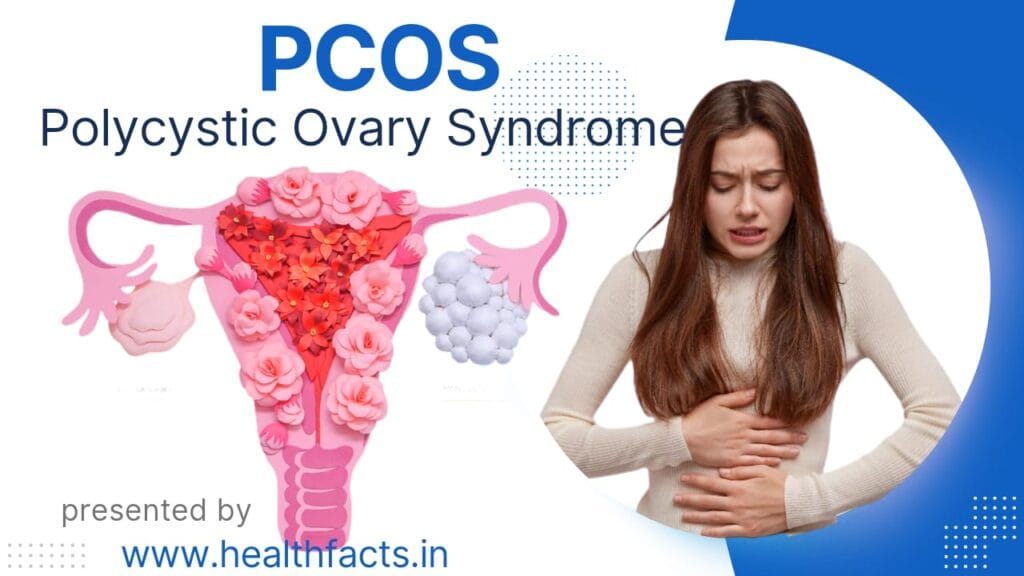
“Early PCOS Symptoms Before Irregular Period Starts most women miss“
- Many women believe that PCOS (Polycystic Ovary Syndrome) only begins when their periods become irregular.
- In reality, the body often shows subtle warning signs long before menstrual cycles start changing. These early symptoms can be mild and easy to ignore because they may seem common or harmless at first.
- Recognizing the early signs of Polycystic ovary syndrome can help you seek timely medical advice, make healthy lifestyle changes, and prevent future complications. Early awareness empowers you to take control of your hormonal health before the condition progresses.
- In this article, we will explain everything in very simple and easy to understand.
1.What is PCOS? 🤔
– Polycystic ovary syndrome (PCOS) is a common hormonal condition that affects women during their reproductive ages. It happens when there is an imbalance in the body’s hormones.
In PCOS:
• The body produces higher levels of male hormones called androgens.
• Ovulation (the release of an egg each month) may not happen regularly.
• Small fluid-filled sacs, called cysts, may develop in the ovaries.
– Because of these hormonal changes, many body functions can be affected — including skin, hair growth, weight, mood, and menstrual cycles.
– But remember, you can experience early PCOS symptoms even if your periods are still regular. Hormonal imbalance often begins quietly, and menstrual changes may appear later. 💛
2. 🌼Early PCOS Symptoms Before Irregular Period Starts
Let us look at the early warning signs one by one.
👉 1. Acne That Does Not Go Away 😣
– One of the earliest signs of Polycystic ovary syndrome is hormonal acne. This type of acne is different from normal teenage pimples.
What makes PCOS acne different?
• Pimples mostly appear on the chin and jawline
• Acne is deep, painful, and cyst-like
• It does not improve with regular creams or face washes
• Breakouts return again and again, especially before periods
– This happens because the body produces higher levels of androgens (male hormones). These hormones increase oil production in the skin, which clogs pores and causes stubborn acne.
– If you are no longer a teenager but still struggling with persistent acne, it may be an early PCOS symptom.
👉 2. Oily Skin and Oily Hair 💦
– Before menstrual cycles become irregular, many women notice increased oiliness.
Common signs include:
• Very oily face within a few hours of washing
• Hair becoming greasy quickly
• Needing to wash hair more often than before
– Hormones control oil glands in the skin. When hormone levels become unbalanced, the oil glands become overactive, leading to excess oil production.
👉 3. Mild Hair Thinning 👩🦱
– Hair fall is normal to some extent. However, early PCOS may cause noticeable thinning.
– You may observe:
• Thinning near the front of the scalp
• A widening hair part
• Increased hair fall while combing or washing
– This condition is called female pattern hair loss. It happens due to increased androgen levels and may begin before any change in your menstrual cycle.
👉 4. Unwanted Hair Growth 🧔♀️
– Another early symptom is extra hair growth in unusual areas.
Common areas include:
• Chin
• Upper lip
• Chest
• Lower abdomen
• Around the nipples
– This condition is called hirsutism. It happens because high androgen levels stimulate hair growth in male-pattern areas.
– If you notice new or slowly increasing facial or body hair, it should not be ignored.
👉 5. Dark Skin Patches 🟤
– One of the earliest and often overlooked signs of PCOS is dark, thickened skin patches.
These may appear around:
• Neck
• Underarms
• Groin
• Elbows
– This condition is called acanthosis nigricans. It is linked to insulin resistance, which is very common in women with PCOS.
– The skin may look dirty, but washing or scrubbing does not remove it. It is a sign from inside the body, not a hygiene problem.
👉 6. Sudden Weight Gain ⚖️
– Many women experience unexpected weight gain in early PCOS.
You may gain weight even when:
• Your eating habits have not changed
• You are not overeating
• You are exercising regularly
– Most of the weight gain usually happens around the lower belly area. This type of fat storage is strongly connected to insulin resistance and hormonal imbalance.
👉 7. Difficulty Losing Weight 😓
– Losing weight may feel much harder than before.
Even after:
• Following a diet
• Walking daily
• Avoiding sweets
– The weight may not reduce easily.
– This is often one of the earliest signs that hormones and insulin are not working properly in the body.
👉 8. Strong Sugar Cravings 🍰
– Many women with early PCOS experience strong cravings for sweets and carbohydrates.
You may notice:
• Intense desire for sugary foods
• Feeling hungry again soon after eating
• Sudden energy crashes after meals
– This happens because insulin levels rise quickly after eating and then drop suddenly. These ups and downs increase hunger and cravings.
👉 9. Mood Changes 😔
– Hormones play a big role in emotional health.
Early PCOS may lead to:
• Irritability
• Mood swings
• Anxiety
• Mild depression
– You may feel emotional, overwhelmed, or sensitive without a clear reason. These changes are linked to hormonal fluctuations and blood sugar imbalance.
👉 10. Low Energy or Constant Tiredness 😴
– Even after sleeping well, you may feel:
• Ongoing fatigue
• Physical weakness
• Mental fog or difficulty concentrating
– Insulin resistance can prevent your body from using energy properly, leading to constant tiredness.
👉 11. Mild Pelvic Discomfort 🩺
– Some women feel subtle discomfort in the lower abdomen before any menstrual changes.
Symptoms may include:
• A heavy feeling in the lower belly
• Mild cramps without periods
• Bloating or pressure
– These signs are usually mild but may indicate early hormonal imbalance.
👉 12. Slight Delay in Ovulation 🌼
– Your periods may still appear regular, but ovulation timing can slowly change.
You might notice:
• Ovulation happening later than usual
• Cycle length increasing gradually
• Changes in PMS symptoms
– These are subtle early signs that hormones are beginning to shift, even if your periods have not yet become irregular.
💛Important points
– Early PCOS symptoms are often mild and easy to ignore. Many women do not connect acne, hair changes, weight gain, and mood swings to hormonal imbalance at first.
– But when several of these symptoms appear together, it may be your body’s early warning system.
– Listening to these signs early can help you take action before menstrual cycles become irregular.
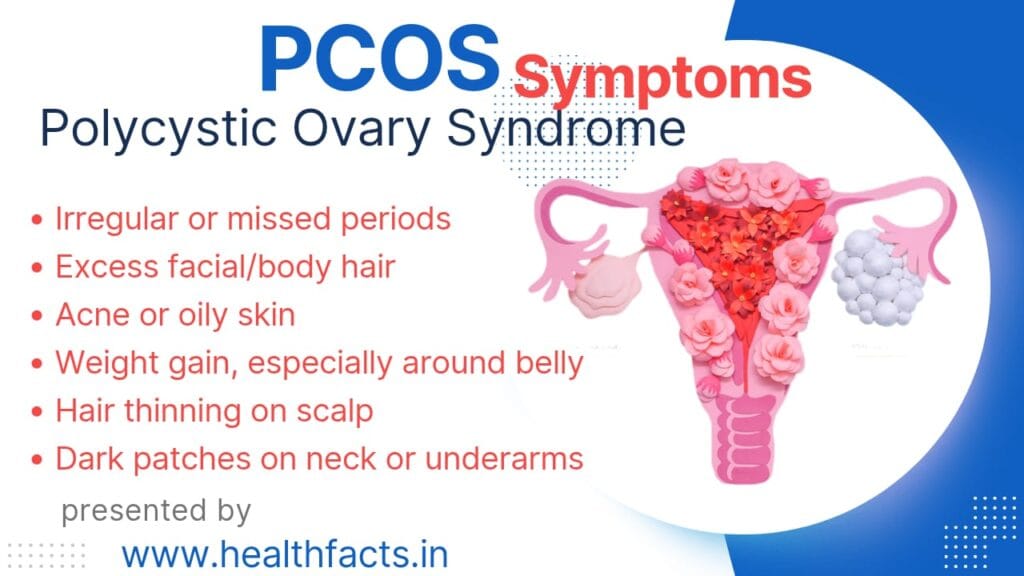
3. Why Do These Early Symptoms Happen? 🧬
– Early symptoms of Polycystic ovary syndrome do not appear suddenly. They develop slowly because of changes happening inside the body. Understanding the root causes can help you manage the condition better.
– The main reasons behind early PCOS symptoms are:
1️⃣Hormonal Imbalance
– PCOS is mainly a hormone-related condition. In this disorder, the body produces higher levels of androgens (male hormones) than normal.
– Although all women naturally have small amounts of male hormones, excess levels can cause:
• Acne and oily skin
• Unwanted facial or body hair
• Hair thinning on the scalp
• Irregular or delayed ovulation
– When hormones are not balanced, the ovaries may not function properly, even if periods still appear regular at first.
2️⃣ Insulin Resistance
– Another major cause of early PCOS symptoms is insulin resistance.
– Insulin is a hormone that helps move sugar from the blood into cells for energy. In insulin resistance, the body cannot use insulin effectively. As a result, the body produces more insulin to compensate.
– High insulin levels can:
• Increase weight gain, especially around the belly
• Cause dark skin patches (acanthosis nigricans)
• Trigger strong sugar cravings
• Lead to energy crashes and fatigue
• Stimulate the ovaries to produce more androgens
– This creates a cycle where high insulin increases male hormones, which then worsen PCOS symptoms.
3️⃣ Chronic Low-Grade Inflammation
– Many women with PCOS have mild, ongoing inflammation in the body. This is not the type of inflammation you see with injury. It happens quietly inside.
– Low-grade inflammation can:
• Increase insulin resistance
• Worsen hormonal imbalance
• Contribute to weight gain
• Affect ovulation
– Lifestyle factors like poor diet, stress, lack of sleep, and inactivity can increase inflammation and make symptoms worse.
💛 The Bigger Picture
– These three factors => hormonal imbalance, insulin resistance, and inflammation —> work together. They create a cycle that leads to early symptoms, even before periods become irregular.
– That is why managing lifestyle, diet, stress, and weight early can make a big difference in controlling PCOS symptoms.
4. When Do Periods Become Irregular? 📅
– In many cases of Polycystic ovary syndrome, menstrual irregularities do not appear at the beginning. Early symptoms like acne, weight gain, or hair changes may show up first. Period problems usually develop gradually over time as hormonal imbalance becomes more noticeable.
Common Signs of Irregular Periods
• Skipping periods for one or more months
• Cycles longer than 35 days
• Getting periods only a few times a year
• Very heavy bleeding
• Very light or spotting-like periods
• Bleeding that lasts longer than usual
– These changes happen because ovulation may not occur regularly. When ovulation is delayed or absent, the menstrual cycle becomes unpredictable.
Important Reminder 💛
– Do not wait for periods to become irregular to take symptoms seriously. PCOS often begins quietly, with subtle hormonal changes happening inside the body. By the time cycles become clearly irregular, the condition may already have been developing for months or even years.
– Listening to early signs can help you take action before menstrual problems start.
5. Who is at Higher Risk? 🚩
– Some women are more likely to develop Polycystic ovary syndrome due to genetic, hormonal, and lifestyle factors. Having one or more risk factors does not mean you will definitely have PCOS, but it does increase the chances.
– You may have a higher risk if:
• Your mother or sister has PCOS – PCOS often runs in families. If a close female relative has it, your risk is higher.
• You are overweight or have obesity – Excess body fat, especially around the abdomen, increases insulin resistance and hormonal imbalance.
• There is a history of diabetes in your family – Since insulin resistance is strongly linked to PCOS, a family history of type 2 diabetes raises your risk.
• You experienced early puberty – Starting periods at a very young age can sometimes be associated with hormonal irregularities later in life.
• You had severe acne during teenage years – Persistent, difficult-to-treat acne may be an early sign of androgen sensitivity.
💛Important point remember
– Even slim women with no family history can develop PCOS. Risk factors increase the chances, but they do not guarantee the condition.
– If you notice early symptoms along with these risk factors, it is wise to consult a healthcare professional for proper evaluation.
6. When Should You See a Doctor? 👩⚕️
– Consult a doctor if you notice:
- Increasing facial hair
- Severe acne
- Rapid weight gain
- Dark neck patches
- Hair thinning
– Early diagnosis helps prevent:
- Infertility
- Type 2 diabetes
- High cholesterol
- High blood pressure
7. How is Early PCOS Diagnosed? 🧪
– Doctors may recommend:
- Blood tests (hormones, insulin)
- Ultrasound scan
- Thyroid test
- Sugar test
– Diagnosis is usually based on symptoms + test results.
8. What Happens If PCOS Is Ignored? ⚠️
– If untreated, PCOS can lead to:
- Irregular periods
- Difficulty getting pregnant
- Type 2 diabetes
- Heart problems
- Endometrial problems
– Early care prevents complications.
9. Can Early PCOS Be Managed Naturally? 🌿
– Yes! Early action makes a big difference.
1. Healthy Diet 🥗
– Focus on:
- Whole grains
- Vegetables
- Fruits
- Protein
- Nuts
– Avoid:
- Sugary drinks
- White bread
- Packaged snacks
2. Regular Exercise 🚶♀️
Even 30 minutes daily:
- Walking
- Yoga
- Strength training
Improves insulin sensitivity.
3. Weight Management ⚖️
– Even 5–10% weight loss can:
- Improve hormones
- Improve ovulation
- Reduce acne
4. Stress Management 🧘♀️
– Try:
- Meditation
- Deep breathing
- Good sleep
Stress worsens hormonal imbalance.
5. Medical Treatment (If Needed) 💊
– Doctors may suggest:
- Birth control pills
- Metformin
- Anti-androgen medicines
– Never self-medicate.
10. Final Thoughts 🌸
– Early PCOS symptoms before irregular periods start are often small and silent.
– Acne, hair fall, weight gain, sugar cravings, dark skin patches — these may be early warning signs of Polycystic ovary syndrome.
– Do not ignore your body’s signals.
– The earlier you take action, the easier it is to manage.
– Healthy food, exercise, stress control, and medical advice can make a big difference.
– Listen to your body.
– Take small steps today.
– Your future health depends on it. 🌷
11. Medical Disclaimer
This information is only for educational knowledge purpose. It is not a substitute for medical advice, diagnosis, or treatment. Always consult a doctor or qualified healthcare professional for any health concerns.
FAQ ❓
1. Can PCOS start in teenage years?
Yes, it often starts during adolescence.
2. Does PCOS always cause irregular periods first?
No, other symptoms may appear first.
3. Is PCOS curable?
There is no permanent cure, but it is manageable.
4. Can slim women have PCOS?
Yes, even thin women can have PCOS.

Hi, I’m Shishpa, founder of Healthfacts.in. I am a passionate health blogger focused on Mental wellness, Diabetes care, Weight management, and natural remedies. My goal is to provide easy, research-based and practical health advice that anyone can follow at home.