

“Early Warning Signs of GERD , Common Triggers and Natural Relief at Home”
- GERD is a common digestive condition that many people experience but do not clearly understand.
- Some people think it is just acidity. Others believe it is simple heartburn. However, GERD is more than occasional burning in the chest.
- It is a long-term problem where stomach acid flows back into the food pipe again and again. This repeated acid reflux can irritate and damage the lining of the esophagus.
- Symptoms may seem small at first, but if they happen often, they should not be ignored.
- With proper care, lifestyle changes, and medical advice when needed, GERD can be controlled effectively.
- In this article, we explore it in a simple and easy-to-understand way
1. What Does GERD Mean?
– GERD stands for Gastroesophageal Reflux Disease. It may sound like a complex medical term, but it is actually simple when we break it down.
- “Gastro” means stomach.
- “Esophageal” refers to the esophagus, also called the food pipe, which carries food from your mouth to your stomach.
- “Reflux” means flowing back.
- “Disease” means a health condition or problem.
– So, GERD is a long-term condition where stomach acid repeatedly flows back into the food pipe. This backflow irritates the lining of the esophagus and can cause symptoms like burning in the chest, sour taste in the mouth, and discomfort after eating. It is more than occasional acidity ,it happens often and needs proper care.
2. How Does GERD Happen?
– To understand GERD, let’s first understand how normal digestion works.
– When you eat food:
- It travels from your mouth to your food pipe (esophagus).
- From the esophagus, it moves down into your stomach, where digestion begins.
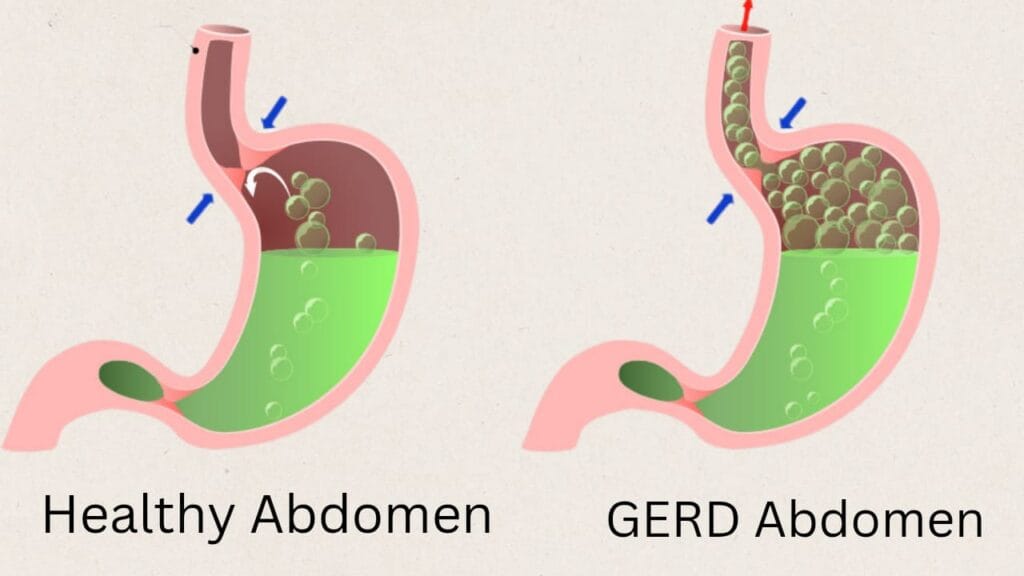
– At the bottom of the food pipe, there is a small circular muscle called the Lower Esophageal Sphincter (LES). Think of this muscle as a door or valve.
- It opens to allow food to enter the stomach.
- It closes tightly to prevent stomach acid from flowing back up.
– In a healthy digestive system, this “door” works perfectly. But in GERD, something goes wrong.
– In GERD:
- The LES becomes weak, or
- It relaxes at the wrong time, even when you are not swallowing food.
- As a result, stomach acid flows back into the food pipe.
- This backflow causes burning, irritation, and discomfort.
– The food pipe does not have a protective lining like the stomach. So when acid touches it, you feel that familiar burning sensation in the chest.
– Imagine a bottle filled with liquid. If the cap is tight, nothing spills. But if the cap is loose and you tilt the bottle, the liquid leaks out. GERD works the same way the “cap” (LES) is loose, and acid leaks upward.
3. Early Warning Signs of GERD
– GERD often begins quietly. The symptoms may seem mild in the beginning, so many people ignore them. But small signs repeated again and again are your body’s way of asking for attention. If you notice these symptoms frequently, it is important not to overlook them.
1. Frequent Heartburn
This is the most common early sign.
- A burning feeling in the chest, especially after eating.
- The discomfort may become worse when you lie down or bend forward.
- It can feel like a line of fire rising behind your chest bone.
If this burning happens regularly — not just once in a while — it may be more than simple acidity.
2. Sour or Bitter Taste in the Mouth
When stomach acid flows back up, you may notice:
- A sour or bitter taste in your throat or mouth.
- A feeling that acid has reached your throat.
- Sometimes, small amounts of food may come back up.
This unpleasant taste is a strong signal that acid is moving in the wrong direction.
3. Chest Discomfort After Meals
GERD does not always feel like burning. Sometimes it feels like:
- A heavy or tight sensation in the chest.
- Discomfort that appears after eating a large or spicy meal.
- Pain that improves when you sit upright or stand.
Because it affects the chest area, some people mistake it for heart-related pain. That is why persistent chest discomfort should never be ignored.
4. Difficulty Swallowing
As irritation continues, swallowing may feel uncomfortable.
- Food may feel like it is getting stuck in your throat.
- You may feel pain while swallowing.
- There may be a constant sensation of something being stuck.
This can happen when the food pipe becomes irritated or inflamed.
5. Chronic Dry Cough
GERD can affect more than just the stomach and chest.
- A dry cough without a cold or infection.
- Cough that becomes worse at night.
- Frequent throat clearing throughout the day.
Acid irritation can trigger coughing, especially when lying down.
6. Hoarse or Rough Voice
Repeated acid exposure can irritate the throat and voice box.
- Your voice may sound rough or weak.
- You may wake up with throat irritation in the morning.
- Speaking for long periods may feel uncomfortable.
This happens because acid reaches the upper throat area while you sleep.
4. Common Triggers of GERD (Acid Reflux)
– GERD does not usually happen without a reason.
– Certain foods, drinks, and daily habits can relax the lower esophageal sphincter (the muscle that keeps stomach acid from coming back up) or increase acid production.
– When this happens, acid can move into the food pipe and cause burning, discomfort, or a sour taste.
– Understanding your personal triggers is one of the most important steps in controlling GERD.
🍽️ Food Triggers
Some foods are known to make GERD symptoms worse by increasing acid or irritating the stomach lining.
- Spicy foods – Chili, hot sauces, and heavily spiced curries can irritate the food pipe.
- Fried foods – Deep-fried snacks and fast food stay longer in the stomach and increase acid reflux.
- Oily or fatty meals – High-fat foods relax the valve between the stomach and food pipe.
- Fast food – Often high in fat, salt, and spices, which can worsen symptoms.
- Chocolate – Contains caffeine and substances that relax the lower esophageal sphincter.
- Tomato-based dishes – Tomato sauce, ketchup, and pasta sauces are acidic.
- Citrus fruits – Oranges, lemons, and grapefruits are naturally acidic.
- Onion and garlic – Especially raw forms can trigger heartburn in many people.
🥤 Drink Triggers
Certain beverages can increase stomach acid or relax the muscle that prevents reflux.
- Coffee – Even decaffeinated coffee may trigger symptoms in some people.
- Strong tea – Contains caffeine, which may worsen reflux.
- Carbonated drinks – Soda and fizzy drinks increase pressure in the stomach.
- Alcohol – Can irritate the stomach lining and relax the valve muscle.
- Energy drinks – Often high in caffeine and acid.
🚶 Lifestyle Triggers
Daily habits also play a big role in GERD symptoms.
- Eating large meals – A full stomach increases pressure and pushes acid upward.
- Eating late at night – Lying down soon after eating makes reflux more likely.
- Lying down immediately after meals – Gravity helps keep acid down; lying flat removes that help.
- Smoking – Weakens the valve between the stomach and esophagus.
- Wearing tight clothes – Tight belts or waistbands put pressure on the stomach.
- High stress levels – Stress does not directly cause GERD but can make symptoms feel worse.
Everyone is Different
Not all triggers affect every person. Some people may react strongly to spicy food, while others may have no problem with it.
It is helpful to:
- Keep a food and symptom diary
- Notice patterns after meals
- Avoid foods that clearly trigger your symptoms
- Eat smaller, balanced meals
Small changes in diet and lifestyle can greatly reduce GERD symptoms. Paying attention to your body is the first step toward better digestive health.

5. Natural Relief for GERD at Home
– We can manage GERD symptoms naturally with simple daily habits. Small changes in eating, sleeping, and lifestyle can rehttps://healthfacts.in/best-diet-for-type-2-diabetes/duce acid reflux and improve comfort. These home remedies are easy, safe, and practical for everyday life.
1️⃣ Eat Smaller, More Frequent Meals
Large meals stretch the stomach and increase pressure, which pushes acid upward.
- Eat 5 small meals instead of 3 heavy meals.
- Avoid overeating.
- Stop eating when you feel about 80% full.
- Eat slowly and chew food properly.
Smaller portions help your stomach digest food more easily.
2️⃣ Avoid Trigger Foods
Some foods relax the valve between the stomach and food pipe or increase acid production.
- Notice which foods cause burning or discomfort.
- Keep a simple food and symptom diary.
- Remove one trigger at a time to see improvement.
- Choose light, low-fat, and less spicy meals.
Being aware of your personal triggers is very important.
3️⃣ Do Not Lie Down After Eating
Lying down too soon after meals allows acid to move upward.
- Wait at least 2–3 hours before lying down.
- Sit upright after meals.
- Avoid late-night snacks before bed.
Gravity helps keep stomach acid where it belongs.
4️⃣ Raise Your Head While Sleeping
Nighttime reflux is common because you are lying flat.
- Lift the head of your bed by 6–8 inches.
- Use a wedge pillow (regular pillows may not help much).
- Keep your upper body slightly elevated.
This simple step can greatly reduce night symptoms.
5️⃣ Drink Warm Water
Warm water may gently soothe the throat and help digestion.
- Sip warm water after meals.
- Avoid very cold drinks.
- Do not drink large amounts at once.
Small, slow sips are better than gulping.
6️⃣ Try Herbal Teas
Some herbal teas may calm the stomach and reduce mild discomfort.
- Ginger tea may help reduce nausea and bloating.
- Chamomile tea may relax the digestive system.
- Drink slowly and avoid very hot temperatures.
Herbal teas can be a soothing part of your evening routine.
7️⃣ Maintain a Healthy Weight
Extra weight, especially around the belly, increases pressure on the stomach.
- Even small weight loss can reduce reflux symptoms.
- Choose balanced meals with fruits, vegetables, and whole grains.
- Stay physically active most days of the week.
Healthy weight supports better digestion.
8️⃣ Avoid Tight Clothing
Tight clothing can press on the stomach and push acid upward.
- Avoid tight belts and tight jeans.
- Choose loose, comfortable clothes.
- Especially avoid tight clothes after meals.
Comfortable clothing reduces unnecessary pressure.
9️⃣ Walk After Meals
Light activity helps digestion.
- Take a 10–15 minute gentle walk after eating.
- Avoid bending forward or heavy exercise immediately after meals.
- Stay upright to support digestion.
Simple movement can make a big difference.
🔟 Manage Stress
Stress does not directly cause GERD, but it can make symptoms feel stronger and more frequent.
Try simple stress-relief methods:
- Deep breathing exercises
- Meditation
- Light yoga
- Listening to calm music
- Spending time in nature
A calm mind supports a healthy digestive system.
6. Medical Treatment Options
Sometimes lifestyle changes are not enough.
Doctors may suggest:
- Antacids (neutralize acid).
- H2 blockers (reduce acid).
- Proton pump inhibitors (strong acid control).
These medicines should be taken only under medical advice.
7. Final Thoughts
– GERD is more than simple heartburn. It is a long-term condition in which stomach acid repeatedly flows back into the food pipe, causing irritation and discomfort. If not managed properly, it can affect your daily life and overall well-being.
– The early signs may seem small at first , such as a burning feeling in the chest, a sour or bitter taste in the mouth, frequent burping, or a dry cough. Many people overlooked these symptoms. Frequent acid reflux is a need for attention.
– The good news is that GERD can be controlled in most cases. You do not always need complicated treatments. Simple, consistent lifestyle changes can bring real relief.
- Eat smaller, balanced meals.
- Avoid foods and drinks that trigger symptoms.
- Walk daily and stay active.
- Manage stress in healthy ways.
- Sleep properly and avoid lying down right after meals.
– These small habits may seem simple, but together they can make a big difference.
– Your stomach works hard for you every single day. Treat it with care. Listen to your body’s signals. Take action early instead of waiting for symptoms to worsen. With the right habits and awareness, you can protect your digestive health and live more comfortably.
8. Medical Disclaimer
This information is only for educational knowledge purpose. It is not a substitute for medical advice, diagnosis, or treatment. Always consult a doctor or qualified healthcare professional for any health concerns.
= FAQs =
1. Is GERD dangerous?
If untreated for a long time, it can cause complications. But with proper care, it is manageable.
2. Can GERD go away naturally?
Mild cases may improve with diet and lifestyle changes.
3. Is milk good for GERD?
Low-fat milk may help for short time, but full-fat milk can increase acid later.
4. Can stress cause GERD?
Stress does not directly cause it, but it makes symptoms worse.
5. Can children get GERD?
Yes, but it is more common in adults.

Hi, I’m Shishpa, founder of Healthfacts.in. I am a passionate health blogger focused on Mental wellness, Diabetes care, Weight management, and natural remedies. My goal is to provide easy, research-based and practical health advice that anyone can follow at home.