
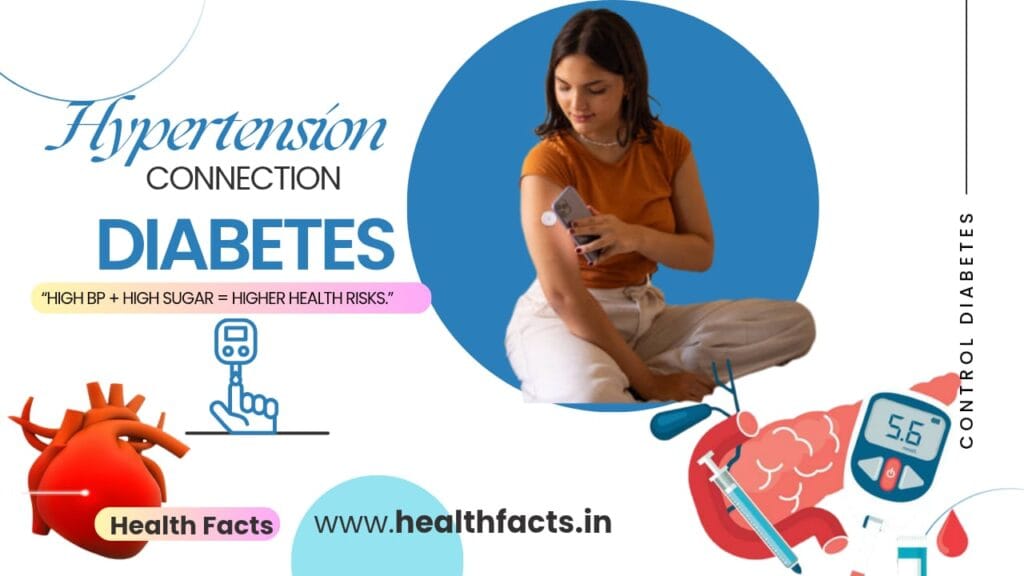
“The Hidden Link Between Type 2 Diabetes and High Blood Pressure”
- Type 2 diabetes and high blood pressure are two of the most common health problems affecting adults worldwide.
- Many people live with one of these conditions. A large number live with both Type 2 Diabetes and High Blood Pressure.
- These two conditions increases risk factors and complications. When they exist at the same time, they increase the risk of heart disease, stroke, kidney failure, and other life-threatening problems.
- Understanding their connection can help adults take early action and protect their long-term health.
- This article explains the connection “Between Type 2 Diabetes and High Blood Pressure”.
1. Understanding Type 2 Diabetes
Type 2 diabetes is a long-term condition that affects how the body processes sugar (glucose). Glucose is the main source of energy for the body’s cells.
Normally:
- You eat food.
- The food turns into glucose.
- The hormone insulin helps move glucose from the blood into the cells.
In type 2 diabetes:
- The body becomes resistant to insulin, or
- The pancreas does not produce enough insulin.
As a result, glucose builds up in the bloodstream. Over time, high blood sugar damages blood vessels, nerves, and organs.
Common Symptoms
- Frequent urination
- Increased thirst
- Fatigue
- Blurred vision
- Slow wound healing
- Numbness in hands or feet
However, many adults have no clear symptoms in the early stages. That is why routine screening is important.
2. Understanding High Blood Pressure
High blood pressure, also known as hypertension, happens when the force of blood against artery walls stays too high for a long period.
Blood pressure readings include:
- Systolic pressure (top number): pressure when the heart beats
- Diastolic pressure (bottom number): pressure when the heart rests
Normal blood pressure is around 120/80 mmHg. Persistent readings above 130/80 mmHg may indicate hypertension.
High blood pressure is often called the “silent condition” because it usually has no obvious symptoms. Many adults only discover it during a routine checkup or after complications develop.
📌 Also Read
3. Why These Two Conditions Often Occur Together
The connection between type 2 diabetes and high blood pressure is not accidental. They share several biological and lifestyle pathways.
1. Insulin Resistance: The Core Link
Insulin resistance is central to type 2 diabetes. But it also influences blood pressure.
When the body resists insulin:
- The pancreas produces more insulin.
- High insulin levels cause the kidneys to retain sodium.
- Sodium retention increases fluid in the bloodstream.
- More fluid increases blood pressure.
In this way, insulin resistance directly affects both blood sugar and blood pressure regulation.
2. Obesity and Visceral Fat
Excess weight, specially abdominal fat, strongly increases the risk of both conditions.
Belly fat:
- Produces inflammatory chemicals
- Disrupts hormone balance
- Worsens insulin resistance
- Increases artery stiffness
Adults with central obesity are much more likely to develop both diabetes and hypertension.
3. Blood Vessel Damage
High blood sugar damages the inner lining of arteries, called the endothelium. This lining helps control blood flow and pressure.
When damaged:
- Arteries become stiff and narrow.
- Blood flow becomes restricted.
- The heart must pump harder.
- Blood pressure rises.
At the same time, high blood pressure further injures these fragile blood vessels. This creates a harmful cycle of damage.
4. Kidney Function Disruption
The kidneys play a key role in controlling blood pressure by regulating fluid and salt balance.
In type 2 diabetes:
- High blood sugar damages small kidney blood vessels.
- Kidney filtering ability declines.
- The body retains more fluid and salt.
- Blood pressure increases.
High blood pressure then speeds up kidney damage, increasing the risk of chronic kidney disease.
5. Chronic Inflammation
Low-level chronic inflammation is common in adults with obesity and insulin resistance.
Inflammation:
- Impairs insulin function
- Damages arteries
- Promotes plaque buildup
This increases the likelihood of both conditions developing together.
4. Why Having Both Conditions is specially Dangerous
When type 2 diabetes and high blood pressure occur together, health risks increases rapidly.
1. Heart Disease
Both conditions damage arteries and promote plaque buildup.
Adults with both are at significantly higher risk of:
- Heart attacks
- Coronary artery disease
- Heart failure
The heart must work harder due to increased pressure and narrowed arteries.
2. Stroke
High blood pressure weakens blood vessels in the brain. Diabetes increases clot formation and artery narrowing.
Together, they greatly increase the risk of:
- Ischemic stroke (blocked vessel)
- Hemorrhagic stroke (burst vessel)
3. Kidney Failure
The kidneys are especially vulnerable. Combined high blood sugar and high pressure damage filtering units rapidly.
Without control, this may lead to:
- Chronic kidney disease
- Dialysis
- Kidney transplant
4. Vision Loss
Small blood vessels in the eyes are delicate.
High blood sugar damages them. High blood pressure increases pressure within them. Over time, this can cause diabetic retinopathy and vision impairment.
5. Nerve Damage
Poor circulation combined with high sugar damages nerves, especially in the feet.
Symptoms may include:
- Tingling
- Burning
- Numbness
- Loss of sensation
This increases the risk of foot ulcers and infections.

5. Early Warning Signs to Watch For
Since both conditions may be silent, awareness is essential.
Possible warning signs include:
- Frequent headaches
- Chest discomfort
- Swelling in legs
- Shortness of breath
- Frequent urination
- Excessive thirst
- Fatigue
Regular screening is the safest approach even without symptoms.
6. Manage Both Conditions Effectively
The good news: both conditions can be managed successfully with consistent effort.
1. Improve Diet Quality
Focus on:
- Vegetables and leafy greens
- Whole grains
- Lean protein
- Healthy fats (nuts, seeds, olive oil)
- Low-fat dairy
Limit:
- Sugary beverages
- Refined carbohydrates
- Fried foods
- Excess salt
- Processed snacks
Balanced nutrition improves insulin sensitivity and reduces blood pressure.
2. Reduce Sodium Intake
Too much sodium increases blood pressure.
Helpful steps:
- Avoid packaged foods
- Read nutrition labels
- Cook fresh meals at home
- Use herbs instead of salt
3. Exercise Regularly
Physical activity:
- Improves insulin response
- Strengthens the heart
- Reduces artery stiffness
- Helps weight control
Aim for at least 150 minutes of moderate exercise per week, such as brisk walking.
4. Maintain a Healthy Weight
Even a modest 5–10% weight loss can:
- Lower blood sugar
- Reduce blood pressure
- Improve cholesterol levels
Small changes can produce powerful long-term benefits.
5. Monitor at Home
Home monitoring empowers adults to stay informed.
Track:
- Fasting blood sugar
- Post-meal blood sugar
- Blood pressure readings
Share results with your healthcare provider.
6. Take Prescribed Medications
Lifestyle changes are essential, but medication may still be needed.
Doctors may prescribe:
- Oral diabetes medications
- Insulin
- ACE inhibitors or ARBs for blood pressure
- Cholesterol-lowering drugs
Taking medication consistently reduces complications.
7. Manage Stress and Sleep
Chronic stress raises both blood pressure and blood sugar.
Helpful strategies:
- Deep breathing
- Meditation
- Yoga
- Nature walks
- Social support
Aim for 7–9 hours of sleep nightly.
7. Final Thoughts
- The link between type 2 diabetes and high blood pressure in adults is strong, complex, and serious. Both conditions damage blood vessels and organs over time. When combined, they significantly increase the risk of heart disease, stroke, kidney failure, and vision problems.
- But this connection also offers an opportunity. By understanding how these conditions influence each other, adults can take early steps to manage them together.
- Healthy eating, regular exercise, weight control, stress management, and proper medical care can dramatically reduce risks. Awareness leads to action and action protects long-term health.
- Protect your blood sugar. Protect your blood pressure. Protect your future.
8. Medical Disclaimer
This information is only for educational knowledge purpose. It is not a substitute for medical advice, diagnosis, or treatment. Always consult a doctor or qualified healthcare professional for any health concerns.
– FAQs –
1. Why do diabetes and high blood pressure happen together?
They have similar causes like weight gain, unhealthy food, and little exercise. High sugar damages blood vessels. This can raise blood pressure.
2. Can diabetes increase blood pressure?
Yes. High blood sugar can harm the kidneys and arteries. This can make blood pressure go up.
3. Is it risky to have both problems?
Yes. Having both increases the risk of heart attack, stroke, and kidney problems.
4. What foods are good for both conditions?
Eat vegetables, fruits, whole grains, and lean protein. Avoid too much sugar, salt, and fried food.
5. Can walking help?
Yes. Walking daily helps lower blood sugar and blood pressure. Even 30 minutes a day can help a lot.

Hi, I’m Shishpa, founder of Healthfacts.in. I am a passionate health blogger focused on Mental wellness, Diabetes care, Weight management, and natural remedies. My goal is to provide easy, research-based and practical health advice that anyone can follow at home.